







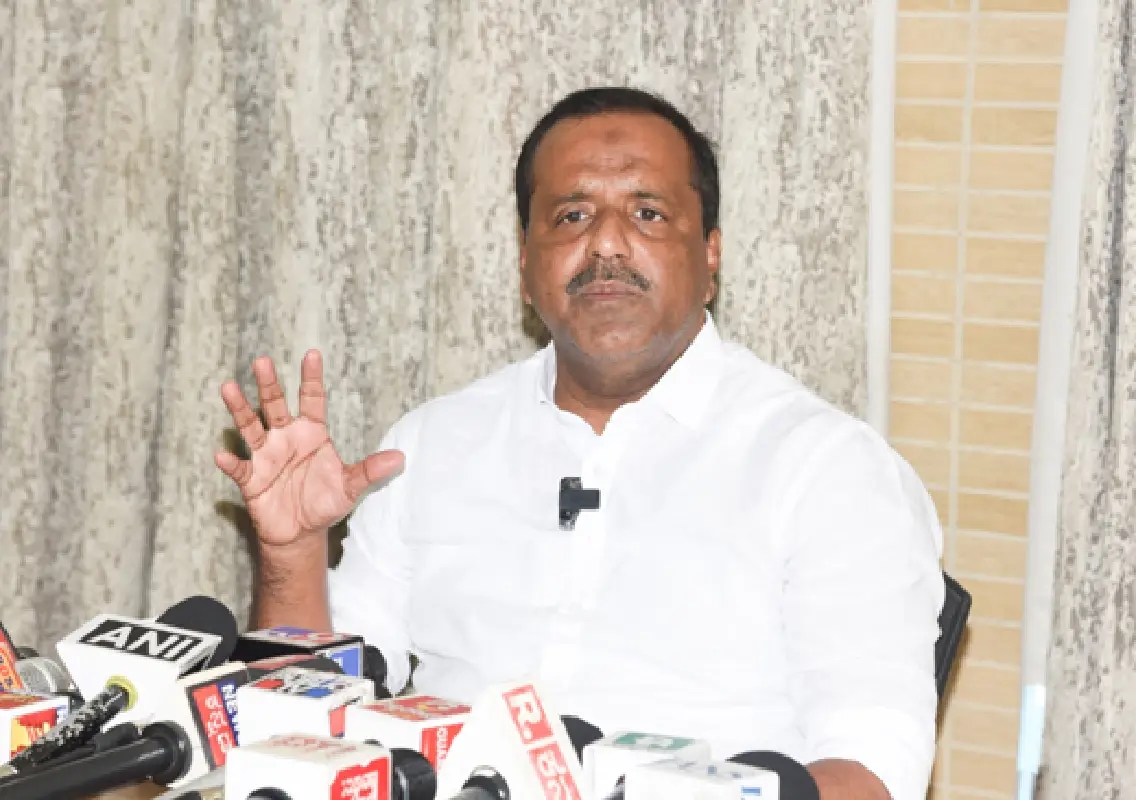


Mangaluru: A workshop for Members of the Legislative Assembly (MLAs) on understanding the State Budget and financial management will be held on March 9 at 4 pm at Lalit Ashok Hall, Legislative Assembly Speaker U.T. Khader said.
Speaking to reporters at the Circuit House on Saturday, Khader said the workshop will be conducted by Chief Minister Siddaramaiah and will focus on various aspects of the budget process, including revenue collection, economic management, classification and allocation of grants, and their effective utilisation.
He said the initiative aims to help legislators gain deeper insight into the functioning of the State’s financial system and strengthen their understanding of budget-related procedures.
Chief Minister to guide MLAs on budget process
Khader noted that Siddaramaiah, who has presented the State Budget 17 times, is widely regarded as one of the most experienced leaders in the country when it comes to financial management and budget preparation.
According to Khader, the Chief Minister will provide detailed explanations on the structure and functioning of the budget. MLAs will also get an opportunity to clarify doubts and raise questions during the workshop.
He clarified that the workshop is not intended to discuss or debate the contents of the current budget speech. Instead, it is designed as an educational session to help legislators better understand financial planning, allocation of funds and the overall budget mechanism.
Khader said such knowledge would be valuable for lawmakers in the long run.
“Many of today’s MLAs could become finance ministers in the future. It is important that they understand the budget process and financial management in detail,” he said.
He added that this is the first time such a workshop is being organised and all MLAs have been asked to attend.
Speaker avoids comment on grant allocation criticism
Responding to questions about allegations by some legislators that they were not receiving adequate grants for development works, Khader said he would not comment on the matter.
However, he observed that he often sees news reports about MLAs inaugurating or laying foundation stones for various projects. As Speaker, he said he is not aware of the specific grants under which those works are being carried out.
Khader emphasised that, in his position as Speaker, he would not comment on differing opinions expressed by legislators.
Criticism part of democratic system
On criticism that the State Budget had been presented by borrowing heavily, Khader said criticism is a natural part of a democratic system.
He noted that from Gram Panchayats to Parliament, debates and criticism over financial decisions are common.
Khader added that the ongoing Assembly session, which will continue for nearly a month, will provide ample opportunity for legislators to discuss the budget in detail and raise their concerns.
Demand for new police station in Ullal constituency
Khader also spoke about development issues in the Ullal Assembly constituency. Following the delimitation of the constituency, there has been a demand for establishing a new police station to serve areas such as Sajip, Ira, Chelur and Kurnadu in Bantwal taluk.
He said police stations are not only necessary for maintaining law and order but also for providing services such as passport verification and other administrative procedures.
The proposal for a new police station has been submitted and discussions are underway.
Updates on development projects
Khader said that around ₹10 crore has already been spent on the riverbank road project from Kallapu to Sajip along the old course of the Netravati river.
An additional ₹50 crore has been sanctioned for further development of the project.
He also noted that a Shramik School has been approved for the Ullal constituency, which is expected to benefit children of labourers and economically weaker sections.
Proposal for skill development centre
The Speaker said the State government has sanctioned 10 Skill Development Centres across Karnataka at a cost of ₹60 crore each.
A demand has been made to allocate one such centre for the district. If suitable land is made available, the centre could be established here and would significantly benefit local youth.
Khader pointed out that there is often a gap between academic education and practical employment skills.
While around 30 to 40 per cent of engineering graduates remain unemployed, only about 10 per cent of Industrial Training Institute (ITI) graduates face unemployment, he said. Skill development programmes could therefore play a key role in improving employment opportunities.
Issues to be discussed in Assembly
Responding to criticism that coastal districts have not received adequate allocations in the State Budget, Khader said the issue could be discussed during the Assembly session.
He added that there may also be an opportunity to address such demands in the supplementary budget.
Demands for medical facilities and Gulf workers’ concerns
On the demand to establish branches of Jayadeva Institute of Cardiovascular Sciences and Research and Kidwai Memorial Institute of Oncology in the city, Khader said the proposal had been raised but was not included in the current budget.
He said the concerned ministers would be approached to consider the demand.
Regarding the proposed medical college in Puttur, Khader said it had been announced in the previous budget and that the current budget has approved a 300-bed hospital as part of the project.
The concerned department will now prepare the plan and submit a financial proposal to the Finance Department, after which the project will move forward once approval is granted.
Khader also addressed reports of difficulties faced by people from the region who have travelled to Gulf countries for work. He said many families have reported problems faced by migrant workers.
Efforts are being made to coordinate between the Central and State governments to address these concerns. At the district level, relatives have also been asked to submit information through an online system so that the data can be compiled and appropriate action can be taken.