







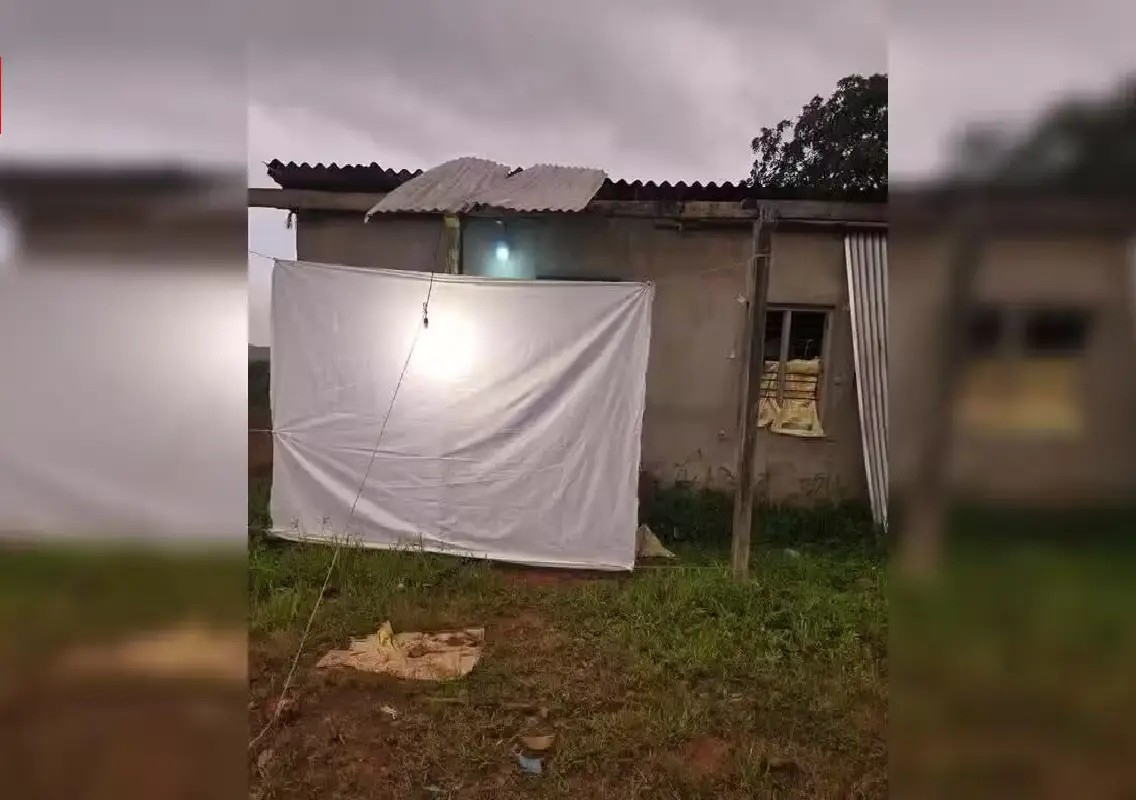


Mangaluru: As darkness settles over plantations in Dakshina Kannada, researchers from the Zoological Survey of India (ZSI) turn them into temporary laboratories, using light traps to attract moths that remain largely unnoticed during daylight.
The insects drawn to the lights could include known species, agricultural pests or, potentially, species not yet recorded by science. A ZSI team is currently documenting moth diversity across agro-ecosystems of the Southern Western Ghats, with its latest fieldwork covering plantations in Sullia and Belthangady.
The specimens collected during the Dakshina Kannada survey are now awaiting detailed laboratory examination to determine their identities.
Dr Aparna Sureshchandra Kalawate of ZSI’s Western Regional Centre, Pune, is leading the three-year study, which covers selected areas of Kerala, Karnataka and Tamil Nadu.
The project is currently in its second year and is funded in-house by ZSI. A particular focus is on micro-moths, many of which are extremely small and cryptic and require microscopic examination for accurate identification.
Light traps reveal nocturnal moths
During the latest survey, the ZSI team visited plantations and interacted with farmers before setting up light traps to attract nocturnal moths.
The insects attracted to the lights were observed and photographed, while selected specimens were collected for further examination.
Unlike larger and more conspicuous butterflies, many moths are active primarily at night and can be difficult to locate during conventional daytime surveys. Light trapping therefore provides researchers with an important method of documenting their diversity.
The fieldwork also allows researchers to understand the moths occurring in agricultural and plantation ecosystems and their possible association with crops.
Detailed examination begins in laboratory
The survey does not end with the collection of specimens. Once brought back to the laboratory, the moths undergo a detailed taxonomic examination.
The specimens are preserved, stretched and mounted before being studied under a microscope. Researchers also use laboratory photography and, in some cases, DNA barcoding to establish the identity of individual specimens.
Dr Kalawate described this as an integrated taxonomic approach, combining traditional morphological examination with modern techniques where necessary.
She said it was too early to determine whether the Dakshina Kannada survey had resulted in the discovery of any species new to science, as the collected specimens are yet to undergo detailed examination.
However, such surveys can lead to important findings, including the identification of species that had not previously been recorded from a particular region.
A survey conducted in Kerala, for example, resulted in the identification of the mango shoot borer Chlumetia.
Dr Kalawate has also described two new moth species — Antaram Idukki from Idukki and Mimeusemia Kali from the Kali Tiger Reserve.
Micro-moths linked to agriculture
The research is not limited to building a catalogue of moth species.
Micro-moths are closely associated with agricultural, forestry and horticultural ecosystems. While some species are important crop pests, others form part of the broader ecological network of plantations and forests.
Their identification can therefore be useful for understanding both biodiversity and agricultural ecosystems.
Some moth species can damage crops at different stages of their life cycle, making accurate identification important for farmers and researchers studying pest populations.
At the same time, moths have several ecological roles. They contribute to pollination, form part of the food chain for birds, reptiles and other animals, and can serve as indicators of changes in habitats.
Silk moths also have direct economic significance because of their connection with the sericulture industry.
The study therefore seeks to understand the diversity and ecological significance of moths rather than simply record their presence.
Survey covers three Southern states
The first year of the project covered portions of the Western Ghats in Tamil Nadu and Kerala.
The first survey of the second year was conducted in Dakshina Kannada, where researchers visited plantation ecosystems in Sullia and Belthangady.
Further fieldwork is planned in Udupi and Chikkamagaluru around October and November.
The three-year study is expected to generate information on moth diversity across different agro-ecosystems in the Southern Western Ghats and could also contribute to a better understanding of crop-associated moth species.
Dr Kalawate said India has more than 13,000 recorded species of Lepidoptera, the order comprising moths and butterflies, and new species continue to be discovered.
The large diversity and the difficulty of identifying many smaller species make detailed field and laboratory studies particularly important.
Rich biodiversity observed in Dakshina Kannada
Dr Kalawate said the recent field visits also highlighted the biodiversity of Dakshina Kannada.
During visits to the Dharmasthala area, she observed endemic Buddha peacock butterflies, blue Mormon butterflies and an Indian monitor lizard.
She also noted the green surroundings and what appeared to be relatively low levels of pollution at the locations visited during the survey.
A good population of ladybird beetles was also observed.
Interactions with farmers provided additional information about agricultural practices in the region. Dr Kalawate said farmers she spoke to generally reported limited use of pesticides, while some were relying on natural methods.
While no immediate major threats were observed at the survey sites, she identified habitat destruction and light pollution as concerns.
Light pollution, in particular, can affect nocturnal insects by altering their natural behaviour and movement patterns. The issue can become more significant in areas experiencing increasing urbanisation.
The ongoing ZSI study is thus expected to provide information not only about moth species but also about the wider ecological health of the agro-ecosystems of the Southern Western Ghats.
For now, the specimens collected from Dakshina Kannada remain in the laboratory, where microscopic examination and other taxonomic methods will determine what species were recorded during the latest night-time surveys.