







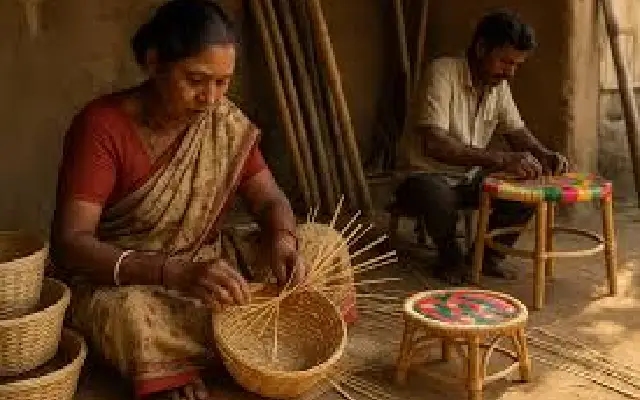


Once thought to be on the verge of extinction due to the rise of plastic, porcelain, fibre, steel, and aluminium alternatives, bamboo craftsmanship has made an unexpected comeback. Once deemed outdated, bamboo products are now regaining popularity, thanks to the resilience and creativity of skilled local artisans.
Despite tough competition and shifting consumer preferences, these artisans have modernised traditional bamboo items to suit contemporary tastes, creating renewed interest—even at slightly higher prices. Items like baagina mora, baskets, bookshelves, bamboo sticks, cots, easy chairs, and handicrafts, once common in every household, are making a stylish return.
This revival comes after years of decline, when bamboo usage waned in favour of synthetic and metallic alternatives. Forest Department restrictions had further worsened the situation by limiting access to natural bamboo sources. Yet, this scarcity gave rise to a solution: farmers began cultivating bamboo as a viable commercial crop. Now, artisans procure their materials directly from growers, creating a sustainable supply chain and revitalising the cottage industry.
Kamala, a long-time seller at Bamboo Bazaar, proudly says, “Our products are made entirely by hand, without machines, and people still value them. Business is strong.”
However, there is an underlying concern—youngsters are opting for modern education and different careers, distancing themselves from traditional crafts. Many artisans express a bittersweet acceptance, hoping the craft may conclude with their generation while embracing the evolving aspirations of the next.
Read also;