









Despite rising literacy rates and numerous health and nutrition initiatives like Matru Vandana Yojana, midday meals, and Anganwadi programs, congenital defects and child malnutrition remain pressing concerns.
Under the Rashtriya Bal Swasthya Karyakram (RBSK) from April 2024 to March 2025, 2.37 lakh Anganwadi children and 1.93 lakh government schoolchildren were screened in Mysuru. Results revealed:
- 10% had nutritional deficiencies
- 0.2% had birth defects
- 15–18% suffered from childhood diseases
- 0.9–6% showed developmental delays or disabilities
Dr. Mohammed Shiraz Ahmed, RCH officer, said malnutrition stems from poor maternal nutrition, early marriages, consanguineous marriages, and adolescent pregnancies. Despite outreach by ASHA workers, many pregnant women neglect essential care. Hygiene issues also trigger diseases like diarrhea, contributing to Severe Acute Malnutrition (SAM) and Moderate Acute Malnutrition (MAM).
To tackle malnutrition, schemes like Ksheerabhagya, Srushti, and ICDS provide milk, eggs, and supplementary nutrition. CFTRI has initiated a pilot to enrich Anganwadi meals.
Dr. Sanjeev Bansal, physician and nutritionist, warned of a shift: earlier malnutrition was seen mostly in rural and migrant populations. Today, even urban kids face undernutrition or obesity—linked to junk food, lack of supervision, and screen addiction.
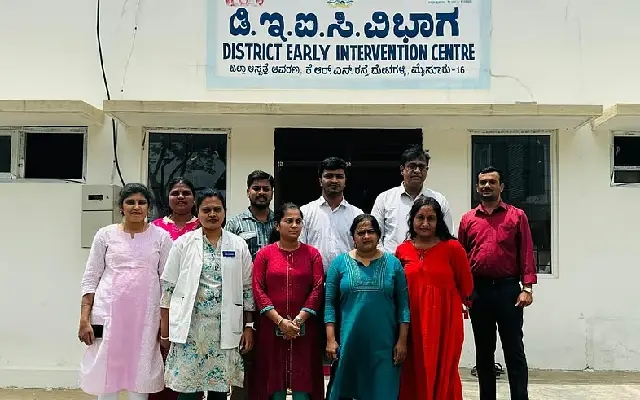
Over 59,000 Anganwadi kids and 72,000 schoolchildren were referred to District Early Intervention Centres (DEIC) or Nutrition Rehab Centres (NRCs). Thousands required treatment—ranging from surgeries for cleft palate to therapies for autism, vision loss, and cognitive delays.
Read also;