







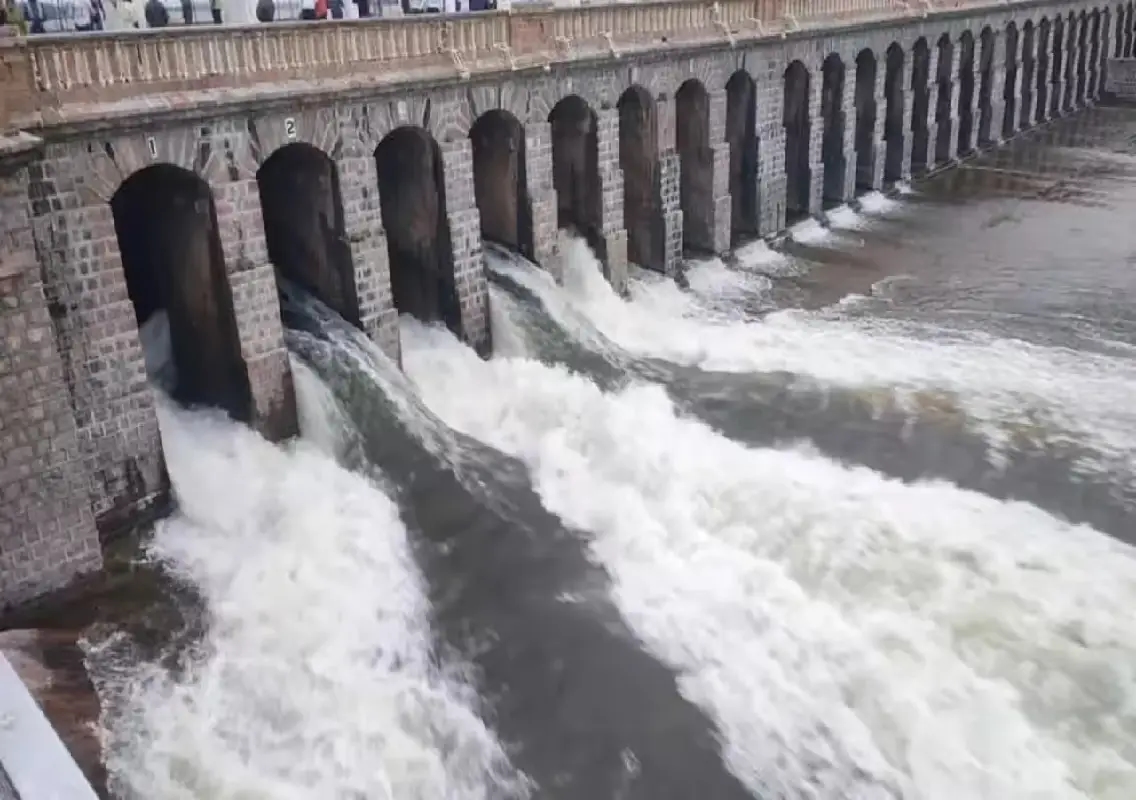


Mysuru: As Karnataka enters the peak summer season, encouraging water levels at the Krishna Raja Sagara Dam (KRS) and the Kabini Reservoir have brought significant relief to authorities and lakhs of residents who depend on these reservoirs for drinking water.
The KRS dam currently stands at 113.8 feet, against its maximum capacity of 124.8 feet. Officials noted that the storage level is almost on a par with the corresponding period last year, boosting confidence that there will be no immediate drinking water crisis in the region.
The reservoir serves as a lifeline for Mysuru, Mandya, Ramanagara and Bengaluru districts, meeting both domestic and irrigation requirements. Apart from supplying drinking water to major urban centres, KRS plays a crucial role in sustaining agricultural activities across the Cauvery basin.
Kabini levels remain reassuring
Meanwhile, the Kabini reservoir, another vital source of drinking water for Mysuru and Bengaluru, recorded a water level of 2,271.99 feet as against its full reservoir level of 2,284 feet. Although slightly lower than last year’s 2,275.3 feet during the same period, officials maintained that the present storage is adequate to meet current needs.
The combined storage position of KRS and Kabini is seen as critical in ensuring uninterrupted water supply during the harsh summer months, when inflows typically reduce and demand peaks.
No immediate crisis, say officials
Jayanth V, Executive Engineer of Cauvery Neeravari Nigam, stated that water availability this year is sufficient to cater to the drinking and agricultural requirements of Mandya, Mysuru and Bengaluru.
He emphasised that while the situation is comfortable at present, scientific planning and prudent water management will be essential in the coming months to prevent any unexpected shortages.
“With proper regulation of releases and close monitoring of consumption patterns, we are confident of managing both irrigation and drinking water needs,” he said.
Lifeline for lakhs of residents
The KRS and Kabini reservoirs collectively support lakhs of residents across southern Karnataka. In addition to urban drinking water supply, they irrigate thousands of hectares of farmland in Mandya and adjoining regions, sustaining paddy, sugarcane and other crops.
Water from these reservoirs is also channelled to Bengaluru, where demand rises sharply during summer due to population growth and industrial usage.
Officials noted that favourable monsoon rains last year have contributed to the current storage comfort. However, they cautioned that water levels must be carefully managed to ensure availability until the next monsoon replenishes the reservoirs.
Call for responsible usage
Authorities reassured the public that there is no cause for alarm at present. However, they appealed to citizens to use water judiciously and avoid wastage to ensure sustained supply throughout the summer.
Experts pointed out that even in years of adequate storage, unregulated consumption and distribution losses can strain resources. Hence, conservation measures at both household and institutional levels remain crucial.
With reservoir levels holding steady and careful management in place, southern Karnataka appears set to navigate the summer without a major water crisis — provided consumption remains responsible and rainfall patterns in the coming season are favourable.