









Mysuru: Severe drought conditions, falling groundwater levels and concerns over the State’s finances have triggered a debate over the scale of this year’s Mysuru Dasara celebrations, with activists and tourism stakeholders questioning the need for a grand festival.
The State government, however, has maintained that a grand Dasara is important to uphold Karnataka’s culture and traditions and support people whose livelihoods depend on tourism. Preparations are continuing for a 10-day festival beginning October 11, with the Vijayadashami procession scheduled for October 21. Recent reports also confirm that Sri Abhinava Gavishiddheshwar Mahaswami of Koppal’s Gavi Mutt will inaugurate the festival.
Drought casts shadow over celebrations
According to the details cited in the report, 301 of Mysuru district’s 2,991 lakes have dried up, while groundwater levels have fallen by around 5.02 metres compared with the previous year.
The district has also experienced a significant rainfall deficit. A recent report based on Groundwater Directorate data said the groundwater table had fallen to 13.4 metres below ground level by the end of August, compared with 8.4 metres during the corresponding period last year. The district recorded a 59% rainfall deficit between June 1 and September 15, according to the Agriculture Department.
The report also highlights pressure on water resources in the Cauvery basin. Irrigation water supply has been affected, while drinking-water shortages have prompted authorities in several areas to drill or hire borewells and arrange tanker supplies.
The drought has also affected agriculture. Farmers in the district had completed sowing on only 56.49% of the targeted area, with the reported crop loss estimated at Rs 12,234 lakh across 1,43,308 hectares.
Dasara preparations continue
Despite the water crisis, preparations are progressing for an elaborate Dasara programme with an estimated budget of around Rs 50 crore.
The proposed celebrations include Kambala, Yuva Dasara and several cultural programmes. The expenditure cited does not include other components such as illumination, civil works, sponsorship-supported programmes and ticket revenue.
The illumination is planned using around 2,60,920 units of electricity, while a two-day drone show is also scheduled. Recent ticketing information confirms that the drone show, procession, torchlight parade and other major events are part of the ticketed Dasara programme.
Chief ministers of southern states have been invited, while around 30 Sandalwood actors are expected to participate in the Jamboo Savari procession.
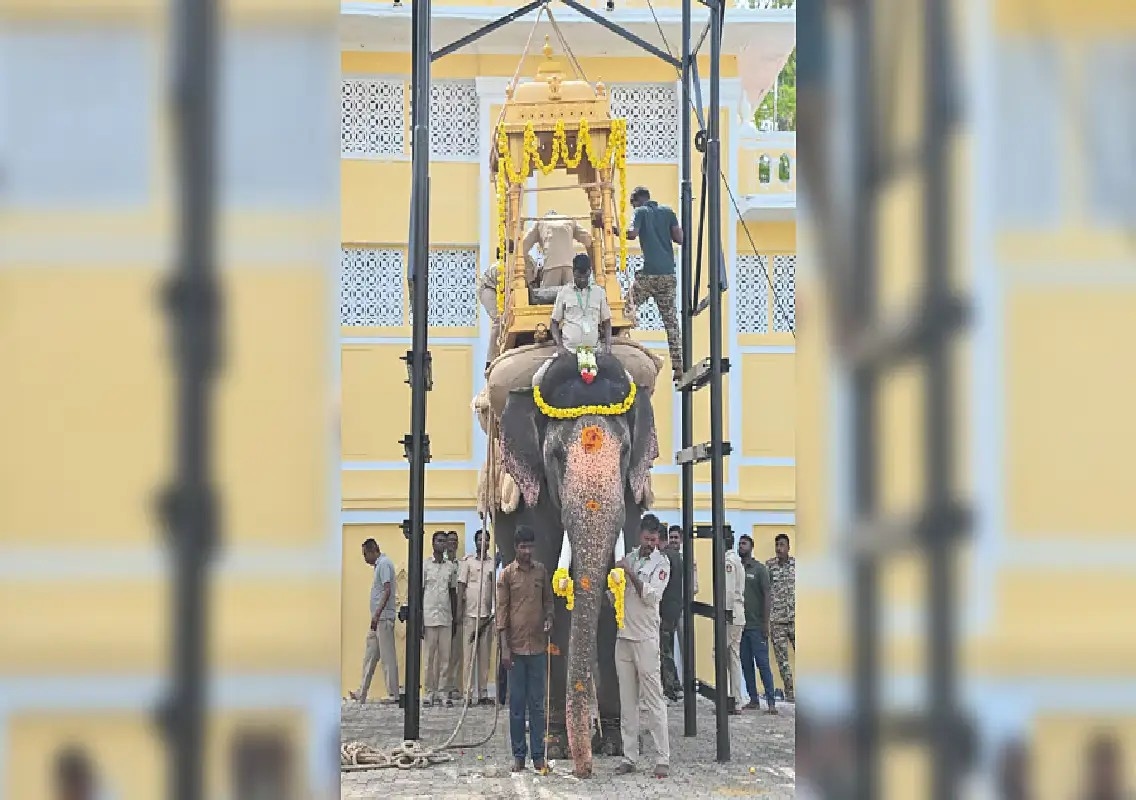
Training for the 12 Dasara elephants that arrived in Mysuru on August 26 has also been intensified.
District-level sports competitions are being held as a prelude to the festival. Workshops covering sand casting, Kaavi art and graphics under Lalithakale and Karakushala Kale Dasara began on September 21, while the eight-day Yuva Sambrama is scheduled to begin on September 28.
Tourism stakeholders seek moderation
Mysore Hotel Owners Association president C Narayan Gowda said tourism is a major source of livelihood for people in Mysuru and that a significant portion of the annual earnings of some tourism-related businesses comes during Dasara and the Dasara Expo.
However, he said the festival did not necessarily need to be organised on such a large scale this year.
Gowda also called for the creation of a Mysuru Tourism and Dasara Pradhikara involving stakeholders from the hotel, tourism and industrial sectors. Such an institutional mechanism, he said, could help stakeholders plan events in advance, mobilise sponsorships and spread tourism-related activities throughout the year.
He also expressed concern over the timing of civil works such as underground drainage and road projects, saying that works taken up close to the festival could result in traffic problems.
Questions over Kambala and expenditure
MLC A H Vishwanath recalled the 2003 Dasara, when the festival was conducted on a simpler scale with private sponsorships.
He questioned the decision to hold a coastal harvest festival such as Kambala in Mysuru at a time when farmers are facing drought.
Environmental concerns have also been raised over the construction of temporary infrastructure for the Kambala event, including the reported use of borewells and removal of trees.
The Karnataka State Kambala Association, meanwhile, is proceeding with preparations for the event. Around 160 buffalo pairs are expected to travel to Mysuru, with competitions scheduled for October 18 and 19. A 147-metre track is being prepared and seating arrangements are being made for spectators.
Environmental and farmers’ organisations have separately opposed the event, citing water scarcity and the expenditure involved.
Artists and welfare payments raised
Singer and Mysuru resident H R Leelavathi, 92, said traditional Dasara celebrations historically centred on the palace Darbar and Jamboo Savari and were closely connected with the agricultural fortunes of the region.
She questioned the spending on elaborate celebrations during a drought and raised concerns over the environmental impact of illumination and temporary infrastructure.
Concerns have also been raised over delayed welfare payments. Tribal leader Sunil T R said several social-security pensions had been delayed during beneficiary verification, while tribal nutrition kits had reportedly not been distributed for several months.
P S Sandhya of AIUTUC said ASHA workers and midday meal workers were also facing delays in receiving honorariums.
A recent report separately highlighted the delay in distribution of tribal food kits in Mysuru and Chamarajanagar, with community leaders linking the issue to drought and lack of employment opportunities.
Dasara scaled down during earlier crises
Mysuru has reduced the scale of Dasara during previous periods of severe crisis.
In 2003, during an acute Cauvery water crisis, the Jamboo Savari was confined to the palace premises. In 2020, during the Covid-19 pandemic, celebrations were also significantly curtailed.
This year, the debate centres on whether the ongoing drought and reported financial and welfare concerns warrant a similar approach, while the government and tourism stakeholders continue to emphasise the cultural and economic importance of the annual festival.