







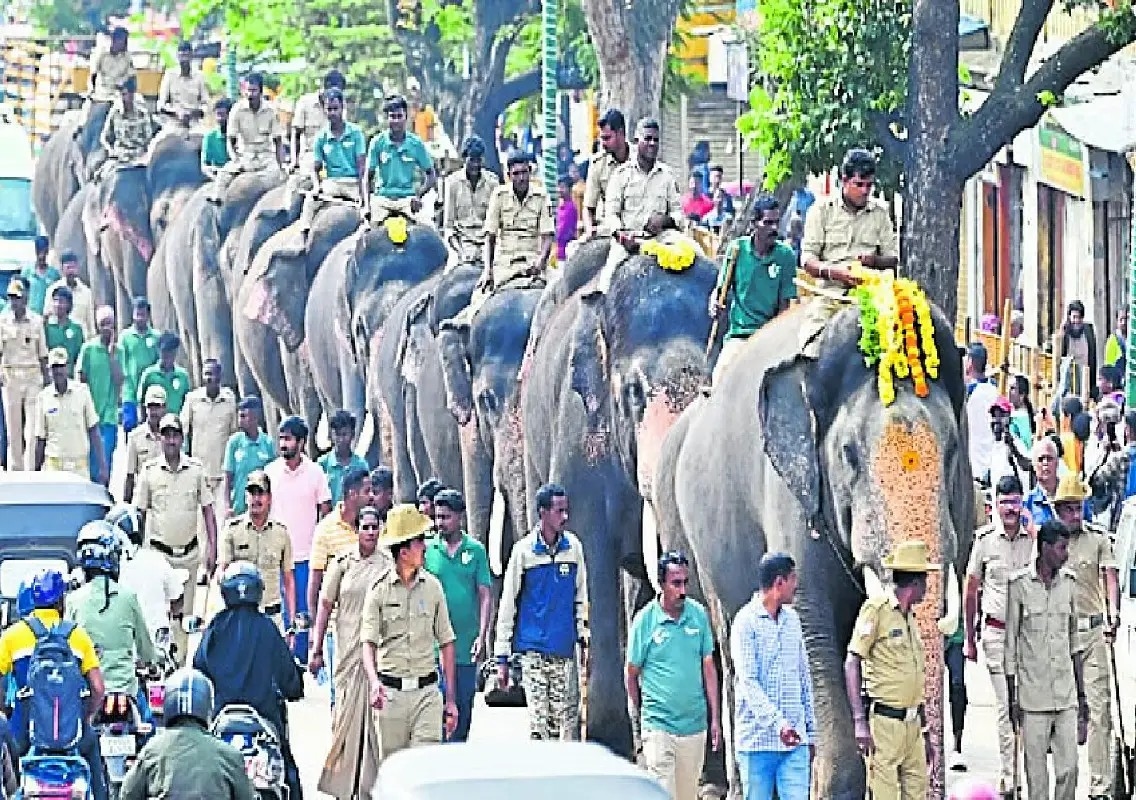


Mysuru: The recent death of a tourist and an elephant following a clash between two captive elephants at Dubare camp in Kodagu district has reignited debate over the continued use of elephants during Mysuru Dasara festivities. With the selection process for Dasara elephants expected to begin in about a month, wildlife experts, veterinarians, activists and forest officials have renewed discussions on animal welfare and public safety during one of Karnataka’s biggest cultural celebrations.
Experts have stated that the incident has highlighted the need for reviewing practices associated with the use of elephants during large public events where thousands gather for rehearsals and lakhs of people attend the final procession.
Experts raise concerns over elephant stress
Wildlife veterinarians and forest officials said elephants selected for Dasara are usually chosen after assessing their health conditions, temperament, behavioural history and previous experience during festivities.
However, officials also pointed out that the animals involved are originally wild elephants that were later brought into captivity rather than animals bred in controlled environments.
Experts noted that despite years of training, predicting elephant behaviour remains difficult.
According to them, elephants can continue to retain natural instincts irrespective of long-term captivity and repeated exposure to public events.
Animal rights activists argued that the Dubare incident once again demonstrates the unpredictability associated with handling large animals in crowded environments.
Robotic elephants suggested as alternative
Several experts and activists have suggested considering robotic elephants for ceremonial purposes in place of live animals.
People For Animals representative Savitha stated that alternative solutions could help preserve cultural traditions while reducing stress on animals and improving public safety.
She pointed to examples such as mechanical elephants used during the Suttur Mutt Jatra Mahotsava and other events across the country.
According to activists, such initiatives have already demonstrated that cultural and religious practices can continue without relying on live animals.
They argued that technological alternatives could provide a balance between preserving heritage and addressing welfare concerns.
Training process and environmental factors under scrutiny
Wildlife activists highlighted concerns regarding the physical and psychological stress experienced by elephants during Dasara preparations.
According to experts, elephants selected for Dasara often undergo nearly 40 days of training before the celebrations begin.
During this period, elephants reportedly walk close to 10 kilometres daily on roads made of tar and concrete, conditions that differ significantly from their natural forest environment.
Experts stated that prolonged movement on hard surfaces can place stress on feet and joints.
They also raised concerns over training practices involving sandbags used to prepare the lead elephant for carrying the Golden Howdah during the Jumbo Savari procession.
According to them, such practices may create pressure on the chest cavity and require recovery time after the festival concludes.
Noise and crowds seen as additional stress factors
Experts further noted that loud cannon firing during rehearsals may create considerable stress for elephants and potentially impact their health.
They said elephants possess hearing sensitivity much greater than humans and are highly responsive to surrounding sounds and environmental changes.
Crowd behaviour, loud cheering, bright clothing, perfumes and music have also been identified as factors capable of disturbing animals during public events.
Some experts also expressed concern regarding loud DJ music played during Dasara events around the Mysore Palace premises.
According to wildlife specialists, such factors can affect animal behaviour, rest patterns and responsiveness to mahouts.
Heritage and cultural considerations remain important
While animal welfare groups advocated alternative solutions, others stressed the cultural and historical significance attached to the Mysuru Dasara celebrations.
Historian Shalvapille Iyengar stated that replacing live elephants with robotic alternatives could affect the heritage and traditional identity associated with the centuries-old procession.
Meanwhile, wildlife photographer Krupakar said changing social attitudes and scientific understanding should also be considered while discussing the future of such practices.
Senior Forest Department officials stated that any decision regarding alternatives should involve detailed scientific assessment and consultation with government agencies, religious institutions, conservation experts, public safety authorities and the people of Karnataka.
The discussions surrounding elephant use during Dasara are expected to continue as stakeholders attempt to strike a balance between tradition, public safety and animal welfare concerns.