







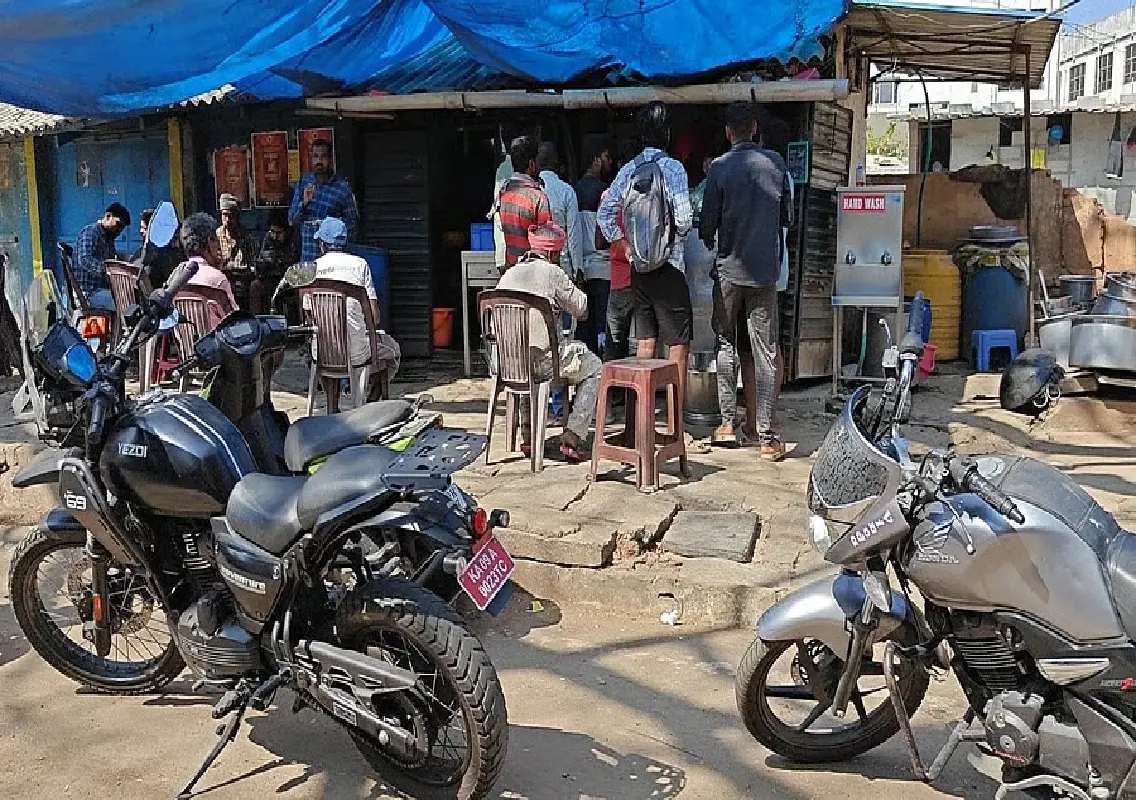


Mysuru: Footpaths in many parts of Mysuru — once considered a defining feature of the city’s pedestrian-friendly design — are gradually disappearing due to encroachments, vehicle parking, and roadside commercial activities. Residents say the situation has turned everyday walking into a challenge, forcing pedestrians to share the road with vehicles, stray cattle, and vendors.
Across both heritage neighbourhoods and planned layouts, people say pavements that once allowed comfortable walking have slowly been taken over by shops, parked two-wheelers, and informal street trade.
Gradual encroachments in heritage areas
In older localities such as Agrahara and Hosabandikeri, residents say the disappearance of footpaths happened gradually over the years.
Commercial establishments began extending their business activities onto pavements, placing goods outside shops to attract customers. According to residents, the idea that “visibility means survival” led many traders to use the footpaths as display spaces.
The trend is also visible along Sayaji Road, where pavements that once served pedestrians are now occupied by merchandise and commercial setups.
K Rajashekhar Murthy, a long-time resident and shop owner in Hosabandikeri, said the change happened slowly.
“Inside the shops, it’s empty. Outside is where everything is kept. Slowly, people stopped using the footpath because there was no space left,” he said.
Walking becomes difficult for elderly residents
For elderly residents in Mysuru, the loss of pavements has altered daily routines. Many who previously preferred walking for short errands now find it difficult and risky.
Residents say a simple trip to a nearby market now requires stepping onto the main road and carefully navigating through traffic.
Senior citizens, who once relied on the city’s footpaths for morning and evening walks, say they now avoid walking in busy areas due to safety concerns.
Different challenges in planned layouts
In planned neighbourhoods like Saraswathipuram, where wide roads and pavements were originally designed for pedestrian convenience, the problem takes a different form.
Residents say footpaths are frequently occupied by parked two-wheelers, particularly near shops and road junctions.
As a result, pedestrians often find the pavements blocked and are forced to walk on the road instead.
“I walk on the road now. On the footpath, there’s always a bike or something blocking the way,” said a senior citizen living in the area.
Parents have also expressed concern about children walking alone on such roads, while many elderly residents have stopped going for evening walks due to safety fears.
Busy markets worsen the problem
In commercial areas such as Mandi Mohalla and Sayyaji Rao Road, pedestrians face an even more difficult situation.
Bikes are often parked wherever space is available, and roadside vendors frequently spill onto the streets, narrowing the available walking area.
Residents say pedestrians are forced to move through narrow gaps between vehicles, stalls, and moving traffic.
Manju, a resident of Nanjumalige, said that the issue is not necessarily intentional but arises from competing needs.
“No one is trying to create trouble; everyone is just trying to manage their own needs. But there’s no space left for people to walk,” she said.
Stray cattle add to traffic woes
Another factor contributing to the problem is the presence of cattle on city roads.
Residents say cattle are often released on the streets during the day, particularly near vegetable and fruit markets, where food waste attracts them.
The animals frequently block traffic and increase the risk of accidents for pedestrians and motorists.
Murthy said cattle have become a common sight on the roads.
“They are used to the roads now. Drivers slow down and pedestrians step aside. It has become normal,” he said.
Impact on schoolchildren
Residents say the situation is particularly worrying for schoolchildren.
In some areas, school grounds are reportedly being used as temporary parking spaces. As a result, students waiting for buses are forced to stand on the roadside, increasing safety risks.
Parents say they worry about the lack of safe pedestrian space for children travelling to and from school.
Residents express concern for city’s pedestrian culture
Despite growing frustration, many residents express their concerns more with nostalgia than anger.
They say Mysuru has traditionally been known for its pedestrian-friendly environment, where people could comfortably walk through neighbourhoods without worrying about traffic.
Long-time residents say the gradual disappearance of footpaths is not just an infrastructure issue but also a reflection of changing urban habits.
On weekends — particularly Fridays, Saturdays, and Sundays — the situation becomes even more noticeable due to the influx of tourists into the city.
Residents say the increased traffic during these days further highlights the absence of dedicated pedestrian space.
For many citizens, the loss of footpaths represents more than just an urban planning concern. It serves as a reminder of how public spaces can gradually disappear when everyday compromises accumulate over time.
Conclusion
Urban planners and civic activists say restoring pedestrian spaces will require coordinated efforts from authorities, traders, and residents.
Without clear regulations and consistent enforcement, they warn that Mysuru risks losing one of its defining features — a city where walking once formed an essential part of daily life.