







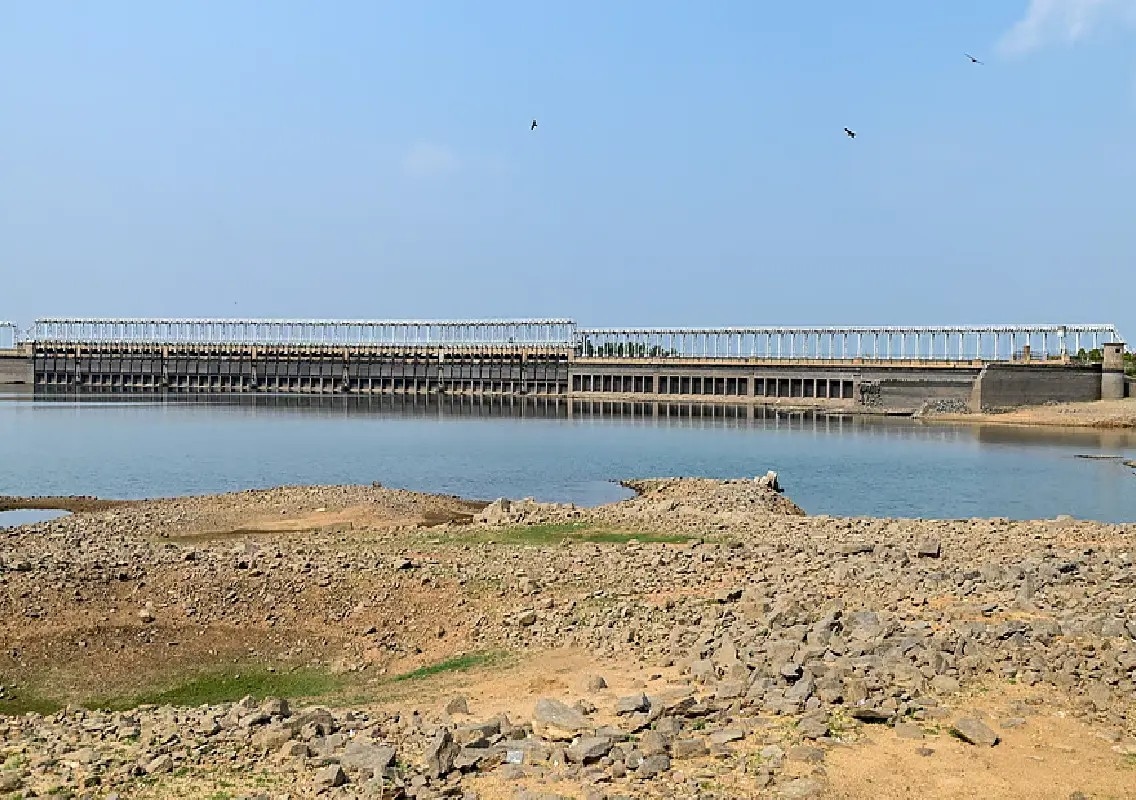


Mysuru: Declining water levels in the Kabini and Krishna Raja Sagara (KRS) reservoirs following the release of water to Tamil Nadu have raised concerns among farmers in the Mysuru region, particularly paddy growers who depend heavily on the reservoirs for irrigation.
Officials said the situation remains worrying despite an increase in inflows during the last week of August following rainfall in Kodagu. According to them, the available water is expected to be sufficient primarily for meeting drinking water requirements and may not be adequate to support agricultural activities.
Sowing target likely to fall below 50%
The shortage is already affecting agricultural planning in the region. Officials indicated that the Mysuru region is likely to achieve less than 50% of its sowing target this year because of inadequate water availability.
Paddy farmers are among those facing the biggest uncertainty. Paddy cultivation requires a substantial and sustained supply of water, making farmers particularly vulnerable when reservoir levels decline.
Although rainfall in Kodagu temporarily improved the inflow into the reservoirs towards the end of August, the increase has not been sufficient to ease concerns over the availability of water for irrigation.
Farmers fear that the situation could become more difficult in the coming months if the reservoir levels continue to fall.
KRS outflow remains significantly higher than inflow
The water position at the KRS reservoir highlights the pressure on the available storage.
As of September 6, the water level in KRS stood at 107 feet. The reservoir was receiving an inflow of 2,774 cusecs, while the outflow was substantially higher at 8,983 cusecs.
The difference between inflow and outflow means the reservoir’s stored water continues to decline, adding to concerns among farmers who are waiting for adequate water availability for cultivation.
The release of water to Tamil Nadu has further intensified the anxiety among farming communities. Farmers fear that continued releases, combined with insufficient inflows, could leave little water available for agricultural purposes.
Farmers fear difficult months ahead
Farmers in the region have expressed concern that the impact of declining reservoir levels will become more pronounced as the agricultural season progresses.
For paddy growers, uncertainty over irrigation water makes it difficult to decide whether to undertake cultivation. Starting cultivation without assurance of sufficient water could expose farmers to substantial losses if water availability declines during critical stages of crop growth.
Officials’ assessment that the available water may be sufficient only for drinking water needs has added to the uncertainty surrounding agricultural activities.
The concerns are particularly significant because the Mysuru region depends on the Cauvery basin reservoirs for both domestic and agricultural requirements. Any prolonged gap between reservoir inflow and water demand can directly affect the extent of cultivation.
Rainfall in Kodagu offers limited relief
Rainfall in Kodagu during the last week of August resulted in an improvement in inflows into the reservoirs. However, officials said the increase has not fundamentally changed the water availability situation.
With inflows still lower than the current outflow at KRS, farmers remain apprehensive about the sustainability of the available storage.
The situation could become more challenging if there is no substantial improvement in rainfall and inflows in the coming weeks.
For now, farmers are closely watching the levels in KRS and Kabini, hoping for additional rainfall to improve reservoir storage. A significant improvement in inflows would be crucial if agricultural activities are to expand beyond the currently expected levels.
With the sowing area projected to remain below half of the target, the water situation has emerged as a major concern for the region’s farming community. The coming weeks are likely to be critical in determining whether further rainfall can improve storage levels and provide some relief to farmers.