







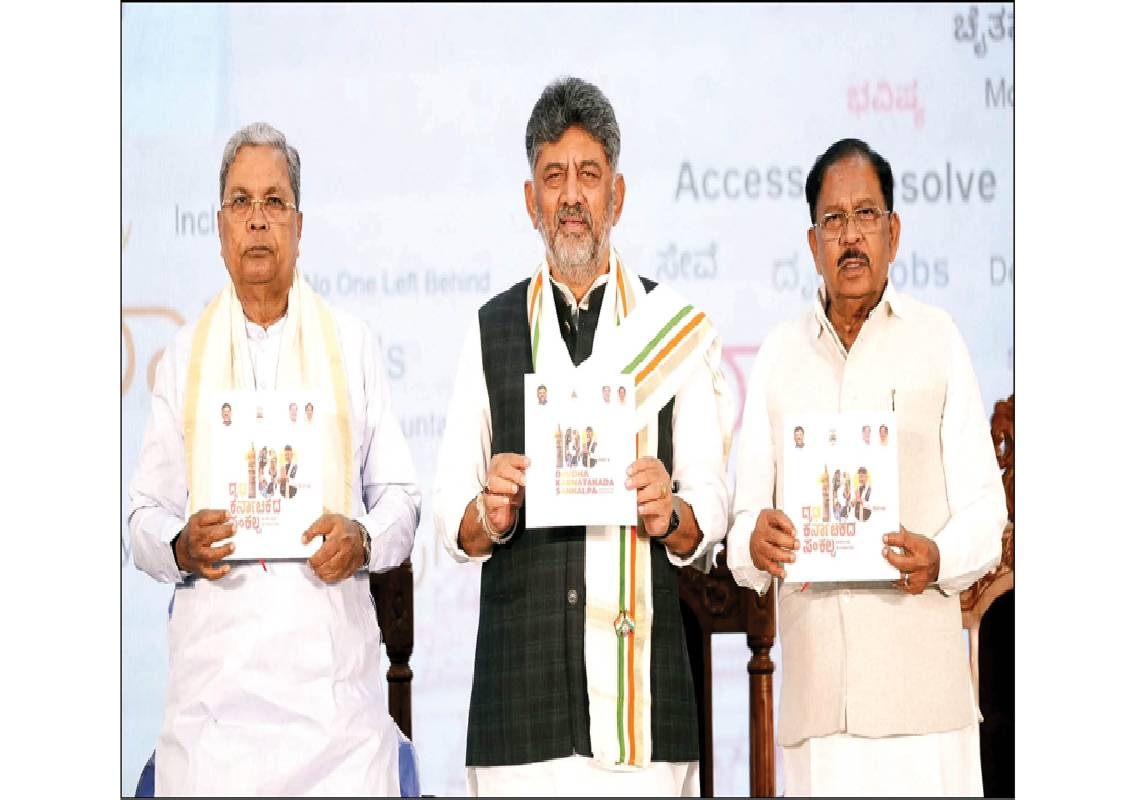


Mysuru: Karnataka Chief Minister D.K. Shivakumar has said investment proposals worth ₹43,214 crore were approved during the first 100 days of his tenure, highlighting the government’s focus on accelerating industrial development and creating employment opportunities across the State.
Shivakumar made the statement while reviewing the government’s achievements and outlining its development roadmap. The investment approvals form part of a broader strategy to strengthen Karnataka’s economy, attract industries and expand growth beyond Bengaluru.
Government targets wider industrial growth
The Chief Minister said the government intends to distribute industrial growth more evenly across Karnataka instead of concentrating investment in Bengaluru and a few established industrial centres.
As part of this approach, the government is planning a special accelerator package to attract investments to backward taluks. The objective is to encourage companies to establish operations in regions that have traditionally received less industrial investment.
The government has also announced initiatives aimed at strengthening industrial infrastructure, including the development of worker housing near industrial areas.
Under the Shramika Nivas initiative, permission has been given to use 15% to 20% of land near industrial areas for worker accommodation. The move is intended to address housing challenges faced by workers employed in industrial clusters.
₹20,000 crore production cluster planned
One of the major projects highlighted by the Chief Minister is a ₹20,000-crore production cluster spread across 4,000 acres in Doddaballapur.
The project is expected to contribute to Karnataka’s manufacturing and industrial ecosystem while generating employment and attracting additional investment to the region.
The government is also working on sector-specific policies, including a textile policy and plans for a jeans park in Ballari. Aerospace and defence policies have also been framed as part of efforts to attract investment in high-value manufacturing sectors.
These initiatives are intended to strengthen Karnataka’s position as an investment destination while creating opportunities outside the State capital.
Focus on ‘Beyond Bengaluru’
The government’s investment strategy is closely linked to its ‘Beyond Bengaluru’ approach.
Under this plan, the State aims to develop economic and technology centres in cities outside the capital. The government has proposed five global technology centres in Kalaburagi, Belagavi, Hubballi-Dharwad, Mangaluru and Mysuru.
The objective is to create new employment opportunities, attract technology companies and reduce the concentration of economic activity in Bengaluru.
The government is also preparing coastal and Malnad tourism policies to encourage investment in sectors beyond traditional industrial hubs.
Karnataka targets $1 trillion economy
The investment push comes alongside the State government’s long-term ambition of taking Karnataka’s economy to $1 trillion by 2037.
Shivakumar has described the target as part of the government’s broader ‘Strong Karnataka’ roadmap, which combines industrial investment, employment generation, technology, infrastructure, education and social development.
According to figures presented by the Chief Minister, Karnataka’s gross domestic product has reached ₹32.81 lakh crore, with the State recording an 8.1% growth rate. The government has also said Karnataka attracted ₹2.53 lakh crore in capital investment over the past three years and remained among the leading States in attracting foreign investment.
Government focuses on employment
Employment generation is another major component of the investment strategy.
The government has proposed measures to encourage private-sector employment in rural areas outside Bengaluru. Under the Udyoga Nidhi initiative, incentives are planned for those creating private-sector jobs in rural areas.
The Yuva Udyoga Setu programme is also intended to establish job-exchange centres that can connect jobseekers with private-sector vacancies and provide training based on the skills required by employers.
The State government has also begun the process of filling 72,000 vacant government posts, according to the Chief Minister’s 100-day review.
New policies aimed at attracting investors
Karnataka is also looking at ways to make it easier for overseas investors to participate in the State’s growth.
The government has proposed creating a separate ministry for non-resident Indians, with the aim of attracting investment from overseas Karnataka-origin investors and other international investors.
The State is simultaneously working on policies for emerging sectors such as aerospace, defence, artificial intelligence and textiles.
Shivakumar has also announced plans to establish what he described as India’s first government-sponsored AI university and introduce AI education for students from Class 6 onwards.
Infrastructure remains key to investment
The government has also linked investment growth with infrastructure development.
Bengaluru has received significant attention, with ₹2,000 crore approved for road development as part of the government’s infrastructure plans.
At the same time, the ‘Beyond Bengaluru’ strategy is intended to ensure that infrastructure and investment opportunities reach other parts of Karnataka.
Better roads, industrial land, worker accommodation and connectivity are expected to play an important role in making emerging industrial centres more attractive to companies.
Investment push comes with larger development agenda
The ₹43,214-crore investment approvals announced during the first 100 days represent one part of the government’s wider economic agenda.
Alongside industrial development, the State is focusing on irrigation, healthcare, education, agriculture, tourism and social welfare.
The government has also announced plans to increase investment in Kalyana Karnataka and develop new technology centres in several cities.
For Karnataka, the challenge will now be to convert approved investment proposals into actual projects and ensure that they generate the promised employment and economic benefits.
With the government targeting a $1 trillion economy by 2037, the pace of industrial investment and implementation of projects will remain closely watched.
The ₹43,214-crore approval figure therefore marks an important early milestone for the government, but its long-term significance will depend on how quickly these investments translate into factories, businesses, jobs and broader regional development.