







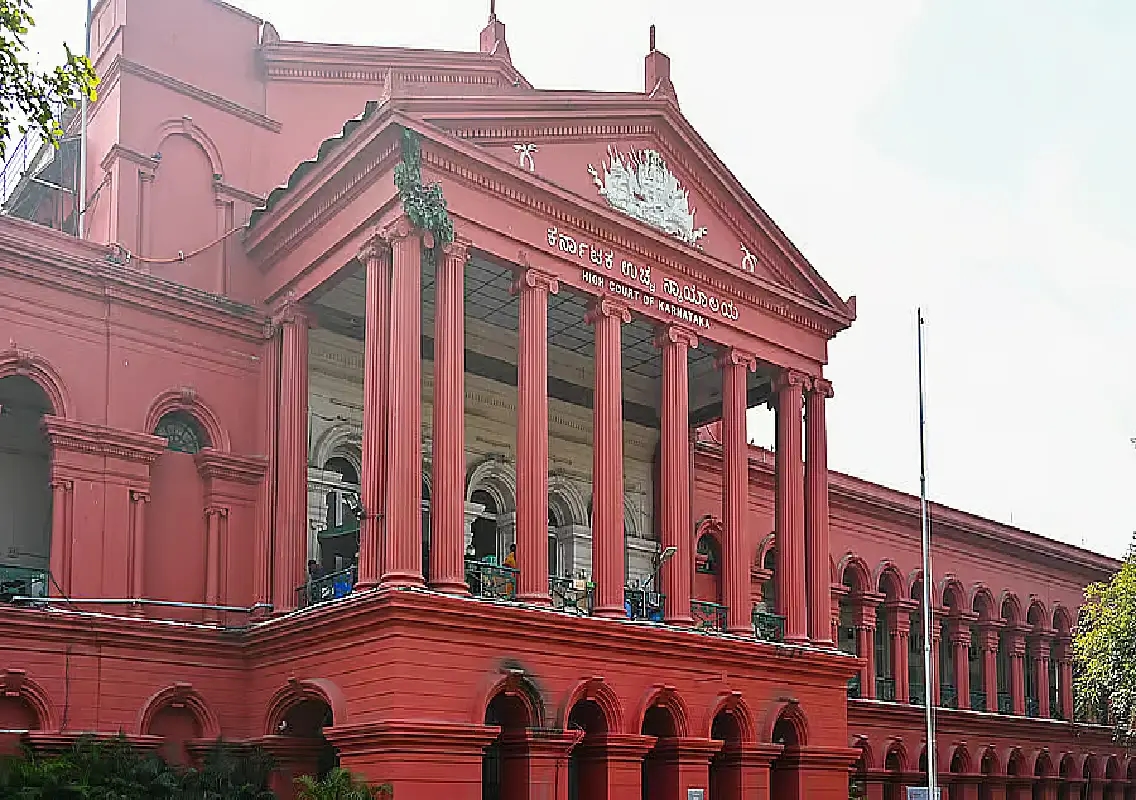


Mysuru: The Karnataka High Court has directed the Mysuru Deputy Commissioner to immediately stop all construction activities at the premises of the Sri Chamundeshwari Devi Temple atop Chamundi Hill.
The interim order, issued on April 9, 2026, came in response to a petition filed by Pramoda Devi Wadiyar, a member of the erstwhile Mysuru royal family, raising concerns over ongoing construction at the temple site.
Court demands detailed expenditure report
Justice Sachin S Magadum, while hearing the matter, directed the Mysuru Deputy Commissioner to submit a comprehensive affidavit within two weeks. The affidavit must include full details of the ₹47 crore sanctioned by the Union government under the PRASHAD (Pilgrimage Rejuvenation and Spiritual Heritage Augmentation Drive) scheme.
The court has sought specific information on works undertaken, funds disbursed, and the current status of execution. This directive aims to bring transparency and accountability to the utilisation of public funds for temple development.
Displeasure over violation of earlier orders
In its interim order, the High Court expressed strong displeasure with the Mysuru district administration for allegedly continuing construction activities despite previous restrictions.
The court warned that any further violation of its orders or breach of undertakings would be viewed seriously and could amount to aggravated contempt of court. It also indicated that appropriate legal action could be initiated against the Deputy Commissioner if violations persist.
Notably, the court took on record an affidavit filed by the Deputy Commissioner acknowledging that certain structures constructed below ground were of a permanent nature. The court observed that this admission prima facie contradicts earlier binding orders that prohibited permanent construction.
Earlier stay orders reiterated
The court recalled that it had already issued a temporary stay on January 14, 2026, restraining any permanent construction at the temple premises. This followed earlier directions issued on October 15, 2024, which stated that no movable or immovable property of the temple should be altered without prior permission of the court.
Subsequently, on February 17, 2026, the court reiterated that the State government must strictly adhere to its undertaking not to undertake permanent construction unless permitted by the court.
Despite these repeated directions, allegations of continued construction prompted the court to intervene once again.
Petition raises heritage and legal concerns
The petition filed by Pramoda Devi Wadiyar highlighted concerns regarding the preservation of the temple’s heritage and compliance with legal norms. Chamundi Hill, a prominent religious and cultural landmark in Mysuru, holds immense historical significance.
The case has drawn attention to the balance between infrastructure development for pilgrims and the need to protect heritage structures from unregulated construction.
Conclusion
The Karnataka High Court’s latest order underscores the importance of adhering to judicial directives and maintaining transparency in public projects. As the matter progresses, the court’s scrutiny is expected to ensure accountability while safeguarding the sanctity and heritage of the Chamundeshwari temple premises.