







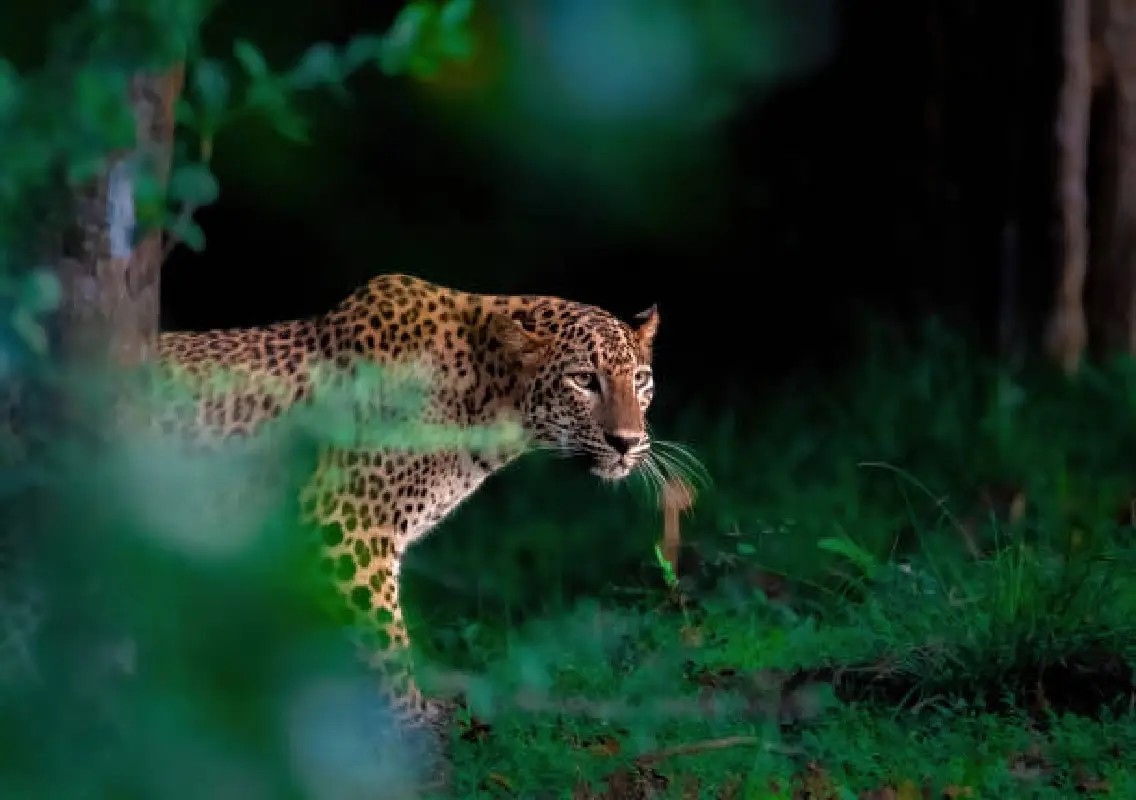


Mysuru: In a significant boost to wildlife conservation efforts, forest officials in Karnataka have rescued 221 leopards over the past three years, with more than 90 per cent of them successfully rehabilitated and released back into the wild.
The latest rescue took place in Melukote in Mandya district on April 30, adding to what officials describe as a strong track record in managing human-wildlife conflict and protecting big cats in the region.
High release rate signals conservation success
According to forest department data, nearly half of the rescued leopards were released directly into nearby forest areas after being assessed as fit for survival. Before release, officials followed standard protocols such as ear notching and microchipping, enabling future identification and monitoring.
Officials say this high release rate reflects a major achievement, especially in a state where the wild leopard population is estimated at around 1,800.
Only about 5 per cent of rescued leopards succumbed to injuries, while another 5 per cent remain in rehabilitation centres, primarily because they were rescued as cubs or were medically unfit for release.
Leopard Task Force strengthens response
The formation of the Leopard Task Force (LTF) in February 2023 by the Karnataka government marked a turning point in handling such incidents. The specialised unit was established following a series of fatal leopard attacks in T Narasipura in late 2022 and early 2023.
Since then, the LTF has played a crucial role in rapid response, rescue operations, and conflict mitigation across Mysuru and Mandya districts.
Deputy Conservator of Forests IB Prabhugouda, who heads the task force, said the initiative has improved coordination and reduced risks to both humans and wildlife.
Mysuru district records highest rescues
Of the 221 leopard rescues, Mysuru district alone accounted for 164 cases. Within the district, Mysuru taluk reported the highest number with 68 rescues, followed by T Narasipura with 35 and HD Kote with 30.
These figures highlight the increasing interaction between humans and wildlife, particularly in areas close to forest fringes, agricultural fields, and expanding urban settlements.
Notable rescue incidents
Among the recent cases, a leopard that entered a house in Siddhartha Nagar in Mysuru drew attention. The animal was later found resting under a cot inside the house. Fortunately, no injuries were reported.
Forest officials who examined the situation suggested that the leopard may have been in shock, which could explain its calm behaviour. The animal was safely rescued and subsequently released back into the wild.
In addition to the task force, territorial forest officials have also contributed to several successful rescue and release operations.
Balancing conservation and safety
Experts note that while the high number of rescues reflects effective intervention, it also underscores the growing challenge of human-wildlife conflict in rapidly changing landscapes.
Encroachment into forest areas, shrinking habitats, and increased human activity near wildlife zones are key factors contributing to such encounters.
Conclusion
Karnataka’s approach to leopard rescue and rehabilitation is emerging as a model for balancing conservation with public safety. With over 90 per cent of rescued animals successfully returned to their natural habitat, the initiative demonstrates how scientific management and timely intervention can protect both wildlife and communities.