







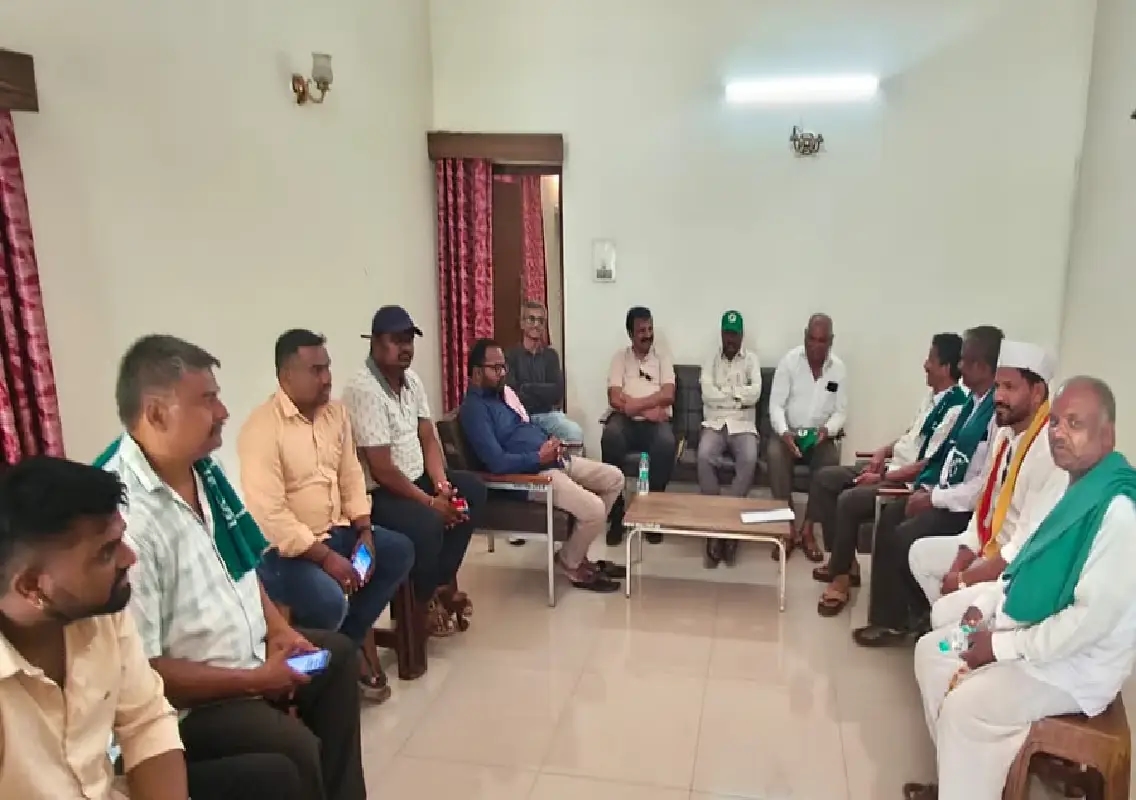


Mysuru: Workers of the KSIC raw silk reeling unit at T. Narasipur in Mysuru district resumed production on Friday after a 15-day strike, even as protests continued against the proposed use of the unit’s land for the construction of a sports stadium. All 190 staff members who had stopped work earlier returned to their duties following assurances from MLC S. Yathindra that the land issue would be reconsidered after obtaining a technical report.
Despite resuming work, the employees expressed their dissatisfaction by staging symbolic protests. The workers carried out their duties while wearing black bands and deliberately skipped overtime work between 4 pm and 6 pm as a mark of protest. They have announced that such evening demonstrations will continue until the government issues an official order dropping the KSIC land from the proposed stadium project.
The employees had earlier halted production for more than two weeks, demanding that the government protect the raw silk reeling unit and avoid acquiring its land for the sports infrastructure project. Workers argue that the unit is an important source of livelihood and plays a key role in the silk industry of the region.
Assurance from political leaders
MLC S. Yathindra recently assured workers and protestors that the government would review the proposal after receiving a technical report regarding the suitability of the KSIC land for a stadium project. Following this assurance, workers decided to resume operations while maintaining their protest in a limited form.
According to employee representatives, the decision to return to work was taken to avoid prolonged disruption of the silk reeling activities and financial loss to workers. However, they emphasised that their concerns regarding the proposed land use remain unresolved.
Workers say they will continue to press for a formal government order ensuring that the KSIC land will not be used for the stadium project. Until such clarity emerges, they plan to continue their symbolic protest every evening after completing their regular work hours.
Support from environmentalists and organisations
The agitation has also received support from environmental activists and several local organisations. Members of groups including the Raitha Sangha and environmental collectives have joined the workers in opposing the proposal.
Activists argue that the KSIC facility is not only important for employment but also for preserving the traditional silk industry in the region. They claim that shifting or dismantling the unit could affect livelihoods of workers and families dependent on the silk sector.
Representatives of civil society groups have demanded that the government identify alternative land for the proposed stadium instead of using land belonging to the silk reeling unit. They say development projects should not come at the cost of established industries that support local communities.
Protest may intensify
Organisations involved in the agitation have warned that the protest could intensify if the government does not issue a clear decision soon. Parashuramegowda, State General Secretary of Parisarakkaagi Naavu, said the protestors expect the government to formally drop the plan to use the KSIC land for the stadium by March 15.
If no such decision is taken by the deadline, protestors have indicated that they will step up their agitation through larger demonstrations and public campaigns. They argue that continued uncertainty over the land has created anxiety among workers and their families.
The groups supporting the protest have also emphasised that the issue reflects broader concerns about balancing development projects with environmental protection and job security.
Conclusion
While the resumption of work at the KSIC raw silk reeling unit has brought production back to normal, the dispute over the proposed stadium project remains unresolved. Workers, activists and supporting organisations have made it clear that their protests will continue until the government issues an official order clarifying the future of the land and ensuring the protection of the existing facility.