







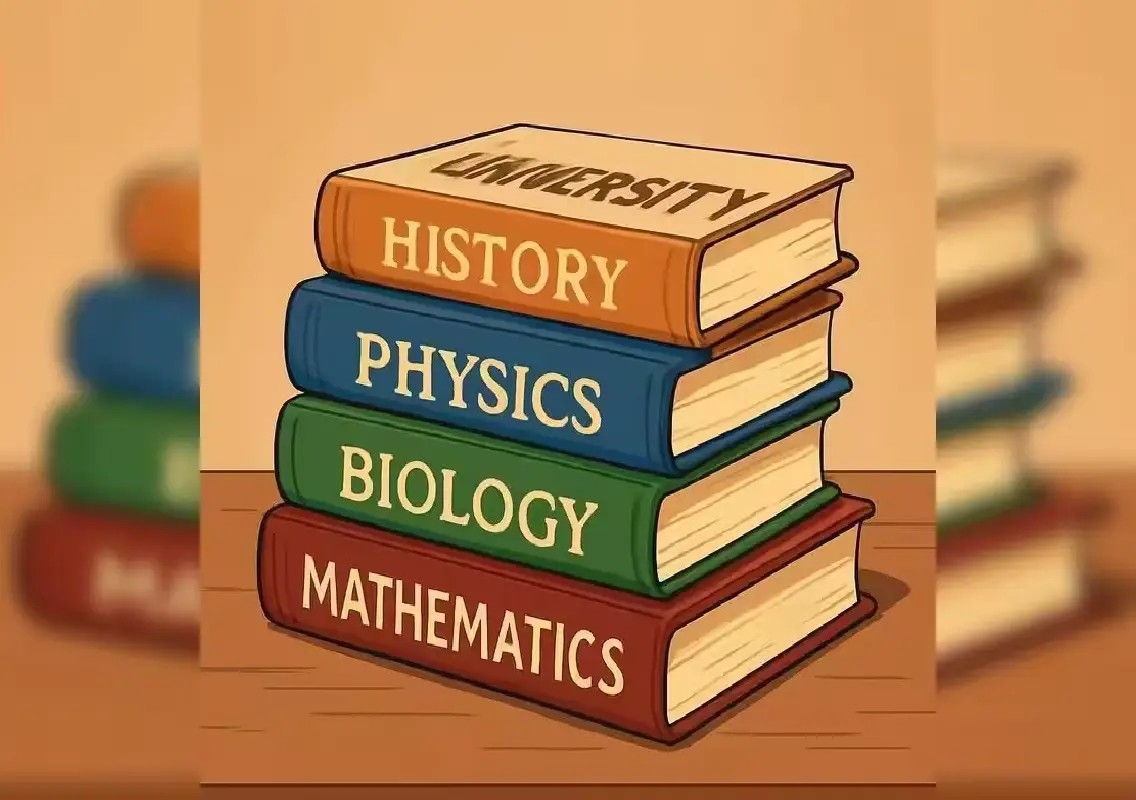


Mysuru: Karnataka State Open University (KSOU) has decided to discontinue the distribution of e-books and restore printed textbooks for students enrolled in its various programmes from the academic year 2026-27. The move is expected to benefit more than 1.25 lakh learners studying through the university.
The decision comes after students, particularly those from rural areas and older age groups, reported difficulties in accessing and using digital study materials. The university had shifted to e-books during the Covid-19 pandemic as part of its digitalisation efforts.
Printed textbooks to return after digital shift
KSOU had introduced digital textbooks during the pandemic following complaints and concerns surrounding irregularities in the printing and distribution of physical study materials.
Under the digital system, students were required to download the university’s mobile application and access PDFs and e-textbooks corresponding to their respective courses and programmes.
While the move helped reduce dependence on printed material and offered convenient access to study resources for students with suitable devices, it also created difficulties for a section of KSOU’s student community.
Students without reliable access to smartphones, computers or tablets found it challenging to regularly access their study materials.
Rural students faced difficulties
University authorities noted that KSOU caters to students from diverse backgrounds and age groups across Karnataka.
Its student community includes women, homemakers, middle-aged learners and senior citizens, apart from younger students. A significant number of learners are also based in rural areas.
For many of these students, studying lengthy materials on smartphones and computers for extended periods proved difficult.
Technical problems while accessing or downloading e-books further added to the difficulties faced by some learners. Students who preferred physical textbooks were also required to bear the cost of printing PDF study materials, adding to their financial burden.
University officials said these concerns were taken into consideration while deciding to bring back printed textbooks.
Every student to receive physical study material
KSOU Vice-Chancellor A P Gnanaprakash has now restored the distribution of printed textbooks for students from the current academic year.
Under the revised system, every student enrolled in the university will receive physical study materials for their respective programmes.
The university believes that printed textbooks will make learning more accessible, particularly for students who face technological or financial constraints in using digital materials.
The move also aims to provide students with a more convenient way of studying away from digital devices.
Committee formed to ensure transparency
To prevent the problems that had previously been associated with the printing and distribution of study materials, KSOU has constituted a technical committee to oversee the process.
The committee will monitor the printing and distribution of textbooks and work towards ensuring transparency throughout the process.
The university has said that necessary preparations have been made to ensure that textbooks and other study materials reach students on time.
The decision is also aimed at addressing concerns regarding delays in the supply of physical books that had been reported in the past.
Nearly eight lakh textbooks to be printed
According to Gnanaprakash, KSOU has floated a tender for printing nearly 8 lakh textbooks required for around 1.2 lakh students enrolled in various courses and semesters.
The large-scale printing exercise is expected to cover study materials required across the university’s different programmes.
Gnanaprakash said the textbooks would be delivered to students’ doorsteps by September 15.
The home-delivery system is expected to make it easier for students, particularly those living in rural and remote areas, to receive their course material without having to travel to university offices or study centres.
170 study centres given directions
KSOU has also held meetings with the heads of its 170 study centres across Karnataka.
The university has issued directions to the centres to ensure smooth academic operations, timely delivery of textbooks and other study materials and proper coordination with students.
The centres have also been instructed to ensure that examinations are conducted transparently and without any scope for malpractice.
The university’s move to strengthen monitoring at study centres is intended to improve academic administration alongside the restoration of printed textbooks.
Balancing accessibility with digitalisation
The decision marks a shift in KSOU’s approach to study materials after several years of increasing reliance on digital resources.
Although digital textbooks provide advantages such as easy storage, portability and immediate access, university authorities have recognised that not all students have the same level of access to technology.
For an open university with a diverse student population, accessibility remains a key consideration. Printed textbooks can be read without electronic devices, do not require internet connectivity and can be retained by students for future reference.
KSOU’s decision therefore seeks to address the practical difficulties experienced by learners while continuing to improve its administrative and academic systems.
With nearly eight lakh textbooks being printed and delivery planned by September 15, the university is now preparing to implement the restored physical study material system across its student base from the 2026-27 academic year.