









Mysuru: Regular walkers and visitors to Lingambudhi Lake in Ramakrishnanagar will have to pay an entry fee from September 1, following a decision by the Forest Department to introduce charges at the popular green space. The move has triggered opposition from morning walkers, senior citizens and local organisations who use the lake and its surrounding park regularly.
Under the new fee structure, adults will have to pay ₹10 for a daily visit or ₹250 for a monthly pass. Senior citizens can obtain a monthly pass for ₹200, while the daily fee remains ₹10. Children will have to pay ₹5 per day or ₹100 for a monthly pass.
The Forest Department has put up a notice at the entrance announcing the revised system. The decision has sparked criticism among regular visitors, many of whom have been using the lake area for walking, jogging, exercise and spending time outdoors.
Entry fee to begin from September 1
The new charges will come into effect from September 1.
According to the notice displayed at the entrance, adults can choose between a ₹10 daily ticket and a ₹250 monthly pass. Senior citizens can purchase a monthly pass for ₹200, while children will be charged ₹5 per day or ₹100 for a monthly pass.
The introduction of the fee means that people who have traditionally used Lingambudhi Lake as a free public space for their daily walks will now have to pay to access the area.
For frequent visitors, the monthly pass may prove more economical than paying the daily fee.
Regular walkers oppose the move
The decision has drawn sharp criticism from people who regularly visit the lake.
Lingambudhi Lake has become a popular destination for morning walkers and evening strollers, with several hundred people reportedly visiting the area every day. The walking path is also used by young sportspersons for jogging, while senior citizens use the park to spend time with family members.
Regular visitors have questioned the decision to impose a fee on people who use the area primarily for walking and exercise.
Many believe that charging people for accessing a natural public space could discourage some residents from visiting the lake regularly.
Why has the Forest Department introduced the fee?
The Forest Department’s decision follows a Government order directing the department to collect entrance fees at Tree Parks.
Lingambudhi Lake is part of an approximately 80-acre forest area developed as a Tree Park. The Forest Department maintains the area using its internal resources.
The department had previously considered introducing an entry fee at the lake in 2022. However, the proposal was withdrawn following protests by the Lingambudhi City Garden Walkers Association.
The latest decision has therefore revived an issue that had already generated opposition several years ago.
Signature campaign launched against fee
Opposition to the entry fee has already taken an organised form.
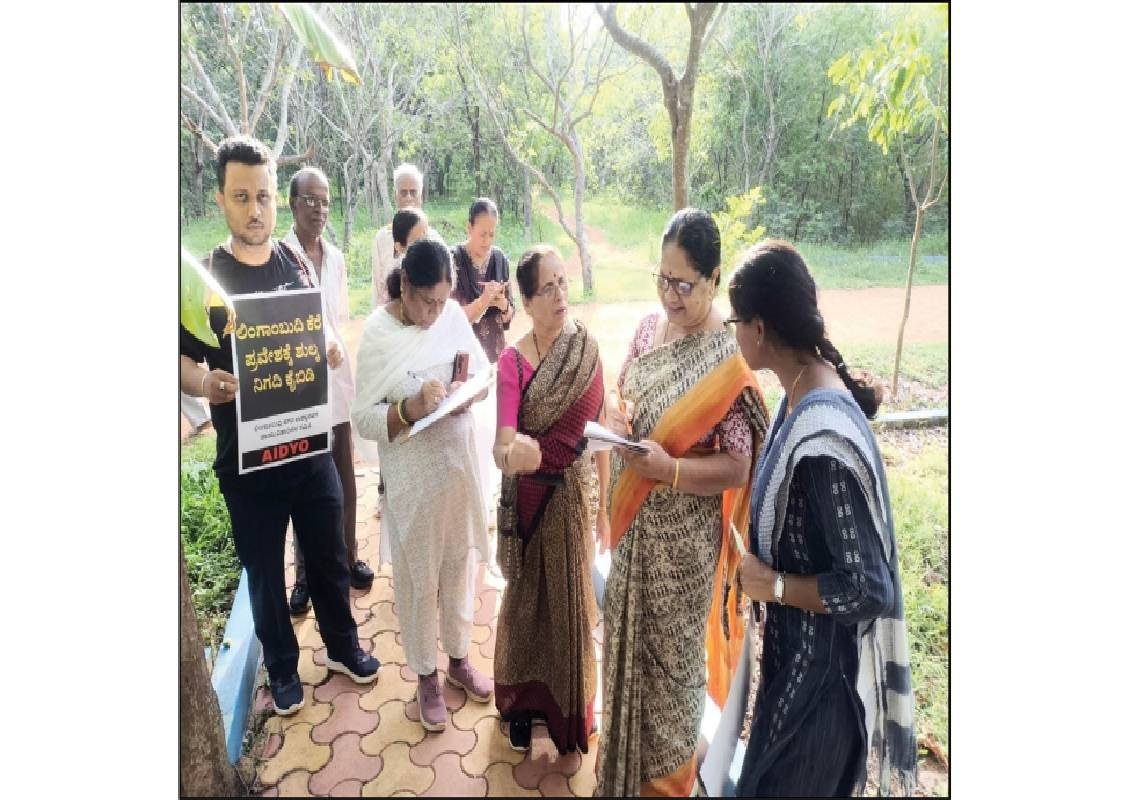
A signature campaign was held on August 26 to protest the proposed charges. Members of local organisations participated in the campaign and collected hundreds of signatures from people opposed to the fee.
The campaign was supported by members of Lingambudhi Mitrara Balaga, the All India Democratic Youth Organisation and the Lingambudhi Walkers Association.
The organisers are seeking public support to urge authorities to reconsider the decision.
Protest planned on August 30
The opposition is expected to intensify in the coming days.
Members of the three organisations involved in the campaign have announced plans to stage a demonstration in front of the park on August 30.
The protest is expected to bring together regular walkers, local residents and members of organisations opposing the entry fee.
The groups are likely to demand that the Forest Department withdraw the charges and allow residents to continue using the walking area without payment.
Lingambudhi Lake attracts hundreds every day
Lingambudhi Lake is one of the well-known natural spaces in Mysuru.
The green surroundings and walking paths make it particularly popular among people looking for a quiet place for exercise and recreation.
Morning walkers regularly visit the area, while evening visitors use the surroundings for walking and relaxation.
Young people also use the walking path for jogging and other physical activities.
The introduction of an entry fee could therefore affect a large number of regular users.
Senior citizens among regular visitors
Senior citizens are among the groups that frequently use the lake area.
Many elderly residents visit Lingambudhi Lake for their daily walks and to spend time outdoors.
The Forest Department has provided a separate monthly pass category for senior citizens at ₹200, while their daily entry fee is ₹10.
However, the concession has not prevented criticism from people who believe that walking and basic outdoor exercise should remain accessible without an entry charge.
Monthly passes announced
The Forest Department’s fee structure provides visitors with the option of buying monthly passes.
For adults, the monthly pass costs ₹250.
Senior citizens will have to pay ₹200 per month, while children can obtain a monthly pass for ₹100.
The monthly option could be useful for people who visit the lake almost every day.
For an adult visiting regularly, a monthly pass would become cheaper than paying ₹10 every day over the course of a month.
Lake is part of a protected natural area
Lingambudhi Lake is not simply a recreational walking space.
The lake and its surrounding forest have ecological importance and provide habitat for various forms of flora and fauna.
The area has been developed as a Tree Park and is maintained by the Forest Department.
The natural surroundings are one of the major reasons residents visit the area.
The department’s responsibility to maintain the park and protect its ecological features is also being cited in the context of the new fee.
Historical significance of Lingambudhi Lake
Lingambudhi Lake has a long history associated with the Mysuru royal family.
According to historical records, Maharaja Mummadi Krishnaraja Wadiyar built the lake in 1828 in memory of his wife, Maharani Krishnavilasa Lingarajammanni. The lake originally covered approximately 250 acres.
The historic water body remains an important part of Mysuru’s landscape more than a century later.
Its combination of history, greenery and biodiversity has helped make the lake a popular destination for local residents.
Water body and forest area
The lake itself currently covers approximately 150 acres, while the reserve forest extends over around 100 acres, according to the report.
The surrounding natural environment adds to the ecological value of the location.
A historic Mahalingeshwara Temple is also situated on the lake premises.
A stone mantap stands on the lake bund, adding to the area’s historical and cultural significance.
Walking space has become a daily routine
For many residents, visiting Lingambudhi Lake is more than a recreational activity.
Morning walks, jogging and evening strolls have become part of the daily routine for people living in nearby neighbourhoods.
The walking path provides an alternative to busy roads and urban surroundings for those looking for a peaceful place to exercise.
The proposed charges have therefore raised concerns about whether regular walkers should have to pay for a routine activity.
Department cites maintenance requirements
The Forest Department maintains the Lingambudhi Tree Park using internal resources.
The introduction of an entrance fee is linked to the government directive concerning Tree Parks.
Revenue collected through entry charges could potentially support the maintenance and management of such areas.
However, the current opposition indicates that visitors want greater clarity about how the money collected from the public will be used.
Earlier proposal withdrawn after protest
This is not the first time the Forest Department has attempted to introduce an entry fee at Lingambudhi Lake.
A similar proposal was made in 2022.
At the time, the Lingambudhi City Garden Walkers Association protested against the move, following which the department withdrew the proposal.
The revival of the entry fee has therefore brought back the earlier dispute between authorities and regular visitors.
Public space versus revenue collection
The controversy has raised a broader question about the use of public recreational spaces.
While authorities need funds to maintain parks, forests and other public facilities, regular visitors argue that basic activities such as walking and jogging should not necessarily come with a cost.
The disagreement is particularly significant because Lingambudhi Lake is used heavily by local residents rather than only tourists.
The Forest Department will now have to address these concerns as the September 1 deadline approaches.
Impact on daily walkers
The ₹10 daily charge may appear modest, but frequent visitors could face a recurring expense.
Someone visiting every day would spend approximately ₹300 over 30 days if paying the daily fee.
The ₹250 monthly pass offers some relief for regular adult visitors.
However, residents who have used the lake without paying for years may still object to the principle of having to purchase a pass for access.
Children also included in fee structure
Children have been included in the new fee structure.
They will have to pay ₹5 for daily entry or ₹100 for a monthly pass.
Families who visit the park together could therefore have to pay separate charges depending on the number of members and their age categories.
This could influence how often some families choose to visit the lake.
Demonstration likely to draw attention
The planned August 30 demonstration could put further pressure on the Forest Department.
The participating organisations have already collected hundreds of signatures through their campaign.
The protest provides an opportunity for regular visitors to directly communicate their concerns to the authorities.
Whether the department will reconsider the decision remains to be seen.
What visitors need to know
From September 1, visitors should be prepared for the new entry system unless the Forest Department changes its decision.
Adults will be charged ₹10 per day or ₹250 for a monthly pass.
Senior citizens will pay ₹10 daily or ₹200 monthly, while children will pay ₹5 daily or ₹100 monthly.
People who visit frequently may therefore find the monthly pass more economical.
Lingambudhi remains a popular green space
Despite the controversy over the fee, Lingambudhi Lake continues to be one of Mysuru’s popular green spaces.
Its combination of a historic lake, tree cover, walking paths and natural surroundings makes it attractive to residents.
The area also provides an important recreational space in an expanding urban environment.
The challenge for authorities will be to balance conservation and maintenance requirements with public access.
Ecological importance adds to debate
The lake’s natural surroundings are also important for biodiversity.
Maintaining the ecological character of the area requires resources and careful management.
Visitors and environmental groups may therefore acknowledge the need for maintenance while still questioning whether a general entry fee is the best way to fund it.
Greater transparency about the purpose and use of the revenue could help address some of these concerns.
A decision that has revived an old debate
The latest fee announcement has revived a debate that first emerged in 2022.
While the government order provides the basis for collecting entrance fees at Tree Parks, local walkers have argued that Lingambudhi Lake serves an important public purpose.
The coming days could determine whether the Forest Department proceeds with the fee unchanged or considers requests from residents and local organisations.
Conclusion
Mysuru: Walking at Lingambudhi Lake will no longer be free from September 1, with the Forest Department introducing an entry fee of ₹10 per day for adults and senior citizens. Adults can also purchase a ₹250 monthly pass, while senior citizens will pay ₹200. Children will be charged ₹5 daily or ₹100 monthly.
The decision follows a government order directing the Forest Department to collect entrance fees at Tree Parks. Lingambudhi Lake forms part of an approximately 80-acre forest area developed as a Tree Park and maintained by the department.
However, the move has triggered opposition from regular walkers and local organisations. A signature campaign has already collected hundreds of signatures, and a demonstration has been planned for August 30.
With several hundred people using the lake every day for walking, jogging and recreation, the controversy is likely to continue as the September 1 implementation date approaches. The key question now is whether the Forest Department will proceed with the charges or respond to demands from residents to keep the popular walking space free.