









Mysuru: Recent large-scale ganja seizures in Mysuru and Mandya districts have once again highlighted the existence of a well-established narcotics supply route linking cannabis-producing regions in Odisha and Andhra Pradesh with southern Karnataka.
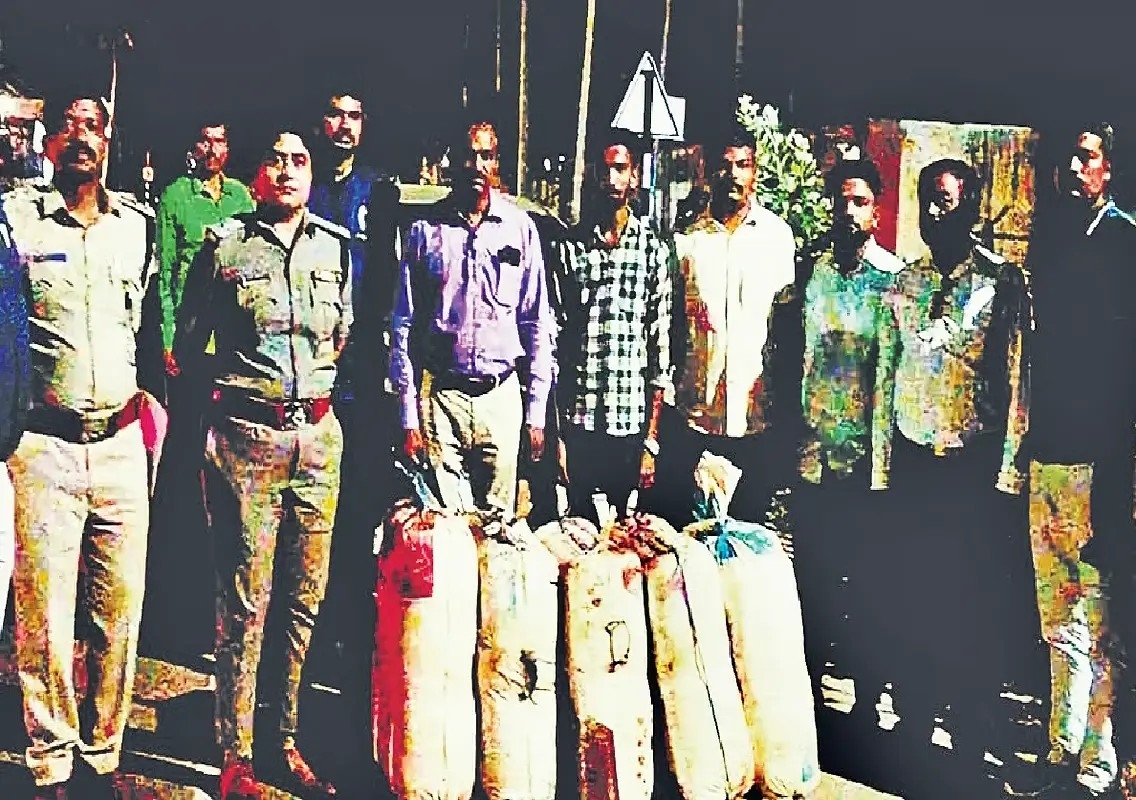
The issue came into focus after Mysuru City Police seized nearly 280 kg of ganja last week, followed by the recovery of another 110 kg in neighbouring Mandya district on Wednesday. Investigators believe these incidents are not isolated cases but part of a broader trafficking network that has been operating across multiple states for several years.
Police officials say the repeated interception of large consignments points to an organised supply chain involving cultivators, transporters, intermediaries and local distributors who facilitate the movement of narcotics from eastern India to markets across the south.
Well-established supply chain under scrutiny
Mysuru investigators have indicated that substantial quantities of ganja cultivated in remote forest regions along the Odisha-Andhra Pradesh border are being transported to Karnataka through a structured network of traffickers.
According to police sources, the narcotic is moved from cultivation areas in eastern India and routed through Andhra Pradesh before entering Karnataka. Once inside the state, consignments are transported through districts such as Mysuru, Mandya and Chamarajanagar.
Authorities believe the region has emerged as a significant transit hub, with drugs either sold locally or redistributed to larger markets in Bengaluru, Kerala and parts of Tamil Nadu.
The recurring seizures have raised concerns among law enforcement agencies about the scale and sophistication of the trafficking operations involved.
Highways increasingly used for transportation
Investigators say traffickers are increasingly relying on national and state highway networks to transport narcotics over long distances.
Vehicles carrying ganja often travel through Andhra Pradesh before reaching southern Karnataka. Officials note that transporters frequently use a variety of vehicles to avoid attracting attention, including private cars, tourist vehicles, goods carriers and occasionally public transport services.
To evade detection, traffickers allegedly conceal the narcotic among legitimate cargo, agricultural produce and other goods being transported across state borders.
Law enforcement agencies believe the widespread road connectivity between eastern and southern India has made the transportation of illegal substances easier for organised networks.
Mysuru’s location attracts trafficking networks
Police officials point out that Mysuru’s geographical location has contributed to its emergence as a preferred transit point for drug syndicates.
The city serves as an important transportation hub with strong road connectivity to Bengaluru, Kerala and several districts of southern Karnataka. This strategic position enables traffickers to redistribute consignments efficiently across multiple destinations.
Investigators believe criminal networks exploit the region’s transport infrastructure to move narcotics without drawing suspicion, making enforcement efforts more challenging.
Authorities have also noted that increasing urban demand and the profitability of the illegal trade continue to fuel trafficking activities.
Profits driving illegal trade
According to investigators, one of the primary reasons behind the continued flow of ganja into Karnataka is the substantial profit margin available to traffickers.
Cannabis purchased at relatively low prices near cultivation zones in Odisha and Andhra Pradesh can reportedly fetch significantly higher prices in urban centres across southern India.
The large financial returns have encouraged organised groups to maintain supply routes despite repeated police crackdowns and seizures.
Officials say dismantling trafficking networks requires coordinated action between law enforcement agencies in multiple states, particularly in regions where cultivation, transportation and distribution activities occur.
Repeated seizures raise concerns
What has particularly alarmed investigators is the frequency with which large consignments are being intercepted. Over the past several years, police across Karnataka have seized hundreds of kilograms of ganja in multiple operations.
Despite these enforcement efforts, authorities acknowledge that the supply chain remains active, suggesting that traffickers continue to adapt their methods and routes.
The recent seizures in Mysuru and Mandya have prompted renewed efforts to identify key operators, financiers and distribution networks involved in the trade.
Police are expected to intensify surveillance on major transportation corridors and strengthen intelligence-sharing mechanisms with neighbouring states to curb the movement of narcotics.
Conclusion
The recent recovery of nearly 390 kg of ganja in Mysuru and Mandya districts has once again drawn attention to the narcotics corridor connecting Odisha and Andhra Pradesh with southern Karnataka. As investigators uncover the extent of the trafficking network, authorities are focusing on disrupting supply chains, strengthening inter-state coordination and preventing the region from being used as a major transit route for illegal drugs.