









Mysuru: Child protection agencies in Mysuru have drawn up a special action plan to prevent child begging and strengthen the safety of vulnerable children during Dasara 2026.
The Child Welfare Committee (CWC), District Child Protection Unit (DCPU) and other agencies have identified seven locations where children are frequently found begging during the festival. Two teams comprising officials, NGO representatives, child helpline personnel and student volunteers will monitor these areas in two shifts between 6 am and 9 pm.
The measures come ahead of the 11-day Mysuru Dasara celebrations scheduled from October 11 to 21.
Seven locations identified for monitoring
The child protection agencies have mapped seven areas considered vulnerable to child begging during the Dasara season.
The locations are:
- Starting point of the Bengaluru-Mysuru National Highway
- Bogadi Junction
- City Bus Stand and KSRTC Suburban Bus Stand
- Dasara Exhibition Grounds
- RMC
- Mysuru Zoo
- Karanji Lake area
These locations are expected to see increased movement of tourists, visitors and temporary vendors during the festival.
The monitoring teams will keep watch for children found begging and intervene where necessary to ensure that they are not exposed to unsafe conditions or exploitation.
Two teams to work from 6 am to 9 pm
Two teams have been formed to cover the identified hotspots.
The teams will work in two shifts between 6 am and 9 pm, allowing the authorities to maintain surveillance throughout the main hours of public activity.
The teams will include DCPU staff, representatives of NGOs and the Child Welfare Committee, child helpline personnel and students pursuing Master of Social Work (MSW) courses.
The combination of government officials, child-care organisations and student volunteers is intended to increase the reach of the monitoring exercise during the festival.
The teams will also identify children who may require immediate care, protection or rehabilitation.
Rescued children to be sent to homes
Children rescued from begging during Dasara will be shifted to designated boys’ and girls’ homes, according to the child protection authorities.
The children will be provided learning spaces and activities while they remain under institutional care.
Officials have also indicated that children rescued during the festival will not be immediately released if there is a risk that they could return to begging.
The approach is aimed at preventing a cycle in which children are temporarily removed from the streets but return to begging soon afterwards.
The authorities will assess the circumstances of the children and provide appropriate care and support.
Screening centres planned at transport hubs
The authorities are also planning screening centres at the railway station and two bus stations in Mysuru.
These centres will help collect details of migrant families arriving in the city during the festival season, including their contact numbers.
The information is intended to help officials monitor the families and provide support where required.
Mysuru sees a significant increase in the movement of visitors and temporary workers during Dasara. Families from different parts of Karnataka and neighbouring States also arrive in the city to earn a livelihood during the festival.
The screening exercise is therefore intended to help authorities identify vulnerable children and families at an early stage.
Special facility for lactating women
The child protection authorities are also planning a dedicated facility for lactating women who are engaged in begging.
The facility is intended to provide a safer environment for mothers and infants during the festival.
Officials said the broader objective is to address the circumstances of vulnerable families rather than simply remove children from public spaces.
The arrangements are part of a wider child-safety effort planned for the festival period.
Action plan follows 2025 Dasara tragedy
The intensified measures follow the rape and murder of a 10-year-old girl from a nomadic community during the 2025 Mysuru Dasara.
The girl had travelled to Mysuru with her parents to sell balloons during the festival. She was abducted from a temporary shelter near the Dasara Exhibition Grounds on October 8, 2025, and her body was found the following morning.
The case led to heightened concern over the safety of migrant families and children who stay in temporary shelters during Dasara.
Police subsequently arrested a man in connection with the case after an investigation that included CCTV examination.
The previous incident has prompted authorities to pay greater attention to families who arrive in Mysuru during the festival and to the conditions in which children stay.
Migrant families to receive greater attention
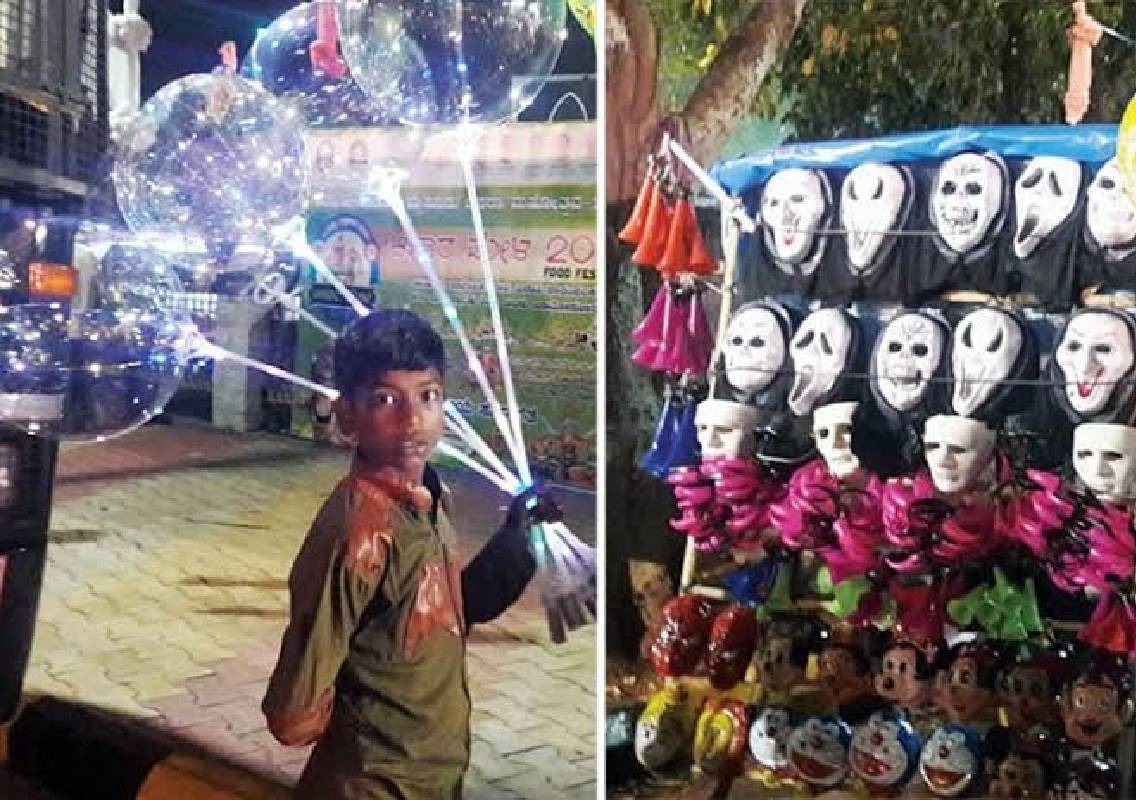
Several families traditionally arrive in Mysuru during Dasara to sell balloons, toys and other items.
Many stay in temporary tents around areas close to the Palace and other busy parts of the city. Their presence increases during the days leading up to Vijayadashami.
Child protection authorities are now working with police and other agencies to ensure that children accompanying these families are protected.
The monitoring teams will also help officials identify children who may be at risk because of unsafe accommodation, lack of supervision or exposure to begging.
The focus is therefore not limited to preventing child begging but also includes broader protection and support.
Authorities aim for child-friendly Dasara
Child rights advocates have called for a child-friendly Dasara, particularly after the incidents involving vulnerable children during the previous festival.
The authorities’ plan seeks to combine surveillance, screening, rescue and rehabilitation rather than relying only on enforcement.
The official Mysuru Dasara website also provides dedicated emergency and child-safety information, including instructions to contact police or emergency services if a child goes missing during the festival.
The approach is particularly important as large crowds gather around the Palace, Exhibition Grounds, Zoo and other tourist locations during Dasara.
Monitoring to continue through festival
The two teams will remain active during the festival period, covering the seven identified hotspots in shifts.
Their work will include identifying children engaged in begging, coordinating with child protection authorities and ensuring that rescued children are moved to appropriate care facilities.
Officials will also use information gathered through the screening centres to monitor migrant families and provide support where necessary.
The aim is to ensure that children accompanying families who come to Mysuru for seasonal work are not left vulnerable amid the crowds and temporary living conditions.
Conclusion
Mysuru’s child protection agencies will deploy two teams to monitor seven child-begging hotspots during Dasara 2026. The teams will work from 6 am to 9 pm and include DCPU staff, CWC and NGO representatives, child helpline personnel and MSW student volunteers.
Children rescued from begging will be placed in designated homes and provided with learning activities, while screening centres at the railway station and two bus stations will help authorities monitor migrant families. The measures follow concerns over child safety during the previous Dasara.