







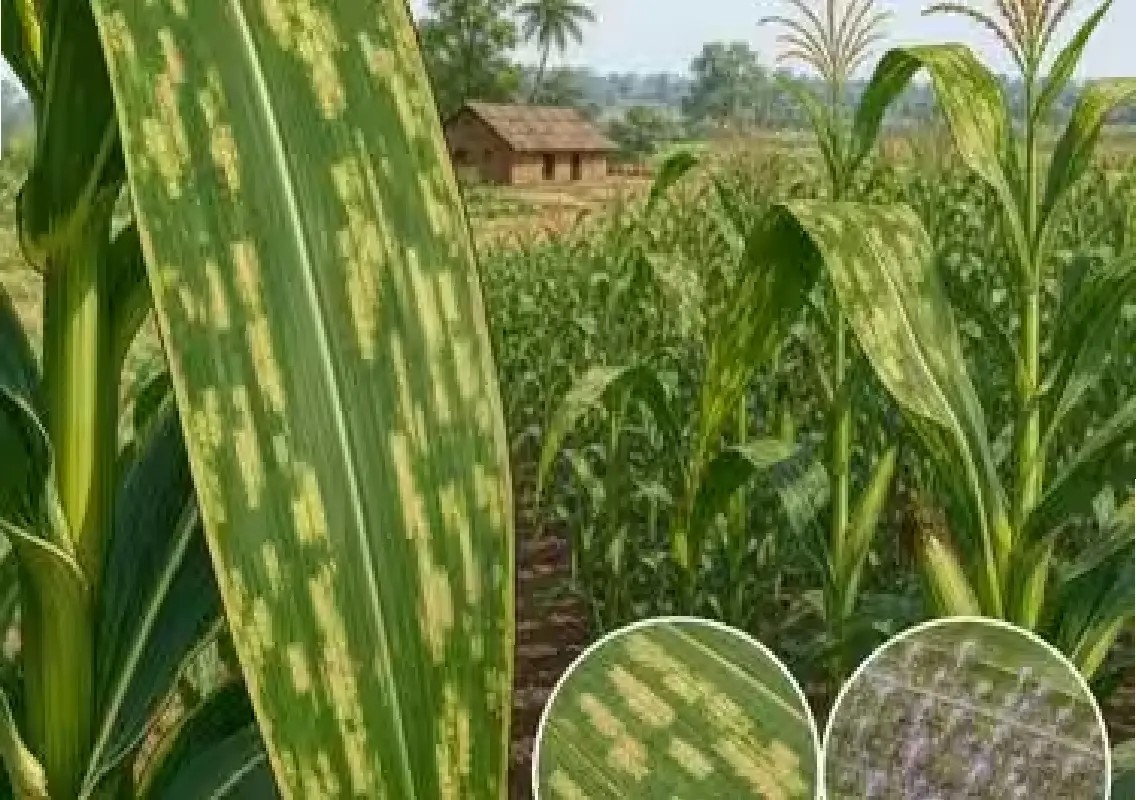


Mysuru: The district agriculture department has proposed a crop holiday for maize cultivation in Mysuru in an effort to control the recurring spread of downy mildew, a disease that has caused significant losses to farmers over the past few years.
The department has submitted a proposal to the Agriculture Commissioner’s office seeking approval for the measure. If approved, farmers may be encouraged to temporarily shift from maize to alternative crops, while certain incentives associated with maize cultivation could also be suspended during the proposed crop holiday.
The move comes as the district continues to record extensive maize cultivation despite repeated problems caused by diseases and pests.
Crop holiday proposed to control disease
Agriculture department officials believe a temporary break in maize cultivation could help interrupt the disease cycle and reduce the spread of downy mildew.
K.H. Ravi, Joint Director of the Agriculture Department, said a crop holiday was necessary to contain the disease and confirmed that a proposal had been submitted to the commissioner’s office.
Under the proposed arrangement, farmers could be encouraged to cultivate alternative crops during the period instead of planting maize.
The department is also considering whether certain incentives, including the distribution of maize seeds, should be suspended during the crop holiday.
The proposal is still awaiting approval, and the exact duration and implementation mechanism will depend on the decision of the Agriculture Commissioner’s office.
Maize cultivation covers 48,726 hectares
Maize remains one of the major crops cultivated in Mysuru district.
According to the latest Agriculture Department data, maize sowing has reached 98.4% of the targeted area during the current southwest monsoon season.
The crop has been cultivated across more than 48,726 hectares in the district, reflecting its popularity among farmers.
Maize is considered relatively attractive because it requires comparatively less maintenance and can provide favourable returns under suitable conditions.
However, the increasing incidence of diseases and pest attacks has raised concerns about the sustainability of continued maize cultivation in affected areas.
Downy mildew remains a major concern
Downy mildew has emerged as one of the most serious problems faced by maize growers in Mysuru.
Farmers and officials have reported that the disease has been recurring for the past two to three years, with some growers suffering substantial crop losses.
The disease is not the only challenge affecting maize cultivation. Leaf blight and fall armyworm infestation have also been reported in maize fields.
The combination of fungal diseases and pest attacks can affect crop health and productivity, increasing the financial risks for farmers.
Agriculture officials are therefore considering a broader approach rather than relying solely on measures to control the disease after crops have been planted.
Farmers consider alternative crops
Some farmers have already begun moving away from maize in response to repeated losses.
P. Marankaiah, Mysuru district general secretary of the Karnataka Rajya Raitha Sangha, said downy mildew had been spreading across the district for the past two to three years.
He said he had suffered heavy losses from the disease last year and consequently decided against cultivating maize this year.
Other farmers have also reportedly started uprooting infected maize plants and shifting to alternative crops.
Chandra J.S., a farmer from Saragur, said several growers were removing infected crops and opting for other agricultural crops.
Such decisions indicate the growing concern among farmers over repeated expenditure on cultivation without certainty of returns.
Disease issue raised with district minister
Farmers have also brought the problem to the attention of district minister Yathindra Siddaramaiah during his recent visit to drought-affected areas.
The concerns raised by growers included recurring disease outbreaks and pest attacks that have affected maize cultivation in different parts of the district.
Farmers are seeking effective measures to protect crops while also reducing the financial impact of repeated disease outbreaks.
The proposed crop holiday is one of the measures being considered by the Agriculture Department in response to these concerns.
Fall armyworm incidence lower this year
Fall armyworm continues to be another concern for maize growers in Karnataka.
The pest was first detected in maize fields in Shivamogga district in 2018 and subsequently became a major challenge for farmers in several parts of the state.
Agriculture Department officials, however, said the incidence of fall armyworm in Mysuru district this year has been lower compared with previous years.
Despite the reduction, officials continue to monitor maize fields because pest populations can fluctuate depending on weather conditions and cropping patterns.
The simultaneous presence of downy mildew, leaf blight and fall armyworm has made maize cultivation increasingly challenging for farmers in affected areas.
Crop diversification may be encouraged
If the proposed crop holiday receives approval, the Agriculture Department may encourage farmers to adopt alternative crops during the period.
Crop diversification could help reduce dependence on maize and potentially break the cycle of diseases that build up when the same crop is repeatedly cultivated in an area.
However, any such move would need to take into account market demand, availability of suitable seeds, irrigation facilities, input costs and the expected returns from alternative crops.
Farmers are also likely to seek clarity on compensation or incentives if they are asked to temporarily discontinue a crop that has become an important source of income.
The suspension of maize seed distribution and other incentives, if implemented, could further encourage growers to explore alternative crops.
Decision awaits government approval
The Agriculture Department’s proposal is now before the Agriculture Commissioner’s office for consideration.
Until approval is granted, farmers are expected to continue making cultivation decisions based on prevailing agricultural and market conditions.
The proposed crop holiday reflects the department’s attempt to address the underlying causes of recurring disease rather than repeatedly treating affected crops.
For Mysuru’s maize growers, the final decision will be significant as the crop occupies nearly 49,000 hectares and remains one of the district’s preferred choices.
A carefully planned crop diversification strategy, combined with disease surveillance and farmer support, could help reduce losses while protecting agricultural incomes.