







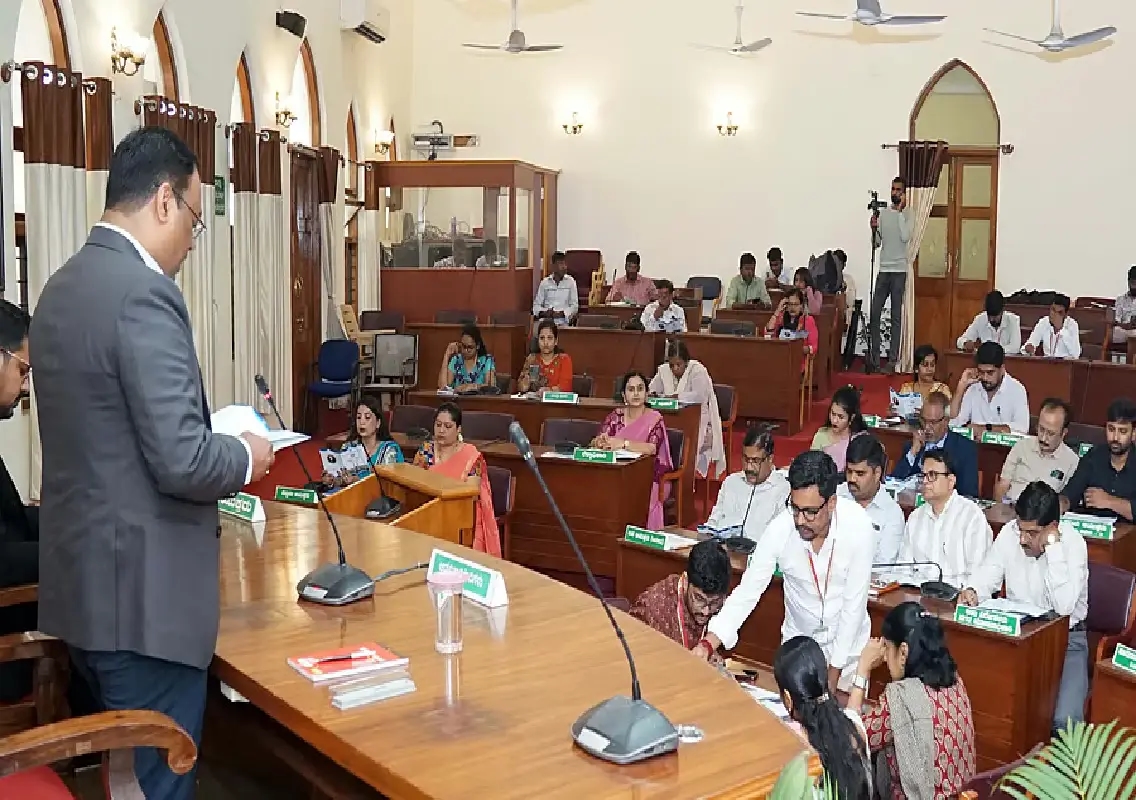


Mysuru: The Mysore City Corporation (MCC) has outlined an ambitious roadmap for urban development and sustainability in its latest budget, featuring a mix of infrastructure upgrades, green initiatives, and citizen-centric amenities.
The civic body aims to transform Mysuru into a clean, attractive, and model city through a series of planned projects focusing on cleanliness, environmental conservation, and improved public facilities.
Central Business District revamp planned
A key highlight of the budget is the proposal to systematically develop the Central Business District (CBD). The Mysore City Corporation plans to ensure round-the-clock cleanliness, scientific waste management, and eco-friendly beautification measures in the area.
Officials believe that improving the CBD will significantly enhance the city’s image while boosting tourism and commercial activity.
‘Green Property Tag’ to promote eco-friendly living
In a bid to encourage sustainable lifestyles, the Mysore City Corporation has proposed introducing a ‘Green Property Tag’.
Properties adopting environmentally friendly practices such as solar power usage, rainwater harvesting, solid waste segregation, and composting of wet waste will be awarded this tag. The initiative is expected to create awareness and incentivise residents to adopt greener practices.
Waste-to-wonder park initiative
Promoting the concept of zero waste, People’s Park will be developed into a ‘waste-to-wonder park’ under a public-private partnership (PPP) model.
The park will feature creative installations made from waste materials, including plastic, serving both as an educational and recreational space. This initiative aims to raise awareness about recycling and sustainability while offering a unique attraction for visitors.
Boost to culture and green spaces
Recognising Mysuru’s status as Karnataka’s cultural capital, the civic body has proposed developing Chaluvamba Park at a cost of ₹20 crore. The park will host outdoor music concerts and cultural events to support local artists and promote tourism.
The MCC also plans to expand green cover by developing three new Miyawaki-style forests, including at Saalumarada Thimmakka Park. Additionally, 13,000 saplings will be planted in areas with insufficient greenery.
Information boards will be installed in all 585 parks, while efforts will continue to encourage public participation through initiatives like ‘Namma Mysuru–Namma Koduge’, under which citizens adopt and maintain parks.
Health and sports infrastructure
The budget places emphasis on public health and fitness. The Mysore City Corporation plans to maintain 2,090 gym equipment installed across 172 parks and establish yoga and gym centres in pourakarmika colonies.
Major infrastructure projects include the development of Kumbarkoppal Stadium with modern facilities at a cost of ₹5 crore and additional works at Puttaraja Gavai Indoor Stadium for ₹1.10 crore.
Three swimming pools are also planned under a PPP model across Krishnaraja, Chamaraja, and Narasimharaja constituencies.
Food hubs and vendor support
To streamline street vending, the MCC will conduct a survey of street vendors, including geo-tagging and issuing business permits. Plans are also in place to establish dedicated street food hubs.
Additionally, ‘Akka Cafés’ will be set up at the MCC main office, along with five coffee kiosks at zonal offices, to be managed by self-help groups (SHGs), promoting local entrepreneurship.
Civic infrastructure upgrades
The budget outlines several projects aimed at improving civic amenities. These include the development of Town Hall at a cost of ₹3 crore and construction of markets in densely populated areas.
The MCC also plans to build heritage-style public toilets and develop people-friendly footpaths at a cost of ₹10 crore to improve pedestrian movement.
Other key works include upgrading major roads and drainage systems with an allocation of ₹30 crore, along with ₹30 crore earmarked for water supply and underground drainage (UGD) lines.
Welfare measures and community support
The civic body has also proposed maintaining destitute homes that have completed five years through partnerships with non-governmental organisations (NGOs), ensuring continued care for vulnerable sections of society.
Conclusion
The comprehensive budget presented by the Mysore City Corporation reflects a balanced approach towards urban development, sustainability, and citizen welfare. With a strong focus on green initiatives and infrastructure, Mysuru is poised to strengthen its reputation as one of Karnataka’s most well-planned and culturally vibrant cities.