







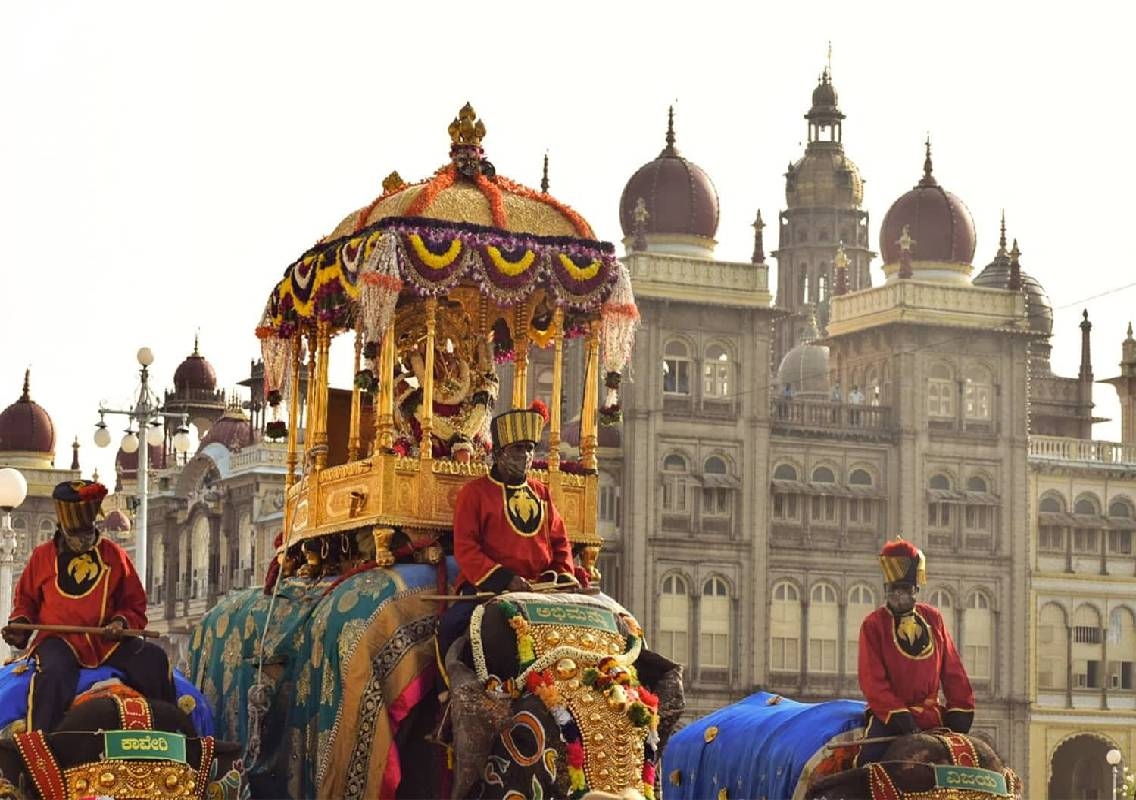


MYSURU: The historic city of Mysuru has ushered in its iconic Dasara celebrations, with 11 days of religious ceremonies, cultural performances, royal traditions and public events scheduled from October 11 to October 21. The festival, popularly known as Karnataka’s Nada Habba, will culminate in the grand Jamboo Savari procession on Vijayadashami, bringing together centuries-old traditions and contemporary cultural attractions.
Sri Abhinava Gavisiddheshwara Swami of Gavisiddheshwara Mutt in Koppal is inaugurating the festival at the Chamundeshwari Temple atop Chamundi Hill on Sunday. The inauguration puja is scheduled between 11.50 am and 12.13 pm, formally marking the beginning of this year’s public celebrations.
Mysuru Dasara is among Karnataka’s most prominent cultural festivals, attracting devotees, tourists and visitors from across the country. The celebrations centre on Goddess Chamundeshwari, whose victory over the demon Mahishasura is commemorated through religious rituals and the traditional procession. The Mysuru Palace, illuminated streets, cultural programmes and ceremonial events form an integral part of the annual festivities.
Mysuru Dasara begins with traditional inauguration
The inauguration at Chamundi Hill is one of the most significant rituals of Mysuru Dasara. The presiding deity, Goddess Chamundeshwari, is worshipped as the divine force who defeated Mahishasura, whose association with the region is reflected in Mysuru’s name and cultural identity.
The selection of Sri Abhinava Gavisiddheshwara Swami for the inauguration brings a spiritual dimension to this year’s celebrations. The pontiff, who heads Gavisiddheshwara Mutt in Koppal, is known for his work in water conservation, lake rejuvenation, education and community welfare.
Following the inauguration, the city will host events at several venues, including the Mysuru Palace, cultural institutions, exhibition grounds and public spaces. The programme is designed to showcase Karnataka’s artistic traditions while providing entertainment and visitor attractions throughout the festival.
Mysuru Palace to remain the centre of celebrations
The Mysuru Palace remains the principal symbol of the city’s Dasara festivities. The royal family’s traditions, ceremonial observances and the palace’s illumination are among the most anticipated attractions during the festival.
The palace is scheduled to be illuminated every evening from 7 pm to 10 pm during the celebrations. The lighting transforms the historic structure into a major attraction for residents and tourists, particularly those visiting Mysuru for the festival.
The royal tradition of the private durbar will also continue during the 11-day period. The ceremony reflects the historical connection between the Wadiyar dynasty and the festival, which evolved from a royal observance into a major public celebration.
Visitors can also explore other festival attractions, including the flower show at Kuppanna Park and the food fair at Maharaja’s College Grounds. The flower show is scheduled from October 11 to 21, while the food fair will continue until October 25, extending the range of activities available to visitors beyond the main festival dates.
Cultural programmes to showcase Karnataka’s heritage
Cultural performances form a central part of Mysuru Dasara, with programmes planned across the city during the festival. Music, dance, theatre and folk art performances provide opportunities for established artists and emerging performers to present Karnataka’s cultural traditions.
The Navaratri Rangotsava, organised by Rangayana, is scheduled from October 11 to 19 at the Vanaranga stage. The nine-day programme will feature plays and folk art performances, adding a strong theatrical component to the festivities.
The festival’s cultural calendar is intended to appeal to different audiences, including families, students, art enthusiasts and tourists. Such events also offer a platform for regional art forms and performances that might otherwise receive less visibility outside their local communities.
Alongside religious observances and royal ceremonies, the cultural programmes contribute to Mysuru’s reputation as a major destination for arts and heritage tourism.
Flower show, food fair and Kambala add to attractions
The celebrations extend beyond the palace and Chamundi Hill, with public attractions spread across different parts of Mysuru.
The flower show at Kuppanna Park will display floral arrangements and horticultural exhibits throughout the main festival period. The food fair at Maharaja’s College Grounds will offer visitors an opportunity to explore a variety of food options during the celebrations.
Traditional buffalo racing, known as Kambala, is also scheduled for October 18 and 19 near the VTU College area. The event adds another regional sporting tradition to the festival calendar.
These attractions are expected to provide visitors with a broader experience of Mysuru Dasara, combining heritage, food, horticulture, sport and entertainment.
The range of activities also means that visitors can plan their trips around individual events rather than attending only the main procession. However, event timings and access arrangements should be checked through official announcements before travel.
Jamboo Savari to mark the grand finale on October 21
The Jamboo Savari procession on Wednesday, October 21, will be the principal public highlight of Mysuru Dasara. The procession traditionally features a decorated elephant carrying the idol of Goddess Chamundeshwari in a golden howdah, accompanied by ceremonial groups and cultural tableaux.
The procession will begin from the Mysuru Palace and proceed towards Bannimantap. According to the official Dasara programme, the procession is scheduled after the floral tribute at the palace at approximately 4.10 pm.
The event is one of the most widely recognised elements of the festival and attracts large crowds. Decorated elephants, traditional music, folk performers and tableaux representing different themes contribute to the spectacle.
The Jamboo Savari represents the culmination of the festival’s religious and royal traditions. It also provides a public display of Karnataka’s cultural diversity, bringing together artistic performances and ceremonial elements along the procession route.
The torchlight parade at Bannimantap is another major attraction, scheduled for October 20 and 21. Visitors planning to attend the procession or parade should check official arrangements for entry, seating, parking and transport.
Tourism and public arrangements
Mysuru Dasara brings increased activity to the city’s hospitality, transport, retail and tourism sectors. Hotels, restaurants, local businesses and transport operators typically experience additional demand during the festival period.
The official Dasara website provides information about the event calendar, ticket bookings and visitor facilities. The administration has also listed 12 designated parking centres with free shuttle services to help visitors reach key locations.
Visitors are advised to plan their journeys in advance, particularly for the Jamboo Savari and other popular events. Reaching venues early, checking access restrictions and following instructions issued by the authorities can help make the experience smoother.
The celebrations also offer an opportunity to explore Mysuru’s historic landmarks, cultural institutions and surrounding attractions. For the city, Dasara remains both an important religious observance and a significant annual event for tourism and cultural promotion.
Mysuru celebrates a living cultural tradition
Mysuru Dasara continues to connect the city’s royal heritage with its contemporary cultural life. The 2026 programme brings together temple rituals, palace ceremonies, performances, food and horticultural exhibitions, traditional sport and the grand Vijayadashami procession.
The festivities will run through October 21, with the Jamboo Savari serving as the central public event. As residents and visitors participate in the celebrations, the festival once again places Mysuru’s traditions and cultural identity at the centre of Karnataka’s public life.
With its combination of religious significance, historic pageantry and citywide attractions, Mysuru Dasara remains one of the state’s defining annual celebrations.