







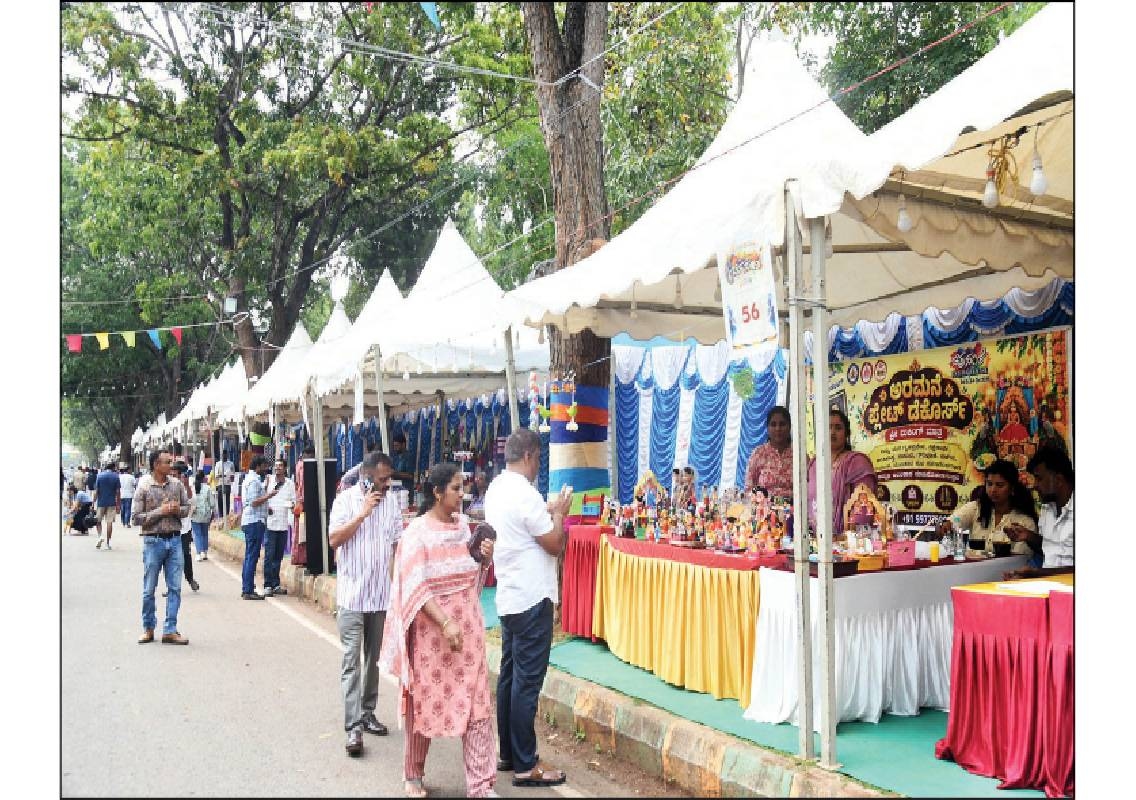


Mysuru: The two-day Dasara ChitraSanthe began at the Manasagangothri campus near the Clock Tower on October 2, transforming the University of Mysore campus into an open-air art gallery as part of the 2026 Dasara celebrations. The event brings together artists and art enthusiasts, offering visitors an opportunity to view and purchase paintings, sculptures, photographs and other creative works.
More than 50 art stalls have been set up along the campus stretch, featuring on-the-spot paintings, live demonstrations and finished artworks for exhibition and sale. The ChitraSanthe is open to the public from 8 am to 9 pm on October 2 and 3.
The annual art market has added a creative dimension to the Dasara festivities, with artists presenting works across several forms, including paintings, sculptures, clay toys, graphics, applied arts, photography, animation and textile design.
Manasagangothri transformed into open-air gallery
The Manasagangothri campus took on the appearance of a large open-air gallery as artists displayed their works along the designated stretch near the Clock Tower.
The ChitraSanthe began with a colourful procession featuring folk troupes. The procession started near the Kuvempu statue at the campus entrance and proceeded towards the Clock Tower, marking the formal opening of the art event.
The arrangement allows visitors to move between stalls and interact directly with artists. Alongside completed artworks, the event features artists demonstrating their creative processes through live painting and other activities.
The combination of exhibition and live demonstrations gives visitors an opportunity to see how different artworks are created while also supporting artists by purchasing their work.
Paintings, sculptures and other art forms on display
The ChitraSanthe features a broad range of artistic forms rather than focusing solely on traditional paintings.
Visitors can explore paintings, sculptures, clay toys, graphic works, applied arts, photography, animation and textile design. The variety is intended to appeal to different groups of visitors, including families, art enthusiasts, students and tourists visiting Mysuru during the Dasara season.
Several artworks displayed at the event draw on themes connected with nature, history and culture. Wildlife-themed works are among the attractions, while portraits of historical personalities such as Mahatma Gandhi and Dr B.R. Ambedkar are also featured.
Works depicting celebrated Kannada literary personalities add another local cultural element to the exhibition.
The presence of artists working in different media also gives the event a wider representation of contemporary and traditional artistic practices.
Yathindra Siddaramaiah inaugurates ChitraSanthe
District Minister Dr Yathindra Siddaramaiah formally inaugurated the ChitraSanthe by painting a picture and beating the drums.
Mysuru City Corporation Commissioner M.K. Savitha, who is also the Chairperson of the Dasara ChitraSanthe Sub-Committee, led the organisation of the event.
Speaking at the programme, Yathindra Siddaramaiah said the ChitraSanthe was being organised to encourage artists and art lovers. He described Mysuru as a cultural centre with a strong association with different art forms.
He also pointed out that the ChitraSanthe was being held alongside YuvaSambhrama even before the formal inauguration of Dasara, bringing together art and youth-oriented cultural programmes.
The Minister urged members of the public to support artists by purchasing their works.
The inauguration thus combined the official beginning of the art market with a wider appeal for public participation in supporting the creative community.
Art market adds to Dasara cultural calendar
The ChitraSanthe is part of the wider programme of cultural activities surrounding Mysuru Dasara.
The 2026 edition comes at a time when the city is preparing for several Dasara events across different venues. Alongside major public programmes, the art market provides a platform for visual artists to showcase their work to residents and visitors.
Holding the event at Manasagangothri also gives artists access to a large campus environment where stalls can be arranged along the open stretches around the Clock Tower.
The event is particularly significant for artists who use public exhibitions to reach audiences directly. Visitors can see original works, interact with artists and purchase pieces displayed at the stalls.
The ChitraSanthe therefore functions not only as a cultural attraction but also as a marketplace connecting artists with potential buyers.
Traffic arrangements made around venue
With the event expected to attract visitors over the two days, Traffic Police personnel were deployed along the routes around the venue.
Police personnel are regulating traffic and directing vehicles towards designated parking areas to manage movement around the Manasagangothri campus.
The traffic arrangements are intended to help visitors reach the venue while reducing congestion along roads surrounding the Clock Tower and the University of Mysore campus.
Visitors attending the ChitraSanthe have been able to walk through the art stalls while traffic personnel manage vehicle movement on the surrounding roads.
Dasara events bring art and youth together
The ChitraSanthe is being organised alongside YuvaSambhrama, another major component of the Mysuru Dasara cultural programme.
The simultaneous presence of art exhibitions and youth cultural activities at Manasagangothri creates a broader festival environment at the campus.
While YuvaSambhrama provides a platform for student performances, the ChitraSanthe focuses on visual arts and gives professional and emerging artists an opportunity to display their work.
The combination also allows visitors to experience different forms of cultural expression during the Dasara season.
Visitors can explore and purchase artworks
One of the key attractions of the ChitraSanthe is the opportunity to purchase artworks directly from participating artists.
Unlike a conventional gallery exhibition, the open-air format allows visitors to browse through multiple stalls in a single location. The presence of live demonstrations also gives visitors a closer look at the artistic process.
The organisers have encouraged the public to support artists by purchasing their creations. Such direct interaction can provide artists with an opportunity to connect with new audiences while giving visitors access to original works.
The range of prices and artistic styles also allows the art market to appeal to different sections of the public.
ChitraSanthe continues Mysuru’s cultural tradition
Mysuru has long been associated with painting, music, literature, handicrafts and other cultural traditions. The Dasara season provides an especially prominent platform for such activities as visitors from different parts of Karnataka and beyond arrive in the city.
The ChitraSanthe adds to this cultural atmosphere by bringing visual artists into a public space and making their work accessible to a wider audience.
The 2026 event also highlights the role of public institutions and local administration in creating spaces where artists can exhibit their work.
With more than 50 stalls and a two-day schedule, the event provides artists with a concentrated opportunity to reach Dasara visitors and residents.
Conclusion
The Dasara ChitraSanthe has transformed the Manasagangothri campus in Mysuru into an open-air art gallery for two days. With more than 50 stalls showcasing paintings, sculptures, photography, graphics, clay works and other art forms, the event offers visitors an opportunity to experience and purchase artworks during the Dasara season. The event will remain open from 8 am to 9 pm on October 2 and 3.