







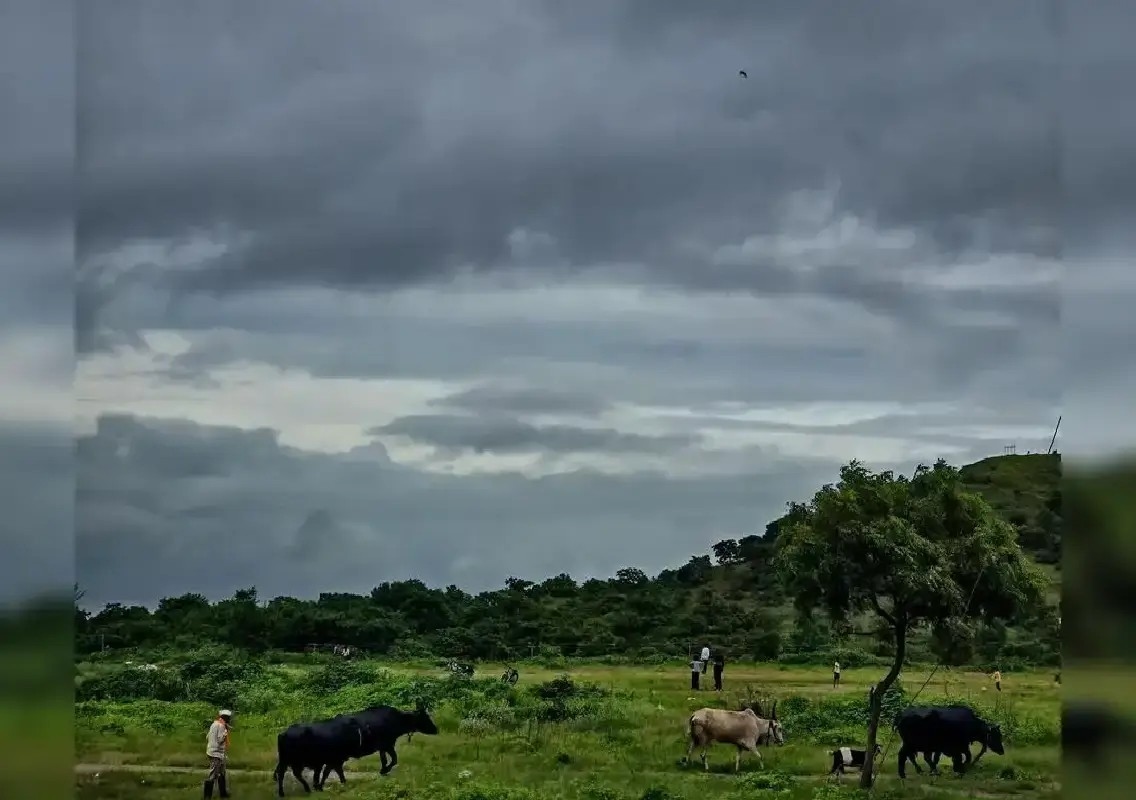


Mysuru: Despite steady inflows into reservoirs in the Cauvery basin, Mysuru district is facing a severe rainfall shortage, having recorded 58% less rainfall than normal during the ongoing southwest monsoon.
The deficit has emerged as a major concern for the agriculture sector, particularly in rain-fed areas, where farmers continue to depend heavily on timely monsoon showers for sowing and crop growth.
Weather experts have warned that there may not be any significant improvement in the rainfall pattern in the coming weeks. Above-normal minimum and maximum temperatures forecast for August and September could further intensify the stress on crops and water resources.
According to Karnataka State Natural Disaster Monitoring Centre (KSNDMC) data, Mysuru is currently the second-worst-affected district in Karnataka in terms of rainfall deficit, behind Vijayanagara, which has recorded a 59% deficit.
Mysuru among worst-hit districts
The rainfall shortage has affected several districts in the region.
While Mysuru has recorded a 58% deficit, Chamarajanagar has registered a 47% deficit and Mandya has recorded 37% less rainfall than normal.
The situation is particularly worrying for farmers in areas dependent on rain-fed agriculture, where inadequate rainfall has affected the timing and extent of sowing.
T Narasipura has emerged as the worst-affected taluk in Mysuru district, recording a rainfall deficit of 65%.
The uneven distribution of rainfall has created difficulties for farmers who require consistent moisture during the sowing and early crop-growth stages.
Sowing lags behind last year
Agriculture Department data highlights the impact of the rainfall shortage on sowing activity.
Only 44.1% of the targeted agricultural area in Mysuru district had been covered by sowing this year, compared with 59.3% during the corresponding period last year.
The district has a target of more than 1 lakh hectares of irrigated land and around 2.7 lakh hectares of rain-fed land.
So far, farmers have reportedly completed sowing on only 9,211 hectares under irrigation and approximately 1.5 lakh hectares in rain-fed areas.
The figures indicate a significant gap between the targeted area and the land brought under cultivation so far.
The delay is particularly concerning for rain-fed farmers, who have limited alternatives when monsoon rainfall remains inadequate.
Irrigated areas also affected
Although Mysuru has access to water resources through the Cauvery basin, the lack of adequate water release from reservoirs has affected sowing in irrigated areas as well.
Farmers dependent on irrigation require sufficient reservoir storage and water releases to begin or sustain cultivation.
The current situation has therefore created challenges in both rain-fed and irrigated agricultural areas.
Steady inflows into Cauvery basin reservoirs have provided some relief, but officials and farmers continue to monitor reservoir levels and water availability closely.
The availability of irrigation water will remain important if the rainfall deficit persists through the remainder of the monsoon season.
Experts see little improvement
Former KSNDMC director G Srinivasa Reddy has warned that Karnataka could experience a deficit rainfall year.
According to Reddy, barring localised weather events, the overall rainfall pattern is unlikely to change significantly before the southwest monsoon ends.
“Except for localised weather events, the rainfall pattern is expected to remain the same till the end of the southwest monsoon,” he said.
The forecast has added to concerns among farmers, particularly those who have already delayed sowing because of inadequate rainfall.
A prolonged dry spell could affect crop growth, reduce yields and increase the financial burden on farming households.
Above-normal temperatures add concern
The rainfall deficit is being compounded by temperature conditions.
Reddy said the latest India Meteorological Department (IMD) forecast indicated that minimum and maximum temperatures could remain above normal during August and September.
Higher temperatures combined with inadequate rainfall can increase moisture loss from soil and raise water requirements for crops.
For rain-fed agriculture, such conditions could make it more difficult for newly sown crops to establish properly.
Farmers may also face higher irrigation requirements where water is available, while those without access to reliable irrigation could remain particularly vulnerable.
Maize crops affected in HD Kote
The situation was reviewed in H D Kote taluk, one of the areas facing significant rainfall stress in Mysuru district.
District Minister Yathindra Siddaramaiah reviewed the drought situation in the taluk on Saturday and held discussions with officials about the conditions faced by farmers.
Officials informed him that maize crops in the area had been affected by fungal disease.
The problem was reportedly linked partly to farmers’ excessive dependence on urea and phosphorus-based fertilisers while neglecting potash application.
Potash deficiency weakens crops
Officials said insufficient use of potash had weakened the crops and reduced their ability to withstand fungal infections.
Potassium plays an important role in plant health and helps crops withstand several forms of environmental and biological stress.
The officials reportedly pointed out that an imbalance in fertiliser application could make crops more susceptible to disease, particularly when weather conditions are unfavourable.
The maize crop damage has added another challenge for farmers already dealing with inadequate rainfall.
Authorities are expected to monitor crop conditions and provide farmers with appropriate guidance on nutrient management and disease control.
Water availability remains a concern
The combination of rainfall deficit, delayed sowing and elevated temperatures has increased concerns about agricultural water availability in Mysuru.
While the Cauvery basin reservoirs have been receiving inflows, the broader rainfall situation remains a concern because reservoir inflows and agricultural requirements can change depending on rainfall in the catchment areas.
Farmers will be watching rainfall forecasts closely as the southwest monsoon progresses.
For rain-fed regions, even short spells of well-distributed rainfall could help improve soil moisture and support crop growth. However, isolated showers may not be sufficient to compensate for the accumulated deficit.
Outlook remains challenging
Mysuru’s 58% rainfall deficit has placed the district among Karnataka’s worst-affected regions this monsoon.
The impact is already visible in sowing figures, particularly in rain-fed areas, while farmers in irrigated regions are also facing difficulties due to limited water availability.
With experts expecting the broader rainfall pattern to remain largely unchanged and temperatures potentially staying above normal, the coming weeks will be critical for agriculture.
The administration will need to closely monitor rainfall, reservoir levels, crop conditions and drinking-water availability while supporting farmers affected by the deficit.
For farmers, timely rainfall remains the most important factor in determining whether delayed sowing can recover and whether standing crops can withstand the continuing weather stress.