







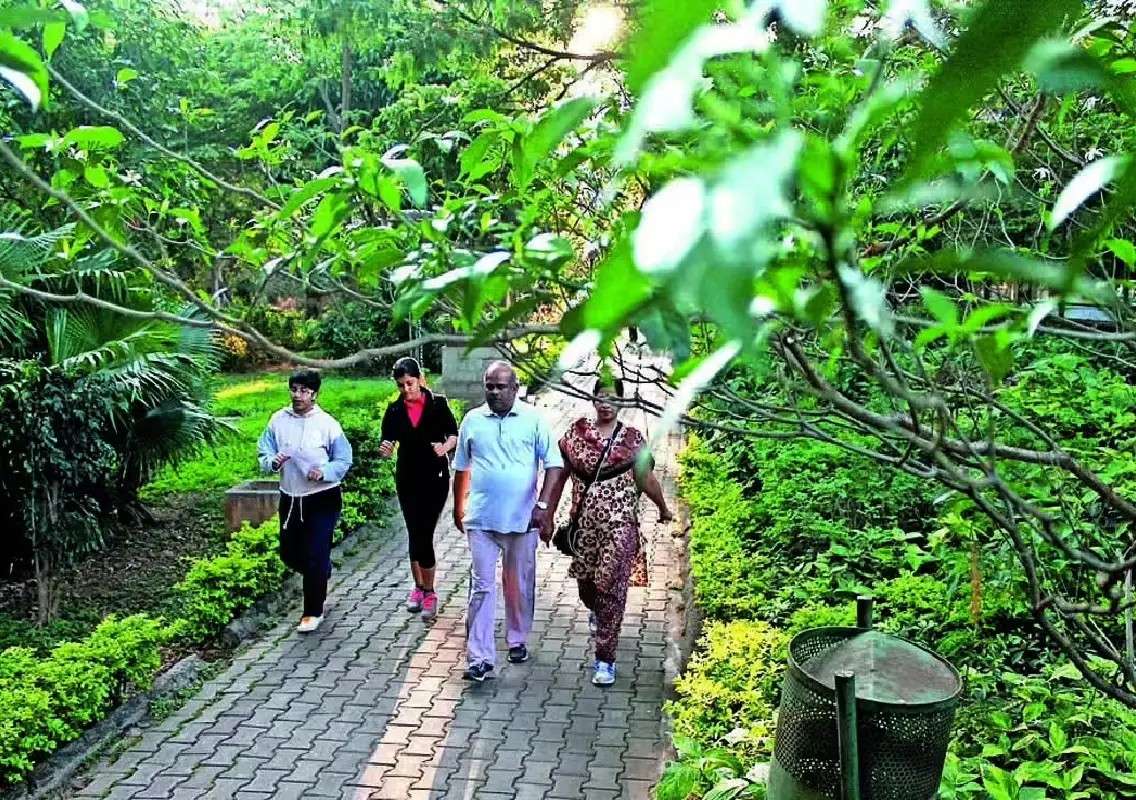


Mysuru: Several organisations in Mysuru have opposed the proposed amendment to the Government Parks (Preservation) Act, 1975, which would permit portions of park and garden land to be used for public infrastructure and utility projects.
The opposition has gained momentum ahead of a protest planned at the iconic Cheluvamba Park on Sunday, August 30, from 8 am. Various organisations and activists are expected to participate in the demonstration and voice concerns over what they describe as a threat to the city’s green spaces.
Activists have also appealed to Governor Thaawar Chand Gehlot not to give his assent to the Bill, warning that the proposed changes could make it easier for park land to be diverted for purposes beyond maintenance and recreation.
Activists warn of wider park encroachment
Mysuru Grahakara Parishat founding working president Bhamy V Shenoy and working president SK Dinesh have written to the governor urging him to withhold his assent to the proposed amendment.
In their letter, they pointed out that the earlier provision permitting the use of up to 5 per cent of park land was intended for park maintenance.
They argued that the proposed amendment could significantly widen the scope for using park areas for infrastructure and utility projects.
“Unfortunately, the new Bill is like opening the floodgates to potentially destroy parks,” they said, adding that the concern was based on their 37 years of experience in protecting Mysuru’s parks.
The activists warned that allowing additional uses of park land could gradually reduce the availability of open spaces and potentially result in the closure or substantial alteration of some parks.
Their concern is particularly significant in Mysuru, a city known for its heritage character, gardens and extensive network of public parks.
Cheluvamba Park cited as example
The activists recalled previous instances where park land had allegedly been used for purposes other than those originally intended.
They cited the construction of a building in Cheluvamba Park by the Mysuru City Corporation (MCC) in the early 1990s.
According to them, the structure was initially described as a guest house and was later used as an office.
The issue eventually reached the courts through a Public Interest Litigation (PIL) filed under the Parks Act.
The activists said the legal intervention resulted in the demolition of the building, with only a portion of the structure being retained for use as a toilet.
They cited the episode as an example of why strict protection of park land is necessary.
According to the activists, even when the existing law imposed restrictions on the use of park areas, attempts were allegedly made to introduce structures and other facilities into public parks.
People’s Park library issue recalled
The Mysuru Grahakara Parishat representatives also recalled an earlier controversy involving People’s Park, one of the city’s major green spaces.
They said alleged irregularities surrounding a contract for construction of a library at the park were brought to light, helping prevent further encroachment on the open space.
According to the activists, these incidents demonstrate the difficulties involved in protecting parks even under the existing legal framework.
They argued that expanding the permissible uses of park land could make it considerably harder for citizens and organisations to prevent encroachments.
“Even with the highly restricted provision allowing five per cent land use, vested interests tried to misuse the park space in several parts of the city,” they warned.
They further contended that if the proposed amendment becomes law, activities that were previously considered encroachments could potentially receive legal backing.
Former MLA also urges governor to return Bill
Parisarakkagi Navu president and former MLA AT Ramaswamy has also joined the opposition to the proposed amendment.
Ramaswamy urged Governor Thaawar Chand Gehlot to return the Bill rather than give his assent.
He said urban areas across Karnataka were already witnessing the rapid loss of green spaces and described parks as essential “lung spaces” for cities.
According to Ramaswamy, the proposed legislation could regularise or facilitate the destruction of such spaces rather than protecting them.
The concerns raised by activists focus on the long-term consequences of allowing park land to be used for infrastructure projects.
While public infrastructure and utility facilities may be necessary for growing cities, environmental activists argue that such projects should not come at the cost of established public parks and gardens.
Protest planned at Cheluvamba Park
The issue is expected to receive further attention during the protest scheduled at Cheluvamba Park on August 30.
Several organisations have joined hands for the demonstration, seeking stronger legal protection for public parks and opposing the proposed changes to the Parks (Preservation) Act.
The choice of Cheluvamba Park for the protest also carries significance, as activists have previously cited the park while highlighting instances of attempts to use park land for other purposes.
Participants are expected to call for the preservation of existing parks and urge authorities to ensure that public green spaces remain available for residents.
Green spaces at centre of debate
The controversy has brought the broader question of urban planning and green-space protection into focus.
Mysuru’s parks are valued not only as recreational areas but also for their contribution to the city’s environmental quality and heritage character.
Activists argue that once park land is diverted for permanent infrastructure, restoring it to its original purpose can become difficult.
The organisations opposing the Bill are therefore seeking stronger safeguards and greater scrutiny before any park land is permitted to be used for infrastructure or utility projects.
The final decision now rests with the governor, who has been urged by activists and organisations to return the Bill.
As the August 30 protest approaches, the debate over the balance between infrastructure development and preservation of Mysuru’s green spaces is likely to intensify.
For campaigners, the central demand remains that public parks should continue to serve their intended purpose and that changes to the law should not create a pathway for permanent encroachment on the city’s remaining open spaces.