









Mysuru: Deputy Commissioner Lakshmikanth Reddy has raised concern over what he described as a widespread misconception among government officials that child protection is solely the responsibility of the child welfare department, stressing that preventing child marriage requires coordinated action across departments.
He was speaking at a one-day training and awareness workshop on the Prohibition of Child Marriage Act and the POCSO Act for district- and taluk-level child marriage prohibition officers held at Kalamandira in Mysuru on Wednesday.
Addressing officers from revenue, education and health departments, the Deputy Commissioner said child marriage prevention must be treated as a shared institutional responsibility rather than a department-specific task.
Misconception among departments flagged
Mysuru DC Lakshmikanth Reddy said that many field-level officials still assume that intervention in cases of child marriage and child protection violations should be handled only by the child welfare machinery.
“Officials in the revenue, education and health departments often believe that child protection is solely the responsibility of the child welfare department. This approach is incorrect. Preventing child marriage is a shared responsibility,” he said.
He emphasised that frontline staff such as teachers, health workers, village accountants and local administrators are often the first to receive early warning signals and must act promptly.
He urged officers to improve inter-department coordination, information sharing and rapid response systems to prevent underage marriages before they are solemnised.
Data shows progress but continuing concern
Mysuru district figures presented at the workshop showed that while a large number of child marriages were prevented in recent years, several cases still went ahead.
According to the Deputy Commissioner:
- In 2024, as many as 224 child marriages were prevented, but 56 marriages were still solemnised
- In 2025, out of 268 reported cases, 24 child marriages took place
Calling the numbers worrying despite Mysuru’s educational progress, he said delayed reporting and lack of timely public information were major reasons why some marriages could not be stopped.
“This is largely due to a lack of timely information from the public,” he said, urging citizens and community leaders to alert authorities at the earliest signs of planned child marriages.
Target set for zero child marriage district
Mysuru administration has now set a target to achieve “Zero Child Marriage District” status by 2026, the Deputy Commissioner announced.
He said this goal would require coordinated campaigns, village-level vigilance, school monitoring and active involvement of anganwadi workers, ASHA staff and local bodies.
Departments were instructed to strengthen surveillance around mass marriage events, festival seasons and school dropout clusters — periods and patterns often linked with higher child marriage risk.
Judiciary calls for collective responsibility
Usha Rani, Principal District and Sessions Judge, Mysuru, also addressed the workshop and underlined the long-term social and legal consequences of child marriage and child abuse.
She said the future success of children depends on the safety, care and compassion extended to them in the present.
“Social evils such as child labour, child marriage and sexual abuse continue to deprive children of education, health and dignity,” she said.
Highlighting demographic vulnerability, she noted that about 42% of India’s population is below 18 years of age, making child protection systems critically important, especially for the girl child.
She urged officials to ensure that child protection laws are not only known but effectively implemented at the ground level through timely intervention and legal follow-up.
Awareness rally and training focus
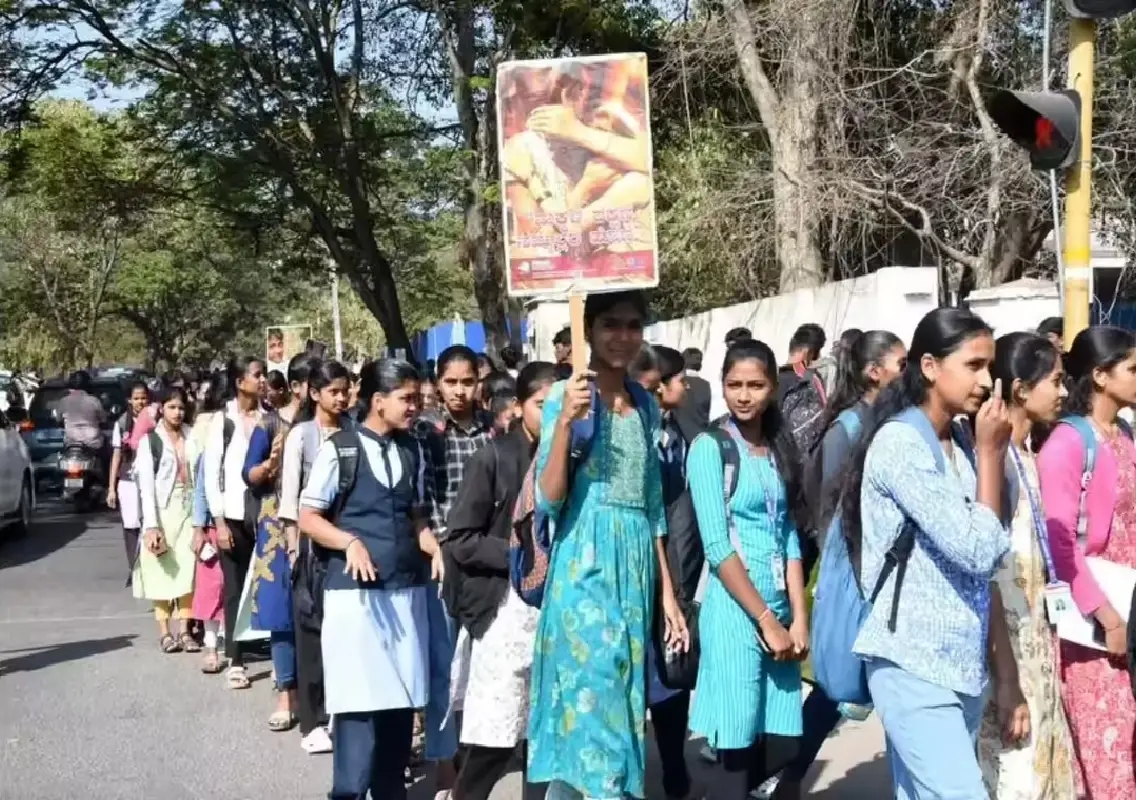
As part of the programme, an awareness rally in support of the Bal Vivah Mukt Abhiyan (child marriage free campaign) was flagged off by Additional Deputy Commissioner Shivaraju.
The workshop focused on:
- Legal provisions under the Prohibition of Child Marriage Act
- Reporting duties of designated officers
- Coordination with police and child welfare committees
- Use of POCSO provisions in related abuse cases
- Rescue, counselling and rehabilitation protocols
Officials were trained on documentation, emergency response and coordination with district legal services authorities.
Key officials attend workshop
Among those present were:
- Sneha, Director, Directorate of Child Protection, Bengaluru
- KK Amarnath, Senior Civil Judge and Member Secretary, DLSA
- NT Yogesh, District Child Protection Officer
- K Saraswathi, Director, RLHP
- District- and taluk-level child marriage prohibition officers
Conclusion
With dozens of child marriages still occurring despite preventive efforts, Mysuru district authorities have called for a whole-of-government approach to child protection. Officials across departments have been directed to treat child marriage prevention as a shared mandate, with the district now aiming to eliminate the practice entirely by 2026.