







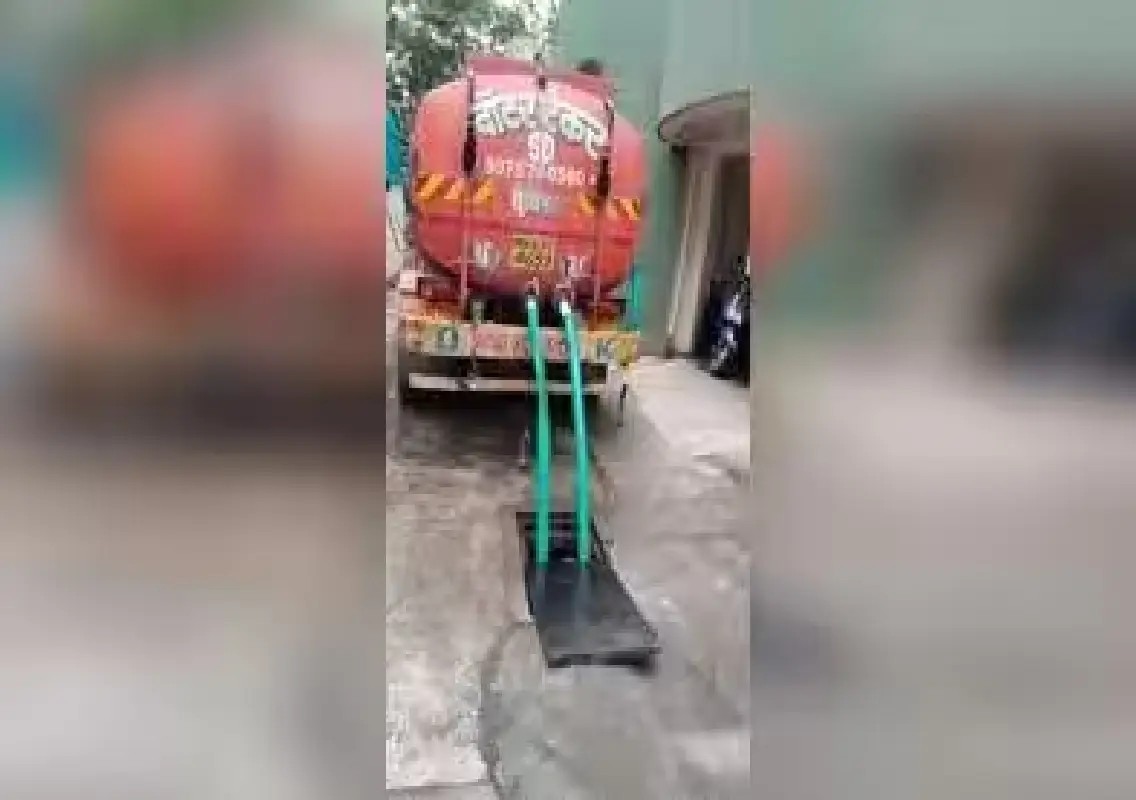


Mysuru: Thousands of families living within a 10-km radius of Mysuru city are facing an acute water shortage, with borewells running dry and residents reporting inadequate supply from the Cauvery and Kabini rivers.
The worsening situation on the city’s outskirts has forced several residential layouts to depend increasingly on private water tankers for their daily requirements. Residents say the prolonged dry spell has depleted groundwater levels, while delays in strengthening the city’s water infrastructure have added to their difficulties.
Many residents have described the situation as one of the worst water crises they have experienced in decades.
Borewells dry up as groundwater levels fall
Residents in several layouts around Mysuru say groundwater availability has declined sharply amid drought conditions.
Borewells that previously provided water to households are reportedly drying up, leaving residents with few alternatives for potable water.
Shyamala, a homemaker from Halli Bogadi, said most residents in the area were struggling to receive regular potable water.
According to her, only a few layouts have relatively reliable supplies, while others are increasingly dependent on tanker operators.
She said the declining groundwater level had made the situation particularly difficult for families that had traditionally depended on borewells.
Residents claim that tanker operators are charging high rates as demand for water increases, adding to the financial burden on households already struggling with the shortage.
Tankers become primary source of water
With borewells failing and piped water supplies remaining inadequate in several areas, private tankers have become a major source of water for residents.
According to residents, tanker operators are charging between Rs 600 and Rs 800 for a load in different parts of the city outskirts.
In some areas, residents have reported paying around Rs 750 per load.
The dependence on tankers is particularly difficult for families requiring water for drinking, cooking, cleaning and other household needs.
Residents have also expressed concern that the growing demand for private water could allow tanker operators to dictate prices in areas where there are limited alternatives.
Kabini supply suspended in 22 layouts
The situation is reportedly particularly severe in Srirampura and surrounding layouts.
Jayant J, president of Nagarika Hitarakshana Samiti, Srirampura, said Kabini water supply to around 22 layouts in the area had remained suspended for nearly two months.
He said residents had been informed that water pumping had stopped.
With the piped supply unavailable, households in several layouts have reportedly been forced to depend on borewells.
However, the falling groundwater table has also affected borewell supplies, leaving residents increasingly reliant on tankers.
Newly built overhead tanks remain unused
Residents have also questioned why newly constructed overhead water tanks are not being used to provide relief during the crisis.
Jayant said residents were unclear about the status of the infrastructure and why the water supply had not been restored.
According to him, the availability of overhead tanks alone has not resolved the problem because residents still lack clarity regarding water pumping and distribution.
He said people have repeatedly sought answers from officials but remain uncertain about when regular potable water supply will resume.
The concerns have added to frustration among residents who say they have been waiting for a permanent solution.
East Mysuru also affected
The water crisis is not restricted to the western outskirts of Mysuru.
Residents in East Mysuru are also reporting severe shortages and increased dependence on private tankers.
AM Babu, president of the Manasi Nagara Residents’ Association and the East Mysuru Layout Residents’ Federation, said residents were now almost entirely dependent on tanker water.
According to him, tanker water costs between Rs 600 and Rs 800 per load, depending on the area and supply.
He said residents had been demanding reliable potable drinking water for a long time but had yet to see a permanent solution.
The rising cost of tanker water is putting additional pressure on households that require multiple loads to meet their regular needs.
Hale Unduwadi project under scrutiny
Residents have attributed the continuing difficulties partly to the delay in implementing the Rs 595-crore Hale Unduwadi project.
The project is expected to play an important role in strengthening water supply infrastructure for Mysuru and surrounding areas.
Residents say the prolonged delay has become particularly concerning at a time when groundwater resources are under pressure and existing water sources are proving insufficient in some locations.
They argue that faster implementation of major water supply projects is essential to prevent recurring shortages in the city’s expanding outskirts.
The rapid development of residential layouts around Mysuru has also increased demand for drinking water, making long-term infrastructure planning increasingly important.
Residents seek clear answers from authorities
Residents say repeated assurances regarding restoration of water supply have not translated into a reliable solution.
Shyamala said officials had continued to assure residents that water supply would be restored, but people remained uncertain about whom to approach for concrete information.
The lack of clarity over pumping, distribution and the status of water infrastructure has contributed to growing frustration.
Residents are seeking a clear timeline for restoration of piped water supplies and better coordination between the agencies responsible for water distribution.
Water shortage adds financial burden
The dependence on private tankers is creating a significant additional expense for families.
Households that previously relied on borewells or municipal supplies now have to purchase water regularly. For larger families and residential communities, multiple tanker loads may be required.
Residents say the cost becomes especially burdensome when water is needed for both domestic consumption and other household activities.
They have also raised concerns about the quality of tanker-supplied water and the need to ensure that water intended for drinking meets appropriate safety standards.
Need for long-term water management
The current situation has highlighted Mysuru’s growing dependence on sustainable water management.
Declining groundwater levels, irregular rainfall and expanding residential areas are placing additional pressure on existing water sources.
Residents and local organisations are therefore seeking not only immediate measures to restore supply but also long-term solutions that can ensure adequate potable water for the city’s growing population.
Strengthening the Cauvery and Kabini distribution network, completing delayed infrastructure projects, protecting groundwater recharge areas and promoting responsible water use could form part of a broader strategy.
Immediate relief remains crucial
For families currently dependent on tankers, however, long-term infrastructure development does not provide an immediate solution.
Residents are seeking urgent restoration of regular water supply, particularly in layouts where piped water has reportedly remained unavailable for weeks.
They also want authorities to monitor tanker operations and ensure that residents are not forced to pay excessive prices for an essential commodity.
The continuing shortage has turned water procurement into a daily challenge for thousands of families on Mysuru’s outskirts.
Conclusion
The growing water crisis around Mysuru has exposed the vulnerability of rapidly expanding residential areas to shortages in both surface and groundwater resources. With borewells drying up and some layouts reporting prolonged interruptions in piped supplies, dependence on private tankers is increasing.
Residents are now calling for immediate action to restore potable water supplies and greater transparency regarding stalled infrastructure projects, including the Rs 595-crore Hale Unduwadi project. A sustainable solution will require both urgent relief for affected households and long-term investment in Mysuru’s water supply and conservation systems.