


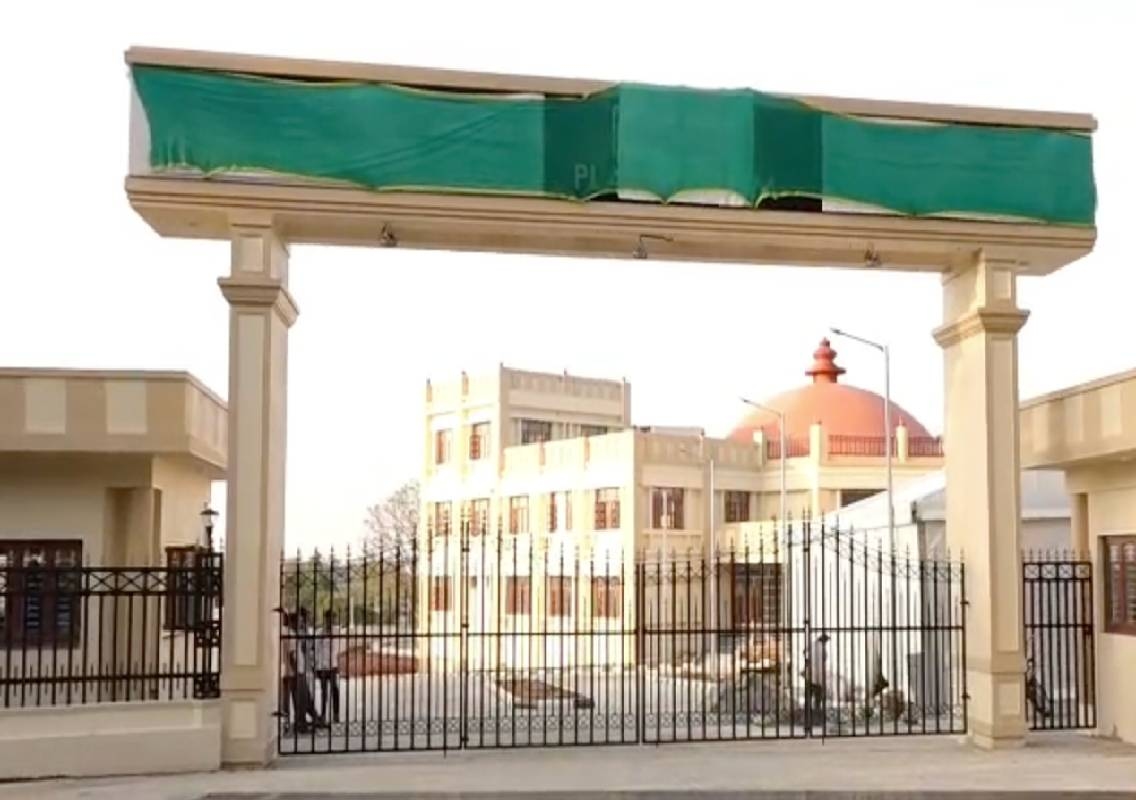


Mysuru: The cultural city of Mysuru is set to gain a major scientific attraction with the inauguration of the world’s first tilted LED dome planetarium on November 13. Prime Minister Narendra Modi is scheduled to inaugurate the state-of-the-art facility, built at the Sri Jayachamaraja Wadiyar Centre for Higher Learning of the University of Mysore, at the foothills of Chamundi Hills.
Developed as part of the Cosmology Education and Research Training Centre (COSMOS), the planetarium is designed to offer visitors an immersive view of the universe using advanced LED technology. The project will also serve as a centre for astronomy education, research and training for students and young scientists.
₹91-crore project brings advanced astronomy technology to Mysuru
The planetarium has been developed on land provided by the University of Mysore, which allocated around three acres for the project. The facility has been built at an estimated cost of ₹91 crore with support from various Union government departments and funds from Union Finance Minister Nirmala Sitharaman’s Members of Parliament Local Area Development Scheme (MPLADS).
The Indian Institute of Astrophysics (IIA), Bengaluru, is associated with the project along with the University of Mysore. The initiative is intended to strengthen astronomy education and scientific outreach while creating a specialised facility for students, teachers and researchers.
The project is expected to add a new dimension to Mysuru’s educational and tourism landscape.
15-degree tilted LED dome is the main attraction
The planetarium’s most distinctive feature is its 15-metre-wide dome, tilted at an angle of 15 degrees. Unlike conventional planetariums that use projectors to display images on a dome-shaped screen, this facility uses LED panels across the dome itself.
The computer-controlled LED panels directly display astronomical visuals, eliminating the need for a conventional projection system. The technology is designed to provide sharper images, improved contrast and a wider range of colours.
With 8K resolution, visitors will be able to experience detailed visuals of planets, stars, galaxies and other celestial objects. The tilted design is intended to provide a more natural viewing experience, allowing audiences to observe the simulated night sky from a different angle.
International technology powers the planetarium
The facility will use the SkyExplorer software developed by France-based RSA Cosmos in collaboration with Japan’s Konica Minolta. The software will control the LED dome and generate astronomical visuals for planetarium shows.
The centre will have seating capacity for around 150 people at a time, enabling students, researchers and members of the public to experience the presentations together.
The LED-based system is expected to offer a different viewing experience from traditional projector-based planetariums, particularly through its high resolution, brightness and image clarity.
COSMOS centre to train students and young scientists
Beyond public planetarium shows, the facility will function as an educational and research training centre. The COSMOS initiative aims to introduce students and young scientists to astronomy, cosmology and scientific data analysis.
The Indian Institute of Astrophysics and the University of Mysore will collaborate to operate the Cosmology Education and Research Training Centre. Students will receive training in analysing astronomical data collected through India’s advanced telescopes.
The centre is also expected to support science teachers and encourage greater interest in astronomy among school and college students. Educational programmes and outreach activities will help make scientific learning more accessible to students, including through Kannada-language initiatives.
New landmark for Mysuru’s scientific and educational landscape
The planetarium is expected to strengthen Mysuru’s position as a centre for education, science and tourism. By combining public astronomy shows with research and training facilities, the project aims to make advanced scientific learning accessible to a wider audience.
With its distinctive tilted LED dome and 8K display technology, the facility is set to become a major attraction for students, researchers and visitors.
The November 13 inauguration is expected to mark an important milestone for the COSMOS project and add a new scientific landmark to the city.