







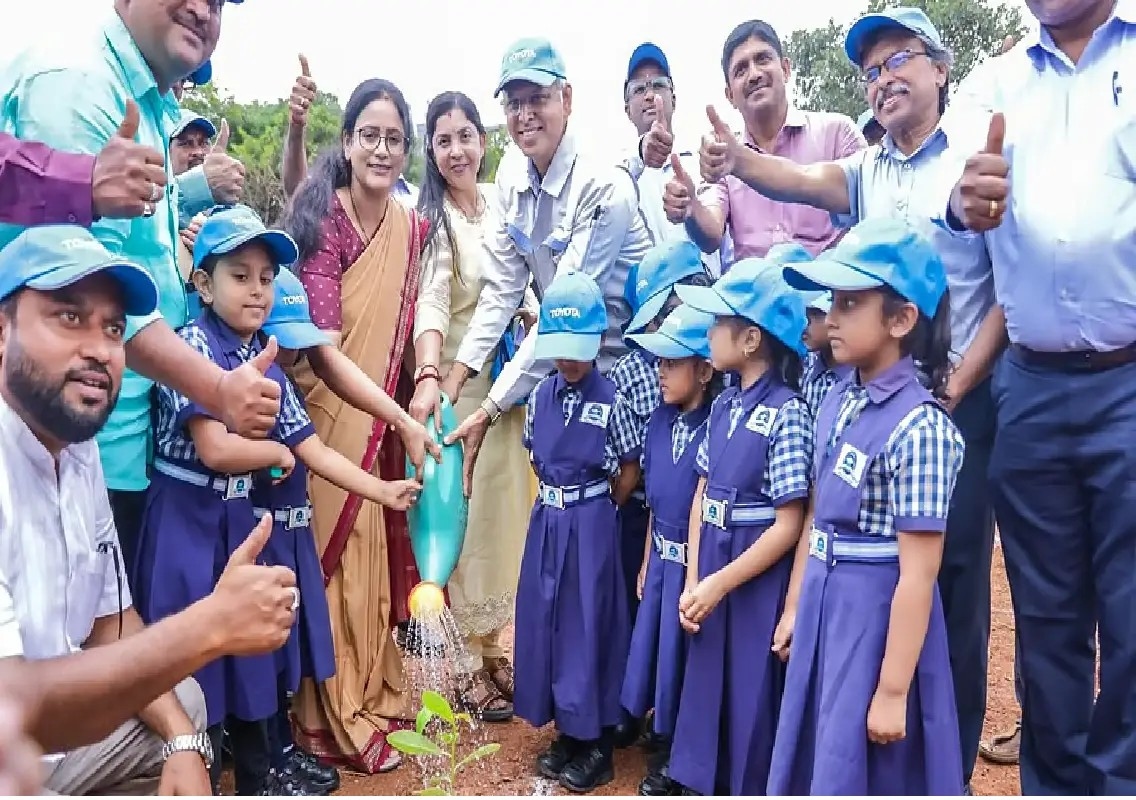


Mysuru: The Mysuru City Corporation (MCC) has taken up the development of two more parks as Miyawaki forests in Rajivnagar, strengthening the city’s efforts to expand green spaces through dense plantation methods.
MCC Commissioner M K Savitha formally launched the Miyawaki afforestation project on Thursday. The initiative covers 1.75 acres across the two parks, where around 17,000 seedlings belonging to nearly 42 species will be planted.
17,000 saplings across 1.75 acres
According to MCC Assistant Executive Engineer (Horticulture) P K Mohan Kumar, the project is being implemented under the civic body’s ‘Namma Mysuru Namma Koduge’ programme with corporate social responsibility (CSR) support from Toyota Kirloskar Auto Parts (TKAP).
The company will undertake the plantation work and maintain the Miyawaki forests for three years. The project is estimated to cost around Rs 65 lakh. After the maintenance period, the developed parks will be handed over to the MCC.
The civic body will provide the required land and water for the project.
The plantations will include about 42 varieties of trees and plants, including Albizia lebbeck, commonly known as Baage, along with Tabebuia, Peltophorum and other species.
Toyota has supported earlier Miyawaki projects
This is not the first Miyawaki initiative supported by the company in the city. Toyota Kirloskar Auto Parts had earlier planted 12,000 saplings across 1.2 acres at a public park in Vijayanagar 3rd Stage on Hinkal Road in September 2024.
In August 2025, the company planted another 15,000 saplings across 1.5 acres at Jodi Bevinamara Park in Dattagalli.
The MCC has also taken up another Miyawaki plantation project at Saalumarada Thimmakka Park in Dattagalli. In March 2026, around 15,000 seedlings were planted across 1.5 acres with CSR assistance from Toyota Accessories Development ME India (TADME).
With the two new parks in Rajivnagar, the city is further expanding its network of densely planted green spaces.
Miyawaki method allows dense plantation
Explaining the significance of the method, Mohan Kumar said Miyawaki forests are known for their dense vegetation and visual appeal. The plantations can also include trees that produce seasonal flowers and fruits.
Unlike conventional tree plantation, the Miyawaki method involves planting a much larger number of saplings in a smaller area.
Under normal plantation practices, around eight to nine trees are planted in every 10 square metres. In the Miyawaki method, the number can go up to 30 trees for the same area.
The closely planted vegetation is intended to create a dense green cover, making the method suitable for developing compact urban forests in available open spaces.
Mysuru has 529 parks
Mysuru has 529 parks spread across around 18 lakh square feet, according to the MCC. Of these, approximately 290 parks have been developed.
Mohan Kumar said most of the remaining parks already have basic facilities such as walking paths, while all parks are fenced.
The civic body is also encouraging individuals and private organisations to participate in the development and maintenance of parks through the ‘Namma Mysuru-Namma Koduge’ programme.
Apart from the five parks developed using the Miyawaki method, 11 other parks have been adopted by private individuals for maintenance under the initiative.
MCC invites more participation
The MCC has appealed to more individuals and organisations to join the city’s green initiatives.
Private individuals can either develop parks as Miyawaki forests or undertake conventional park development, beautification and maintenance. Organisations can also contribute through CSR funding.
The civic body will continue to provide support and maintain the parks, with the aim of expanding the city’s green cover and improving public spaces.
MCC Additional Deputy Commissioner Veena and TKAP Managing Director Tabrez Ahmed were among those present at the launch of the latest project.
The new plantations in Rajivnagar are expected to add to the city’s growing network of urban green spaces while demonstrating how unused or underdeveloped land can be converted into dense community-oriented forests.