







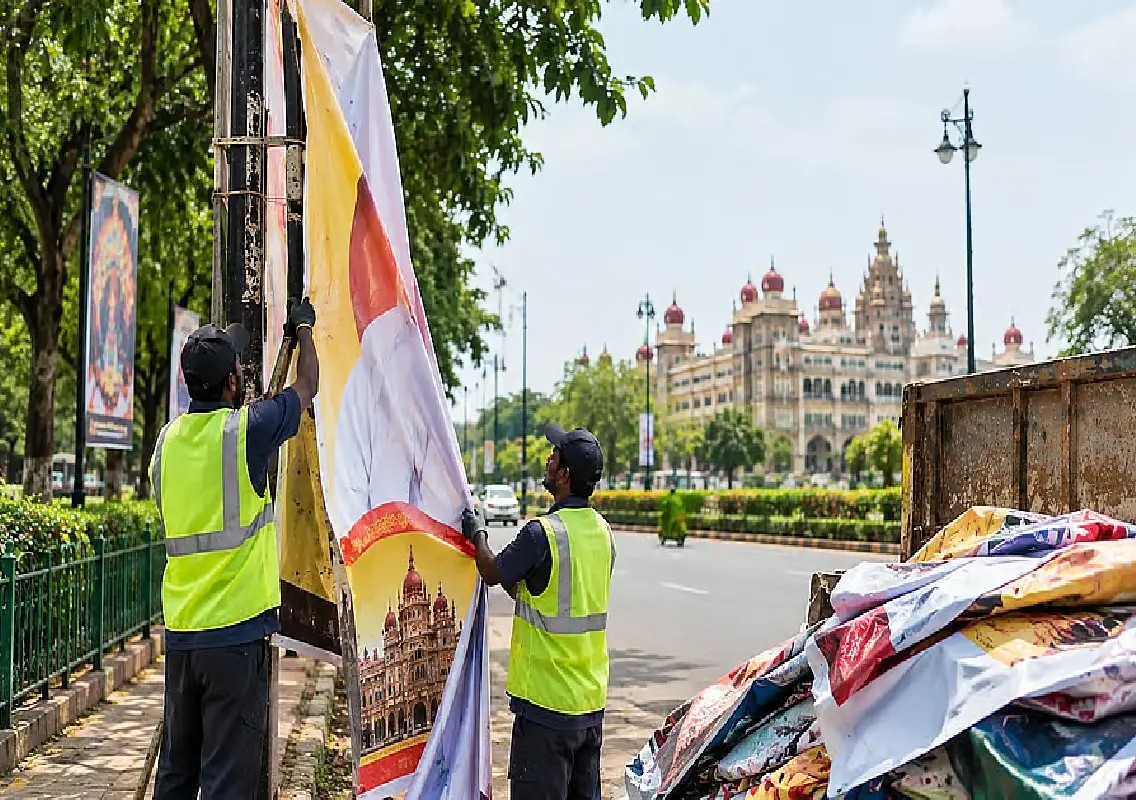


Mysuru: Mysuru city will go flex-free ahead of Dasara 2026, with the Mysuru City Corporation (MCC) banning the installation of unauthorised flexes, banners and posters from October 5 until further orders.
The decision follows Chief Minister D K Shivakumar‘s approval of a proposal submitted by MCC Commissioner M K Savitha. During a Dasara preparatory meeting on Saturday evening, Shivakumar directed officials to take strict action against unauthorised flexes in the city to protect Mysuru’s heritage character and the visual appeal of the Dasara celebrations.
Following the direction, Commissioner Savitha issued an official order and launched the initiative titled ‘Flex-Free Dasara 2026’.
Political flexes and banners also banned
The Chief Minister has specifically directed officials not to allow flexes carrying his photograph or those of other political leaders in Mysuru.
The MCC has also instructed elected representatives, political parties, associations, institutions, programme organisers and members of the public to remove existing flexes, banners and posters on their own by October 7.
If they fail to comply, the MCC will remove the material and initiate action against the violators under the Karnataka Open Places (Prevention of Disfigurement) Act, 1981.
The civic body has also warned that penalties will be imposed on those violating the order.
Only publicity and information banners related to Dasara will be permitted, and these must be installed after obtaining the required permission from the concerned authorities.
‘Mysuru is the city of Palaces’
Explaining the initiative, Savitha said Mysuru’s heritage and cleanliness needed to be protected, particularly during Dasara when visitors from across India and abroad arrive in the city.
“Mysuru is the city of Palaces with rich history, cultural heritage and it is world famous for its beauty. Naada Habba Dasara is the symbol of this living heritage,” she said.
She added that Dasara showcases Karnataka’s art, culture and vibrancy to the world and attracts visitors who come to experience the city’s heritage and witness the grandeur of the Jamboo Savari procession.
“In order to present Mysuru at its best to the world, by protecting its beauty and clean city image and facilitating hassle-free movement, installation of flexes, banners and posters is completely banned from October 5 until further order,” Savitha said.
She clarified that only authorised Dasara publicity and instruction banners would be allowed.
MCC aims for a permanently flex-free Mysuru
The initiative is not intended to remain limited to the Dasara season. Savitha has indicated that the ban is the first step towards her larger objective of making Mysuru completely flex-free on a permanent basis.
The move is aimed at protecting the city’s aesthetics while also addressing concerns over the environmental and health impacts associated with the widespread use and disposal of flex materials.
Savitha has sought the cooperation of elected representatives, political parties, organisations and the public to ensure that the initiative succeeds.
The campaign also follows discussions around the growing flex menace in Mysuru. A detailed report on the issue had earlier highlighted the scale of flex waste and its potential environmental impact.
A representation from the Mysore Grahakara Parishat, signed by members Ravi Bale, Sudhir Vombatkere, Bhamy V Shenoy and Roy Joseph, was submitted to the MCC commissioner last month, along with the concerns raised over the issue.
Savitha subsequently pursued the proposal and obtained formal approval from the Chief Minister.
Environmentalists welcome the move
Environmentalists have welcomed the MCC’s decision to restrict flexes in the city.
Environmental activist Ravi Bale said even publicity material that is permitted during Dasara should be made using environmentally friendly alternatives.
He suggested that authorised Dasara publicity banners should use eco-friendly Khadi cloth and organic dyes.
Bale also called for MCC officials and workers to be allowed to carry out enforcement duties without fear or threats. He said Mysuru could set an example for other cities in Karnataka by implementing the flex-free initiative effectively.
Flex waste poses environmental concerns
The MCC currently collects and disposes of around 300 kg of flex waste every day, highlighting the scale of the problem.
Experts have pointed out that flex materials are generally made using composite materials that can include PVC, stabilisers, plasticisers and polyester fabrics. Some flex products may also contain dyes and additives involving heavy metals.
Improper disposal can contribute to plastic pollution, while deterioration over time can result in microplastic contamination of soil and water.
Burning PVC-based flex material can also release hazardous pollutants, including toxic gases and dioxins. Environmental concerns are therefore particularly significant when large quantities of flex waste are generated during festivals, elections and public events.
Discarded flexes can also clog drainage systems and create problems for traffic and pedestrian movement when they are improperly installed or left unattended.
Long-term exposure to certain toxic substances associated with the burning or degradation of plastic materials has been linked to serious health risks. Environmental experts have therefore called for better alternatives, responsible disposal and tighter enforcement.
Dasara preparations get a cleaner focus
Mysuru witnesses a significant increase in visitors during Dasara, making the appearance and cleanliness of public spaces particularly important.
The MCC’s flex-free initiative is intended to reduce visual clutter, protect the city’s heritage character and facilitate smoother movement during the festival.
If successfully implemented beyond the Dasara period, the initiative could also reduce the volume of plastic-based advertising waste generated in the city throughout the year.
For a city seeking to preserve its reputation as one of India’s prominent heritage and tourist destinations, the move towards a permanently flex-free Mysuru could mark a significant shift in how public advertising and event publicity are managed.