







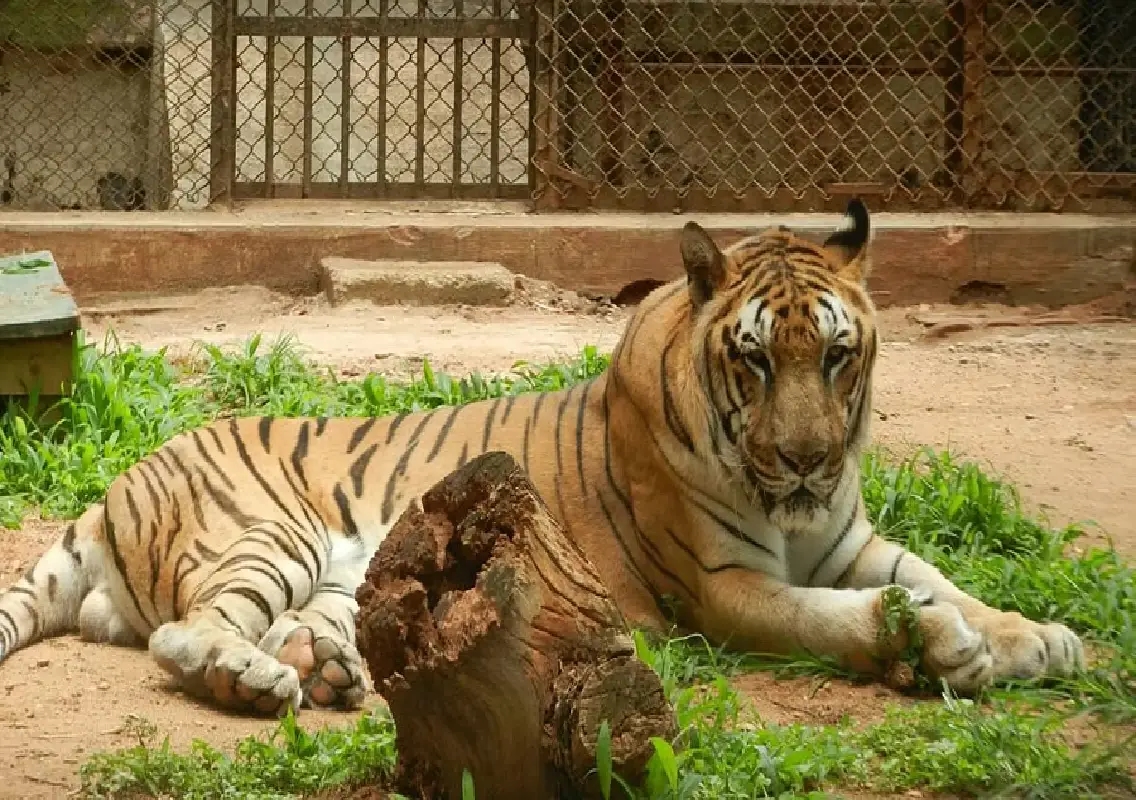


Mysuru:A male Royal Bengal tiger named Pruthvi at the Sri Chamarajendra Zoological Gardens, popularly known as Mysuru Zoo, passed away on April 8 after battling illness for several days.
The 13-year-old tiger had been under veterinary care after showing signs of deteriorating health, according to a statement issued by the zoo’s Executive Director.
Health complications led to decline
Zoo authorities stated that Pruthvi had stopped consuming food for two days prior to his death, raising concerns among caretakers and veterinary staff. Further examination revealed that the tiger was suffering from congenital paresis, a condition affecting muscle movement and strength.
Despite continuous monitoring and medical intervention by the zoo’s veterinary team, the tiger’s condition did not improve. He eventually succumbed to the illness on Wednesday.
Veterinary efforts to save the animal
Veterinarians at Mysuru Zoo had been actively treating Pruthvi, providing supportive care and attempting to stabilise his condition. However, the severity of the underlying health issue made recovery difficult.
Officials noted that all possible efforts were made to ensure the animal’s well-being, but the response to treatment remained poor.
Zoo mourns the loss
In its official statement, the zoo expressed grief over the loss of the tiger, describing it as a significant moment for the institution. Pruthvi had been a part of the zoo for several years and was among its notable big cats.
The death of a Royal Bengal tiger, a species of great ecological and conservation importance, has also drawn attention to the challenges of managing health conditions in captive wildlife.
Importance of conservation and care
Royal Bengal tigers are a protected species in India, and zoological parks play a key role in their conservation, breeding, and care. The incident highlights the importance of continuous veterinary support and monitoring, particularly for ageing animals in captivity.
Experts note that congenital conditions can pose long-term challenges and may worsen with age, even under careful supervision.
Conclusion
The passing of Pruthvi marks a loss for Mysuru Zoo and wildlife enthusiasts alike. While the zoo’s veterinary team made sustained efforts to save the animal, the case underscores the complexities involved in wildlife care and the need for ongoing conservation efforts.