







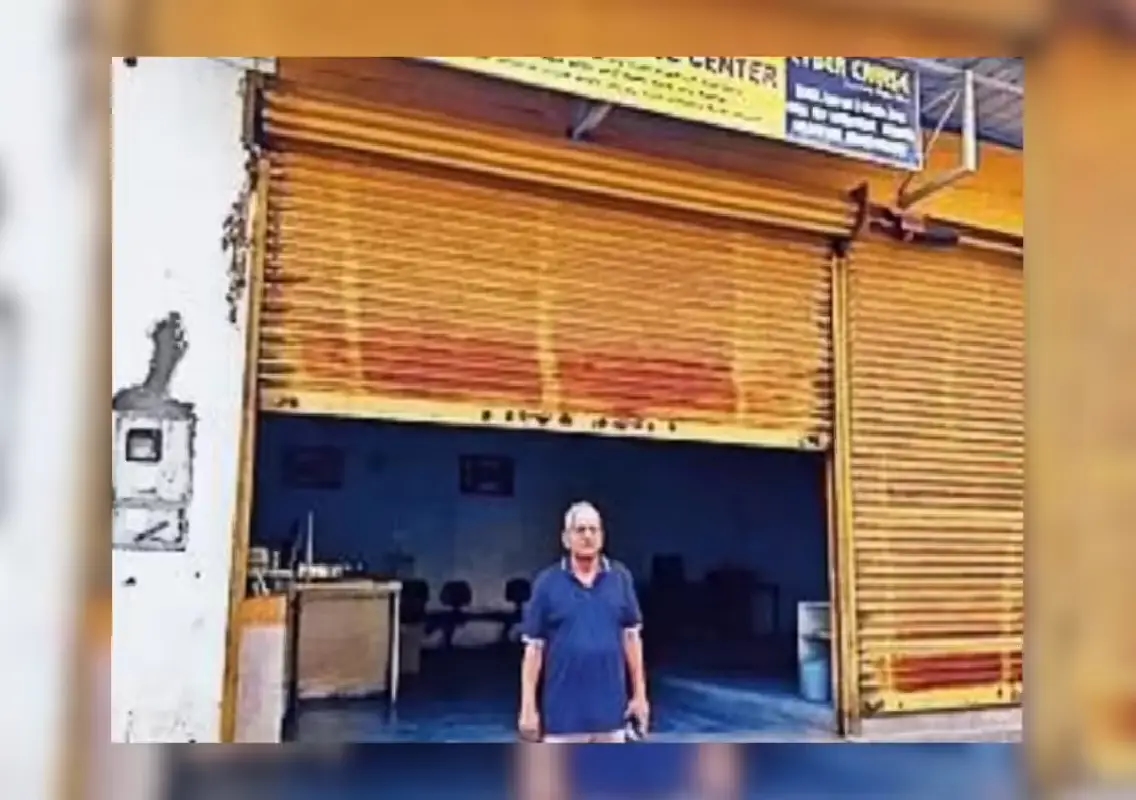


Mysuru: Cyber Cruise, one of Mysuru’s earliest internet browsing centres and a pioneer of the city’s digital era, closed its doors on Monday after nearly 27 years of operation. Located in Cheluvamba Agrahara, the cyber café had been a landmark for internet users since the late 1990s, when access to the web was still a novelty in many Indian cities.
The closure marks the end of an important chapter in Mysuru’s technological journey. For many residents, Cyber Cruise was the place where they first experienced the internet, sent their earliest emails, and connected with friends and relatives living abroad.
Owner M.A. Mohan, who founded the café in 1997, said the decision to shut down was driven by a sharp decline in customers following the Covid-19 pandemic and changing technology trends.
Beginning of the internet era in Mysuru
Cyber Cruise was launched at a time when internet access was extremely limited in India and cyber cafés were emerging as gateways to the digital world.
Mohan started the café with just two computers and an internet connection speed of 32 kbps, which was considered standard in the late 1990s.
The browsing centre initially charged Rs 120 per hour, a price that reflected the high cost of internet connectivity at the time.
“I had read about cyber cafés becoming popular in the United States and Europe. Inspired by the concept of ‘Internet Cruise’ cafés abroad, I decided to start something similar in Mysuru,” Mohan recalled.
He invested Rs 2 lakh as a loan to set up the business, hoping to bring the internet closer to people in the city.
First customers were foreign visitors
According to Mohan, the café’s first customers were two foreign visitors staying at a nearby lodge.
The travellers had come to Mysuru to learn yoga at Lakshmipuram and visited the café to access the internet and communicate with people back home.
Over time, word spread about the new facility, and the cyber café gradually began attracting more local residents.
For many people in Mysuru during the late 1990s and early 2000s, Cyber Cruise became their first exposure to the internet.
A hub for early internet users
During its peak years, the browsing centre evolved into a busy hub for students, professionals and tourists.
Customers used the facility to check emails, browse websites, download information and communicate with family members living abroad.
Mohan recalled that in those early days, internet speeds were extremely slow and performing even simple tasks required patience.
“Those days, sending a single email could take nearly an hour,” he said.
Despite the limitations, the café became a social space where people gathered to explore the possibilities of the emerging digital world.
Growth before the pandemic
Over the years, Cyber Cruise expanded significantly as internet usage increased across the country.
From the initial two computers, the café eventually grew to 20 terminals and employed eight staff members.
As internet technology improved and became more affordable, the cost of browsing also dropped dramatically.
By the time the café reached its peak, customers could access the internet for just Rs 10 per hour, making it accessible to a larger section of the public.
During this period, the centre reportedly saw a daily footfall of nearly 200 visitors.
Impact of smartphones and the pandemic
However, the rise of smartphones and affordable mobile data gradually reduced the need for public browsing centres.
The Covid-19 pandemic further accelerated this decline, as lockdowns and changes in work and communication habits drastically reduced the number of people visiting cyber cafés.
According to Mohan, the daily footfall at Cyber Cruise eventually dropped to just five or six customers per day.
“Covid-19 killed the industry,” he said, reflecting on the challenges faced by traditional internet cafés across the country.
Attempt to revive the business
Before deciding to close down the centre, Mohan explored the possibility of transforming the business into a Karnataka One outlet, which provides various government services to citizens.
However, his application was not approved, leaving him with limited options to sustain the establishment.
Without a steady customer base and facing increasing operational costs, Mohan ultimately decided to shut down the café.
Nostalgia for a bygone digital era
For many residents of Mysuru, the closure of Cyber Cruise is symbolic of how dramatically the digital landscape has changed over the past three decades.
In the late 1990s and early 2000s, cyber cafés were the primary way for people to access the internet.
Students visited them to research projects, travellers used them to stay in touch with family, and professionals relied on them for communication and information.
Today, however, smartphones, home broadband and widespread mobile internet access have made such centres largely obsolete.
Conclusion
The closure of Cyber Cruise marks the end of a pioneering institution that played a crucial role in introducing Mysuru residents to the internet. From its modest beginnings with two computers and slow dial-up connectivity to becoming a bustling digital hub, the café witnessed the evolution of India’s internet culture.
While the shutters of Cyber Cruise may have come down, the memories it created for thousands of early internet users in Mysuru will continue to remain part of the city’s digital history.