







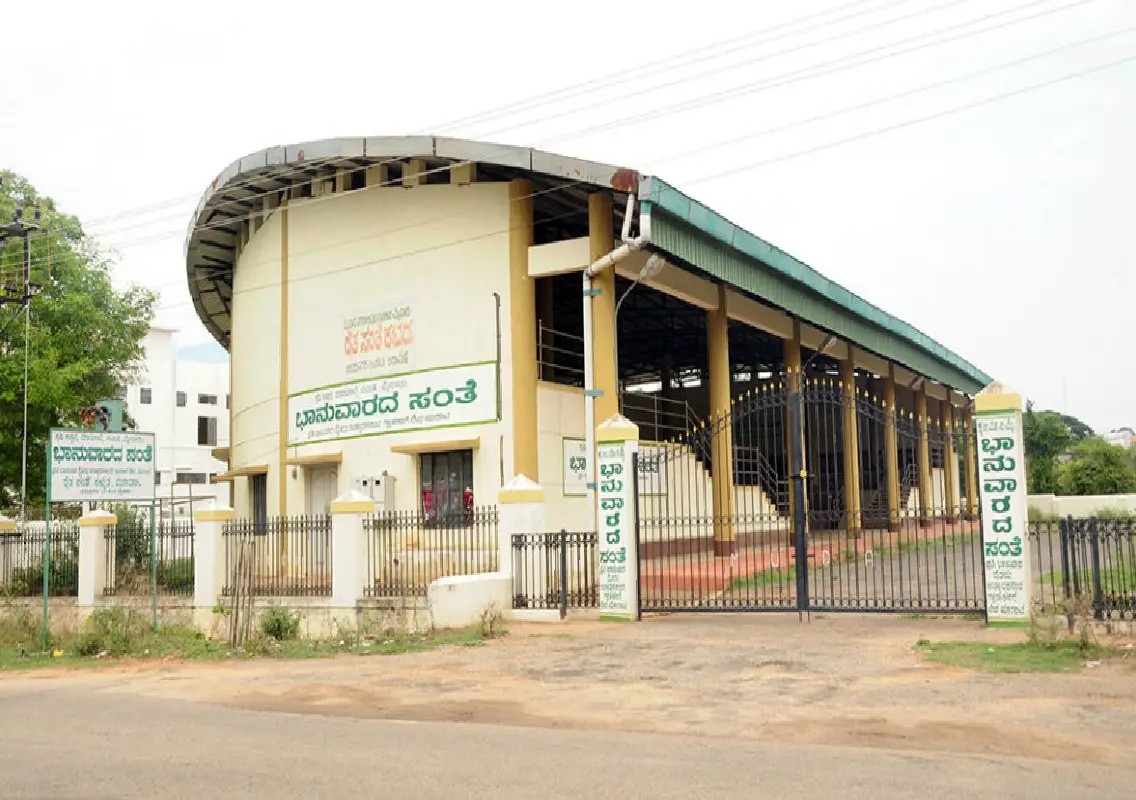


Mysuru: Mini vegetable markets (Raitha Santhe) constructed by the then Mysuru Urban Development Authority (MUDA), now known as the Mysuru Development Authority (MDA), at various locations across the city have remained vacant and unused despite significant public investment. Built to provide organised vending spaces for vegetable sellers and improve access to fresh produce for residents, many of these market complexes have failed to attract vendors and are now lying abandoned.
The unused structures have gradually fallen into disrepair, with residents alleging that the absence of regular maintenance and monitoring has led to their misuse. The issue has also raised questions about the utilisation of public funds spent on developing the facilities.
Markets remain vacant years after construction
The mini Raitha Santhe markets were established with the objective of providing dedicated vending spaces for vegetable sellers while reducing congestion on roads and footpaths.
However, despite the availability of permanent stalls and market infrastructure, vendors have reportedly shown little interest in shifting their businesses to these locations.
As a result, many of the market complexes remain completely vacant, with no commercial activity taking place.
Residents say the facilities, which were intended to improve urban market infrastructure, have instead become examples of underutilised public assets.
Public infrastructure falls into neglect
With no vendors occupying the stalls, the market buildings have been left without proper upkeep.
Several structures show signs of neglect, including damaged facilities, accumulated waste and lack of routine maintenance.
The absence of regular monitoring has also allowed anti-social activities to take place within the vacant premises.
According to local residents, alcohol consumers and substance users frequently occupy the abandoned market spaces, creating concerns over public safety and cleanliness in the surrounding neighbourhoods.
Questions raised over public expenditure
The construction of the mini vegetable markets involved substantial expenditure from the public exchequer.
However, the lack of operational activity has raised concerns about the effectiveness of planning and implementation.
Residents have questioned whether adequate studies were conducted before selecting locations for the markets and whether vendors were consulted about their willingness to relocate.
Urban planning experts often stress that infrastructure projects achieve their intended purpose only when they are designed in consultation with stakeholders and supported by proper management after completion.
Markets could support footpath vendors
The issue has gained further attention as civic authorities continue drives to clear footpath encroachments in different parts of Mysuru.
Several residents believe the vacant Raitha Santhe complexes could provide an alternative location for vegetable vendors currently operating on roadsides and footpaths.
Relocating willing vendors to these markets could help improve pedestrian movement, reduce roadside congestion and make productive use of the existing infrastructure.
Such a move would also allow authorities to better regulate vending activities while providing traders with organised spaces to conduct their business.
Need for a revival plan
Residents have urged the Mysuru Development Authority and the city administration to prepare a comprehensive plan to revive the unused markets.
Suggestions include improving basic amenities, carrying out repair and maintenance works, enhancing accessibility, and engaging directly with vendors to understand the reasons behind their reluctance to occupy the stalls.
They have also called for stronger monitoring to prevent misuse of the vacant buildings until they are brought into regular use.
Urban development experts note that government-funded infrastructure should be periodically reviewed to ensure that public investment delivers the intended benefits.
Conclusion
The abandoned mini Raitha Santhe markets in Mysuru highlight the challenges of ensuring that public infrastructure remains functional after construction. While the facilities were built to benefit vendors and consumers alike, their continued vacancy has resulted in the underutilisation of valuable public assets. Reviving these markets through better planning, maintenance and stakeholder engagement could help maximise the investment while offering an organised solution for roadside vendors across the city.