







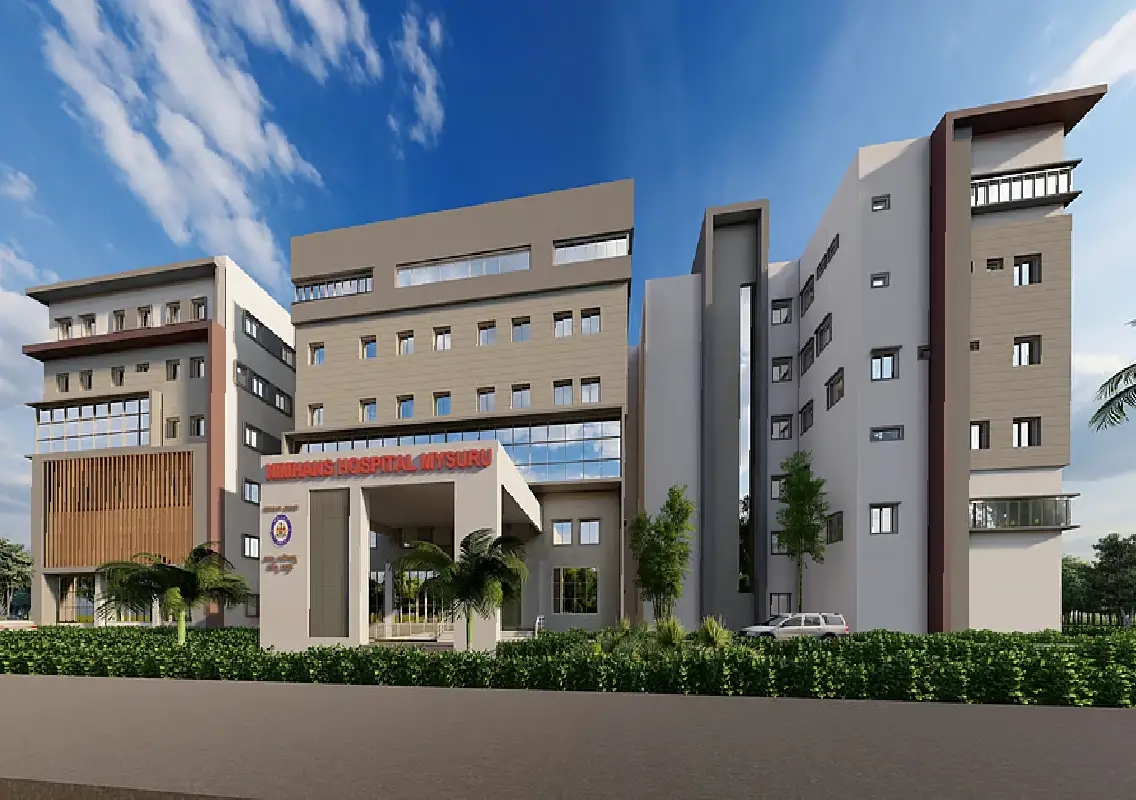


Mysuru: Construction of a NIMHANS-model super-speciality hospital and de-addiction centre under Mysuru Medical College and Research Institute is set to begin shortly on a 20-acre plot at Gudumadanahalli in Mysuru taluk, near the city airport. The project, estimated at ₹100 crore, aims to strengthen advanced neuro and mental healthcare services in the region and reduce dependency on Bengaluru-based referral centres.
Officials said all key approvals are in place, land has been handed over, and the tender process has been completed. Work is expected to commence within the next two weeks after the final contract agreement is signed.
Foundation stone laid after budget announcement
The project was announced in the 2025 State Budget by Chief Minister Siddaramaiah. The foundation stone for the hospital was laid virtually on January 18 during a government event held in T Narasipura taluk.
According to the institute administration, the detailed project report (DPR) has been approved and administrative clearance has been granted by the State government. Revenue authorities have already transferred the identified land parcel to the medical college and research institute for execution of the project.
The hospital is planned as a phased development, with civil construction taken up first, followed by staffing, equipment procurement, and operational setup.
Two-phase execution plan
Dean and Director Dr K R Dakshayini said the first phase will focus entirely on building infrastructure. The second phase will cover recruitment of specialist doctors, nursing staff, technicians, counsellors, and support personnel, along with installation of advanced diagnostic and surgical equipment.
Authorities estimate that the full project will be completed within two years from the start of construction.
The facility is being designed on the model of National Institute of Mental Health and Neurosciences, with integrated neurology, neurosurgery, psychiatry, rehabilitation, and addiction treatment services under one campus.
Designed to reduce referral burden
At present, a large number of neuro and mental health patients from southern districts are referred to Bengaluru for advanced care. Officials say the new centre will significantly reduce referral pressure and enable faster access to treatment closer to patients’ homes.
Hospital administrators noted that the century-old teaching hospitals attached to the institute — including KR Hospital — already handle heavy neuro and psychiatry caseloads each week. Current figures indicate:
- 300–350 neurology patients treated regularly
- 15–20 neuro surgeries per week, largely trauma-related
- 15–20 neuro in-patients admitted weekly
- 30–40 neuro OPD cases daily
- Around 850 psychiatry and mental health cases per week
Patients travel not only from the city but also from neighbouring districts such as Hassan, Kodagu, Mandya and Chamarajanagar. The new dedicated block is expected to ease congestion and improve treatment turnaround time.
Dedicated de-addiction centre included
A separate de-addiction centre will be constructed within the campus to address rising cases of substance abuse and alcohol dependency. Health department engineers said the block will have ground and first floors with specialised counselling, detox, and rehabilitation units.
Officials believe the centre will strengthen public health response to addiction-related disorders and provide structured recovery programmes under medical supervision.
Building layout and facilities
According to project engineers from the Health and Family Welfare Department, the main hospital block will be a 160-bed facility with ground plus five floors and a terrace, spread across roughly 19,266 square metres.
Key facilities planned floor-wise include:
- Ground floor: Emergency, casualty, radiology and oncology
- First floor: Laboratories, psychiatry, radiation and oncology
- Second floor: Neurology and neuro-rehabilitation
- Third floor: Neurosurgery, cath lab and special wards
- Upper floors: Administration, medical records, blood bank, auditorium, drug store, kitchen and dining areas
The campus will also include operation theatres, ICUs, in-patient wards, VIP rooms, counselling units, seminar halls, conference rooms, police outpost, pharmacy and waiting lounges.
Advanced diagnostics such as MRI, CT scan, X-ray, ultrasound, ECG, EEG and EMG will be available within the facility.
Expected benefits for patients and students
Doctors say the centre will not only improve survival and recovery outcomes through timely intervention but also reduce travel, accommodation and out-of-pocket costs for families who currently journey to distant tertiary centres.
The project is also expected to enhance academic and clinical training for undergraduate and postgraduate medical students by providing exposure to advanced neuro and behavioural health infrastructure.
With construction set to begin shortly, authorities describe the project as a major step toward decentralising specialised mental and neurological healthcare in the region.