







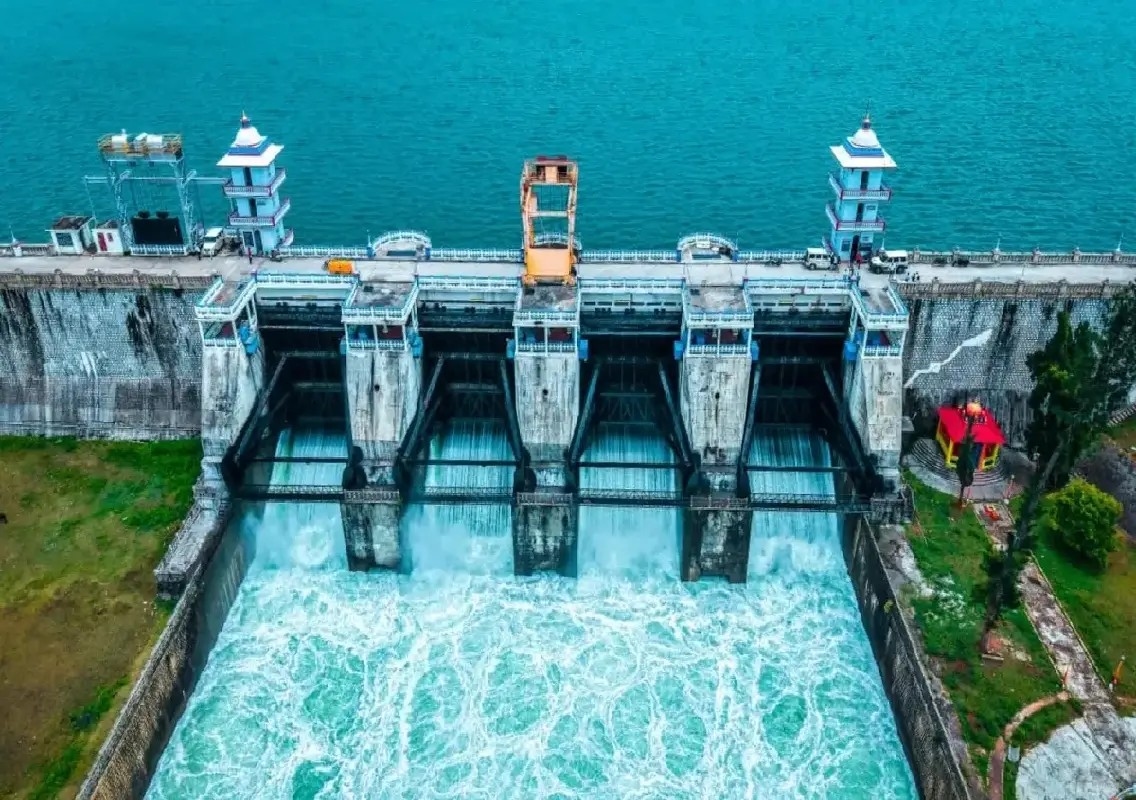


Mysuru: Paddy sowing has gained momentum in Mysuru and Chamarajanagar districts following the release of water from the Krishnaraja Sagar (KRS) and Kabini reservoirs into canals. Farmers have begun sowing paddy, raising seedlings and preparing their fields for transplantation despite earlier advisories to avoid water-intensive crops this year.
The development follows a decision taken at the recently held Cauvery Irrigation Consultative Committee (ICC) meeting chaired by Water Resources Minister N Cheluvarayaswamy in Bengaluru. The committee decided to release water into canals in the Cauvery basin districts on an intermittent basis through four rotational cycles.
The decision has provided some relief to farmers who had delayed paddy cultivation because of inadequate water levels in the two major reservoirs.
Paddy sowing delayed during June and July
Mysuru district has set a target of cultivating paddy on 86,000 hectares this year, while neighbouring Chamarajanagar has planned paddy cultivation across 23,000 hectares.
However, sowing was significantly affected during June and July because KRS and Kabini reservoirs did not receive sufficient inflows to support the early release of water to irrigation canals.
In previous years, when the reservoirs reached adequate levels, water was released to canals earlier, allowing farmers to begin paddy sowing in the last week of June and throughout July.
This year, the delay in reservoir filling disrupted the normal agricultural calendar. Farmers in several parts of the two districts were therefore unable to take up paddy cultivation during the crucial sowing period.
With the ICC now permitting water release through four rotational cycles, agricultural activities have picked up from the third week of August.
Only farmers with irrigation facilities taking up sowing
Joint Director of Agriculture KH Ravi said that farmers who have access to irrigation pumpsets are currently taking up paddy sowing.
He said water was being released to canals intermittently, primarily to facilitate the cultivation of less water-intensive crops. Farmers had also been widely advised against cultivating paddy and expanding sugarcane acreage because of concerns over water availability.
Despite these advisories, farmers who have access to assured irrigation facilities have started sowing paddy and preparing seedlings.
The availability of canal water has encouraged farmers to make use of the limited irrigation opportunity, particularly after losing valuable time during June and July.
Falling reservoir levels raise concerns
The latest decline in water levels in KRS and Kabini reservoirs has added to farmers’ concerns.
The water level at KRS, which stood at 109 feet last week, had declined to 108.48 feet following the release of water and poor inflows into the reservoir.
Similarly, the water level in the Kabini reservoir in HD Kote taluk fell to 2,273 feet on Sunday, compared with 2,280 feet recorded the previous week.
The falling storage levels have raised questions over whether the available water will be sufficient to sustain paddy cultivation through the entire crop cycle.
Paddy requires substantial quantities of water, and farmers who have started sowing late in the season may need irrigation support well beyond the four rotational cycles currently announced by the government.
Officials say water release aimed at short-term crops
Cauvery dam Superintending Engineer K Raghuram said the four rotational releases were intended primarily to fill lakes, facilitate short-term and less water-intensive crops and protect standing sugarcane and other crops.
The limited releases are therefore not intended to provide continuous irrigation for a full paddy crop cycle.
The clarification has created uncertainty among farmers who have already invested in paddy seeds, nursery preparation, field preparation and labour.
Farmers taking up paddy cultivation at this stage will need adequate water for several months, making the availability of irrigation water a key factor in determining whether the late crop can reach harvest successfully.
Farmers fear losses if canal releases stop
State Sugarcane Growers Association president Kurubur Shanthakumar has expressed concern over the decision to release canal water only in four rotational cycles.
He said farmers who have begun sowing paddy could face crop losses if the government stops releasing water after the scheduled rotations.
Paddy is generally a crop with a cycle of around 120 days. According to Shanthakumar, farmers who sow now could therefore face financial losses if water availability is discontinued before the crop reaches maturity.
He also alleged that the storage maintained in the KRS and Kabini reservoirs was being prioritised for releases to Tamil Nadu rather than adequately supporting farmers in the Cauvery command areas of Karnataka.
Shanthakumar further alleged that water released into canals was eventually linked to river systems and flowed towards Tamil Nadu instead of providing sufficient benefit to farmers in the state.
The allegations reflect the growing concern among farmer groups over water management in the Cauvery basin.
Farmers plan intensified agitation
The State Sugarcane Growers Association has announced plans to intensify its agitation from Monday, demanding the release of sufficient water into canals to enable paddy cultivation across the Cauvery command area.
Farmers argue that the delayed monsoon and reservoir filling have already affected the agricultural calendar. With sowing now underway in several areas, they are seeking greater clarity and assurance from the government on irrigation water availability for the coming months.
The government, meanwhile, faces the challenge of balancing irrigation requirements within Karnataka with its obligations relating to Cauvery water releases.
For farmers in Mysuru and Chamarajanagar, the immediate concern remains whether the water released through the four rotational cycles will be sufficient to sustain the late-sown paddy crop.
The coming weeks will be crucial as reservoir inflows, canal releases and rainfall conditions determine the availability of water for agriculture. While the recent release has revived paddy sowing in the twin districts, farmers remain uncertain about completing the crop cycle unless irrigation supplies are maintained.