







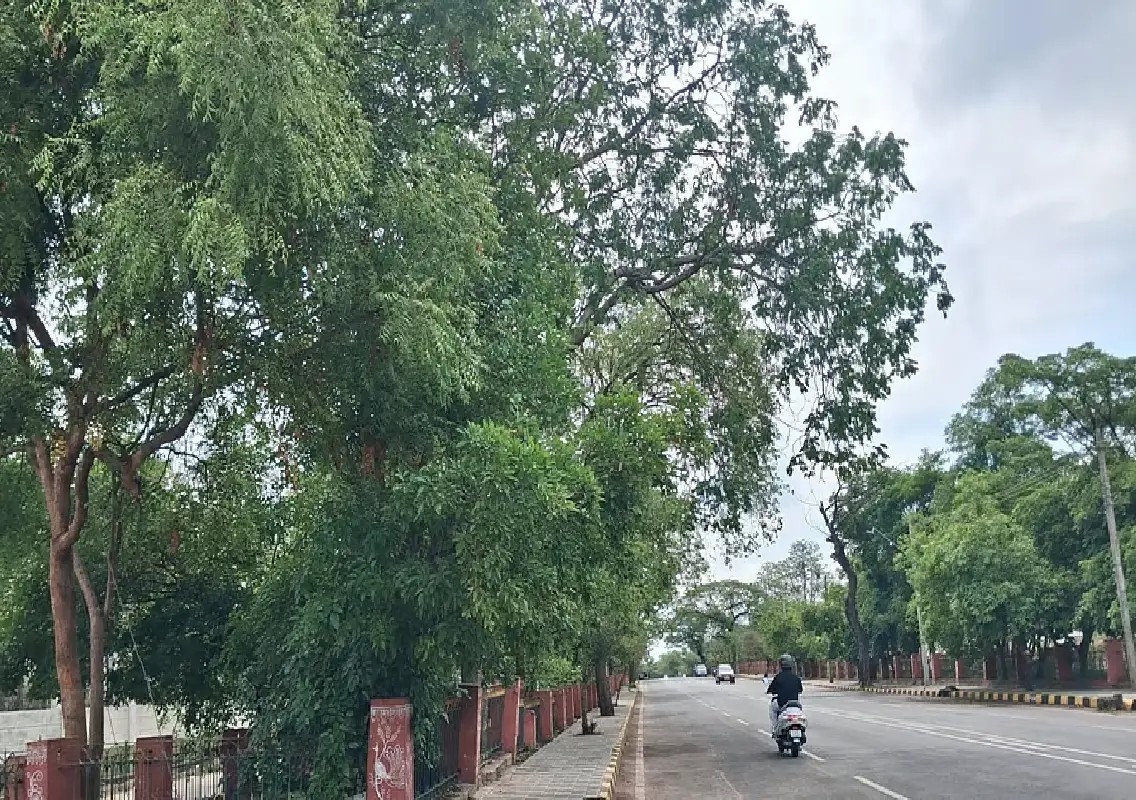


Mysuru: Once known for its cool and pleasant climate throughout the year, Mysuru is now witnessing rising temperatures amid growing concerns over shrinking green cover and rapid urban development.
According to officials from the India Meteorological Centre in Bengaluru, Mysuru recorded its highest maximum temperature of 37.2 degrees Celsius on April 24 this year. Earlier, the city had also registered 36 degrees Celsius on March 27, indicating an unusually warm summer season for the region.
Experts and officials attribute the increasing temperatures to a combination of climatic conditions and declining green cover in the city.
Green cover far below recommended level
Officials noted that Mysuru currently has only around 14 per cent green cover, significantly lower than the recommended 33 per cent required for maintaining ecological balance and moderating urban temperatures.
Head of the Meteorological Centre and Scientist-F N. Puviarasan said seasonal wind patterns are contributing to heatwave-like conditions in interior Karnataka.
“During summer, northerly, north-easterly, and north-westerly winds bring warm air advection, causing heatwave conditions over interior Karnataka,” he explained.
Environmentalists have repeatedly raised concerns over increasing urbanisation, road expansion projects, and reduction in tree cover across Mysuru, warning that such changes could permanently alter the city’s traditionally moderate climate.
Health department prepares for heat conditions
In response to the rising temperatures, the Mysuru district health department has implemented precautionary measures to handle possible heat-related illnesses.
District Health Officer Dr P. C. Kumarswamy said Oral Rehydration Solution (ORS) corners have been established at all healthcare facilities in the district to help people stay hydrated during extreme heat conditions.
He added that dedicated heat stroke management rooms have also been set up across healthcare institutions.
According to the health department:
- Two beds have been reserved in Community Health Centres
- Five beds have been allocated in taluk hospitals
- Ten beds have been earmarked in the district hospital
These facilities will remain operational from March 1 to July 31 as part of summer preparedness measures.
Dr Kumarswamy stated that, so far, no heat stroke cases have been reported in Mysuru district this season.
Public advised to stay hydrated
Officials from the Karnataka State Disaster Management Centre and the health department have issued several guidelines to help people cope with the heat.
Residents have been advised to:
- Drink sufficient water frequently, even if not thirsty
- Use ORS regularly
- Consume homemade drinks such as lemon water, buttermilk, lassi, and fruit juices with added salt
- Avoid alcohol, tea, coffee, and carbonated soft drinks that can cause dehydration
Authorities also recommended wearing loose cotton clothing, preferably light-coloured garments, while using umbrellas, caps, towels, or hats to protect against direct sunlight.
People have also been advised to use fans, apply damp cloths to cool the body, and take cold-water baths frequently.
Special advisory for travellers, athletes and farmers
Travellers have been asked to carry drinking water while outdoors, and athletes have been advised to avoid strenuous physical activity during peak daytime temperatures.
Farmers have specifically been urged to protect themselves from heat exposure by covering their heads, necks, and faces with damp cloths and using umbrellas or hats while working in fields.
Authorities also advised farmers to keep livestock in shaded areas and ensure adequate drinking water for animals during the summer months.
Need for long-term environmental planning
Experts believe Mysuru’s rising temperatures underline the urgent need for sustainable urban planning and large-scale tree plantation drives to restore ecological balance in the city.
With climate patterns becoming increasingly unpredictable, environmentalists have stressed the importance of preserving green spaces, lakes, and urban forests to reduce heat stress and improve living conditions for residents.