







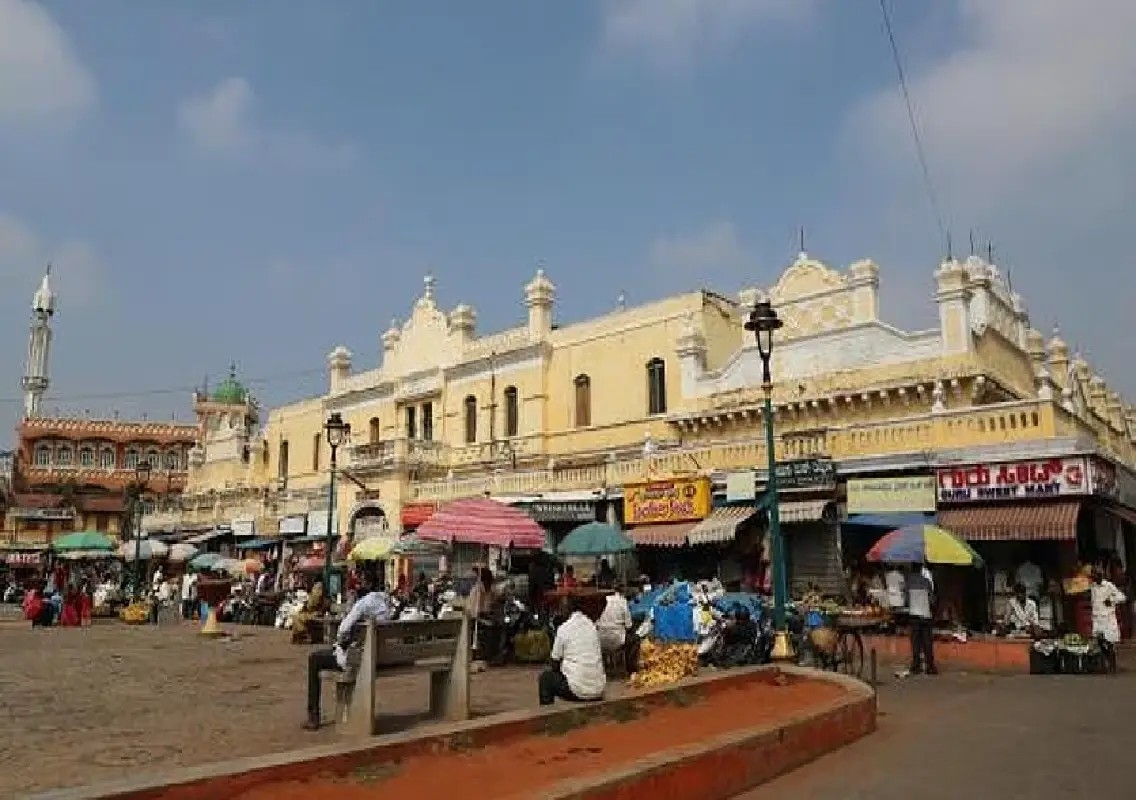


Mysuru: Heritage experts, activists, vendors and residents of Mysuru have welcomed the Supreme Court’s decision directing the conservation and restoration of the historic Devaraja Market and Lansdowne Building instead of demolishing the structures as previously proposed by the government and civic authorities.
The verdict has been hailed as a major victory for heritage conservation efforts in Mysuru, a city known for its architectural and cultural legacy.
However, heritage experts have also urged the Karnataka government to introduce a special financial package for the conservation and maintenance of hundreds of heritage structures across the city.
Supreme Court order brings relief
The issue had triggered widespread debate after the Mysuru City Corporation and the state government proposed demolition and reconstruction of the two ageing heritage structures.
Vendors operating in Devaraja Market had strongly opposed the move, fearing loss of livelihood and displacement from one of Mysuru’s most iconic commercial spaces.
Although the Karnataka High Court had upheld the government’s decision to demolish and rebuild the structures, the matter was later challenged before the Supreme Court.
A bench comprising justices J B Pardiwala and Vijay Bishnoi examined a technical report submitted by Indian Institute of Technology Roorkee regarding the condition of the buildings before issuing directions favouring conservation and restoration.
The ruling was celebrated by heritage activists, residents and traders who had campaigned for preserving the historic identity of the city.
Demand for comprehensive heritage conservation package
Following the verdict, experts stressed that the focus should now expand beyond Devaraja Market and Lansdowne Building to include the preservation of several other historic structures across Mysuru.
Heritage Experts Committee member and retired professor N S Rangaraju said Devaraja Market is structurally fit for restoration and appealed to Chief Minister Siddaramaiah to allocate a dedicated package for conservation works.
“Devaraja Market is fit for restoration. The Chief Minister must allot a special package not just for Devaraja Market and Lansdowne Building, but for all heritage structures in Mysuru,” he said.
Experts pointed out that Mysuru was officially declared a heritage city in 2004 and possesses more than 600 structures with historical and architectural significance.
According to records, the Heritage Experts Committee had recommended 234 buildings for heritage recognition in 2006, of which 129 were later officially notified as heritage buildings by the Mysuru Urban Development Authority.
In addition, 32 structures are protected by the state government and seven are classified as centrally protected monuments.
Experts suggest monetising heritage buildings
Some conservation experts also proposed monetising heritage structures to generate funds for maintenance and restoration.
Retired engineer and activist Ravi Bale said many countries successfully utilise heritage buildings for tourism, museums, hotels, offices and cultural activities while preserving their architectural value.
“I have visited several countries and have not seen heritage buildings remaining unused. It is difficult for the government alone to fund conservation of so many structures. They should be monetised,” he said.
He suggested that heritage buildings could be repurposed for tourism-related activities, cinema shooting locations, educational institutions or government offices to generate revenue for upkeep.
Ravi Bale noted that buildings such as the Postal Training Institute, Metropole Hotel and Mysore Palace are already being utilised effectively while retaining their heritage value.
He added that conserving and reusing heritage structures is preferable to demolishing them and constructing new buildings.
Government had planned rebuilding projects
In the 2024–25 state budget, the Karnataka government had announced Rs 35 crore for reconstruction of the Lansdowne Building and Rs 95 crore for rebuilding Devaraja Market.
Detailed project reports for both redevelopment projects had already been prepared, with plans to reconstruct the buildings while retaining their architectural appearance.
However, since the matter was pending before the Supreme Court, the government had not yet proceeded with final fund allocation or execution of the projects.
With the apex court now favouring restoration instead of demolition, heritage activists hope the authorities will adopt a long-term conservation policy for Mysuru’s historic structures.
Experts believe the decision could become a landmark precedent for heritage preservation efforts across Karnataka and other historic cities in India.