







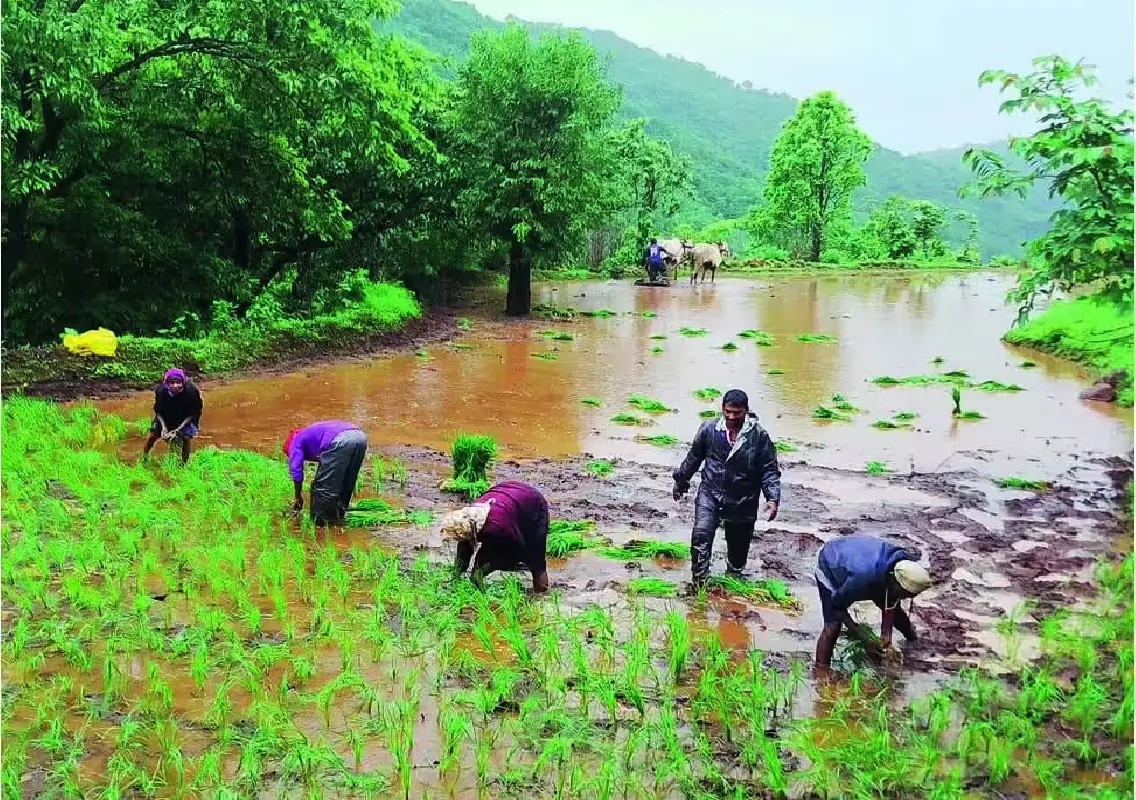


Mysuru: The weak southwest monsoon has affected the sowing of major food crops in Mysuru district, with paddy and finger millet (ragi) bearing the brunt of inadequate rainfall. As farmers adjust their cropping choices, tobacco has emerged as the most extensively cultivated crop after maize during the current monsoon season.
Despite below-normal rainfall in several tobacco-growing areas, farmers have continued to cultivate the crop across large tracts, encouraged by its market prospects. Maize, meanwhile, remains a preferred choice because of relatively stable prices, lower water requirements and reduced labour needs.
Tobacco achieves 97.8% of sowing target
According to Agriculture Department data, tobacco cultivation has reached 97.8% of its targeted area in Mysuru district.
Against a sowing target of 63,500 hectares, farmers have completed tobacco sowing across 62,130 hectares. This is the highest area recorded among the major crops covered by the department’s sowing data.
Agricultural experts said the continued preference for tobacco reflects farmers’ efforts to choose crops that can provide better economic returns under prevailing conditions.
The crop is mainly cultivated in areas including K R Nagar, Hunsur, Periyapatna and H D Kote. Tobacco is also grown in Ramanathapura in neighbouring Hassan district.
Maize remains a popular choice
Maize has also recorded strong progress, with 98.4% of its targeted area covered under sowing.
Farmers have sown maize across 48,725 hectares against the district’s target of 49,523 hectares.
Karnataka Rajya Raitha Sangha president Badagalapura Nagendra said maize has become an attractive option because it is primarily a rainfed crop and requires comparatively less water.
“Prices are also favourable and the crop demands less labour. That is why farmers are preferring maize,” he said.
The combination of lower water requirements, manageable cultivation costs and relatively stable market prices has encouraged farmers to opt for maize despite the uneven monsoon.
Paddy and ragi cultivation hit
In contrast, paddy and pearl millet have been the worst affected crops due to inadequate rainfall. Virtually no sowing of these crops has been reported across the district, highlighting the impact of the weak monsoon on water-intensive and rain-dependent food crops.
Farmers have expressed concern that the sharp reduction in cultivation of paddy and ragi could eventually affect market availability and lead to higher prices.
“The decline in ragi and paddy cultivation could lead to a rise in prices. The government must take note of the situation,” farmers said.
The shift in cropping patterns could have implications not only for farm incomes but also for the availability and prices of staple food crops in the coming months.
Tobacco offers better returns
Official sources estimate the cost of producing tobacco at around Rs 180 per kg. Farmers can potentially make a profit if they receive an average price of between Rs 220 and Rs 250 per kg.
This price difference has made tobacco an economically attractive option for farmers in several parts of the district.
However, tobacco cultivation is also dependent on suitable soil and weather conditions, and farmers have to manage crop-specific challenges during the growing season.
S Ramakrishnan, principal scientist and head of the ICAR-Central Tobacco Research Institute in Hunsur, said tobacco is currently among the more suitable crops for farmers in several parts of the region.
He said the crop was performing well despite some instances of potash deficiency being observed in fields.
Karnataka tobacco has export demand
Ramakrishnan also highlighted the demand for Karnataka-grown tobacco in international markets.
According to him, tobacco cultivated in Karnataka is valued for factors including low pesticide residues and natural cultivation practices. The produce is widely used as filler tobacco in cigarette manufacturing.
The international demand has provided farmers with an additional incentive to continue tobacco cultivation, even as rainfall remains below normal in some growing regions.
However, experts and farmers will be closely watching rainfall patterns in the coming weeks, as the performance of rainfed crops will depend significantly on the availability of moisture during critical stages of crop growth.
Rainfall deficit raises concerns
The current cropping pattern in Mysuru reflects the way farmers are adapting to uncertain monsoon conditions. While tobacco and maize have nearly achieved their respective sowing targets, food crops such as paddy and ragi have suffered significantly.
If rainfall remains inadequate, farmers cultivating water-intensive crops could face further difficulties, while the shift towards commercial crops may continue.
Agricultural authorities may need to monitor the changing crop pattern and assess its potential impact on foodgrain availability and prices.
For farmers, the immediate priority remains selecting crops that can withstand prevailing weather conditions while offering reasonable returns. With tobacco and maize currently dominating sowing activity, the coming weeks will be crucial in determining whether the monsoon improves sufficiently to support food crops and sustain agricultural production across Mysuru district.