









Mysuru: Amid a significant pre-monsoon rainfall deficit and forecasts of below-normal rainfall in the coming months, Karnataka’s Urban Development Minister and Mysuru-Chamarajanagar district in-charge Minister for disaster management, Yathindra Siddaramaiah, has directed officials to advise farmers on crop planning based on weather forecasts and rainfall patterns to minimise losses.
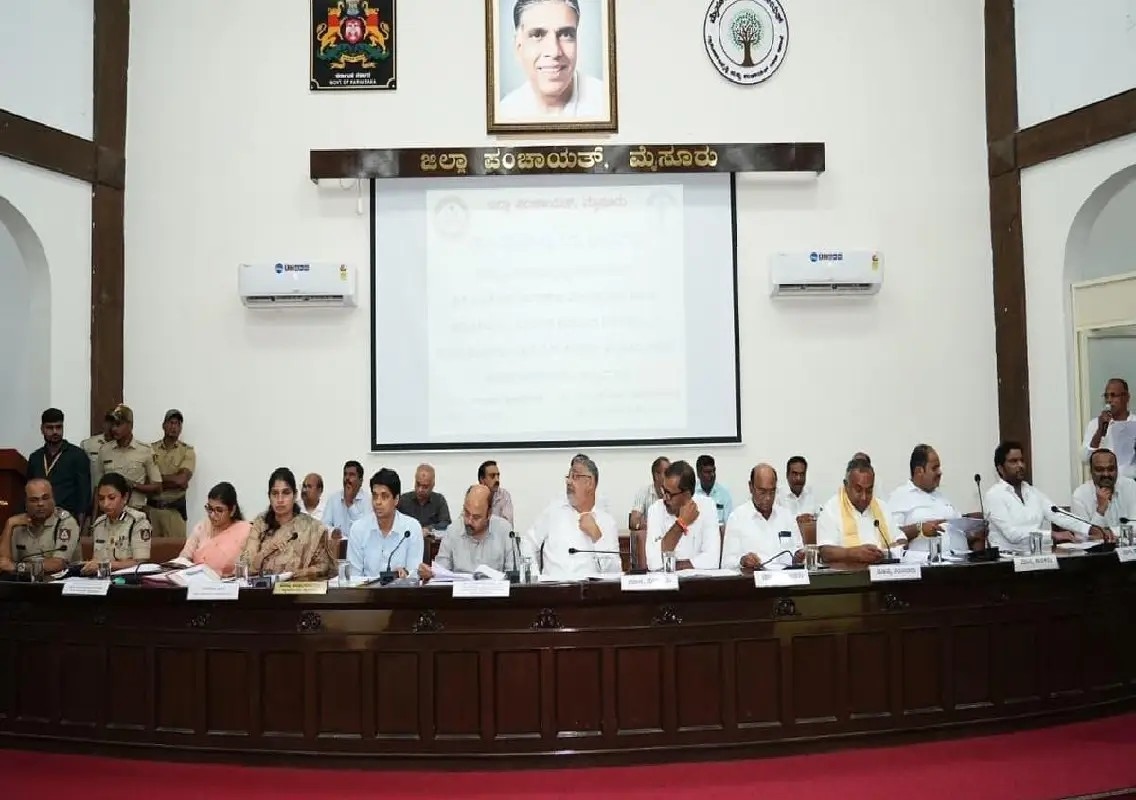
Reviewing drinking water preparedness and kharif sowing progress at the zilla panchayat on Sunday, the minister stressed the need for proactive measures to address the challenges posed by an uncertain monsoon.
Farmers advised to shift to drought-resilient crops
Expressing concern over the rainfall deficit, Dr Yathindra Siddaramaiah urged the Agriculture Department to encourage farmers to move away from water-intensive crops and adopt drought-resilient varieties such as ragi, jowar and pulses.
He said scientific crop planning and diversification would help farmers reduce risks associated with erratic rainfall and safeguard agricultural productivity.
The minister also directed the department to intensify awareness campaigns on crop diversification and provide scientific guidance to farmers after cases of downy mildew were reported in jowar fields in H.D. Kote and Periyapatna taluks.
Officials have been asked to closely monitor the crop situation and provide timely advisory services to farmers to prevent further losses.
Focus on drinking water preparedness
With concerns mounting over water availability due to deficient rainfall, Dr Yathindra instructed officials to keep a close watch on the drinking water situation and ensure that reports accurately reflect the ground realities.
He directed officials to undertake regular field visits and make arrangements for private borewells and tanker supply in villages facing shortages.
The minister emphasised that drinking water projects should not be considered complete until power connections are provided by the power utility and water supply actually begins.
He also ordered mandatory quality testing of water supplied through private borewells and tankers to ensure public safety.
Directions to expedite infrastructure works
The minister instructed the Forest Department to expedite statutory clearances in anticipation of increased demand for new borewells and pipeline works.
He also directed officials to fast-track drinking water projects under the AMRUT 2.0 scheme in Chamarajanagar district and asked the Mysuru City Corporation to prepare a ward-wise assessment of drinking water problems.
Pending electrification and pumping works related to overhead water tanks should be completed within fixed timelines, he added.
Legislators raise concerns over water shortages
Sunil Bose said Hanur taluk, particularly villages located on the forest fringes, was facing acute drinking water shortages and stressed that water supplied to residents should be tested for potability before distribution.
Meanwhile, Tanveer Sait urged the power utility to provide electricity connections to newly drilled borewells without delay.
K. Harish Gowda called upon Mysuru City Corporation officials to respond promptly to public complaints and ensure that drinking water pipelines are not damaged during civic works.
Funds to be utilised after drought declaration
Mysuru Deputy Commissioner G. Lakshmikanth Reddy said funds under the National Disaster Response Fund (NDRF) for drinking water could be utilised only after an official drought declaration.
Until then, available funds from the Rural Development Department would be used to tackle water shortages, he said.
The Deputy Commissioner also announced that a separate meeting chaired by local legislators would be convened to review drinking water issues in Mysuru city.
Several legislators and senior district officials attended the review meeting, which focused on ensuring preparedness for both agricultural and drinking water challenges in the event of a weak monsoon.