







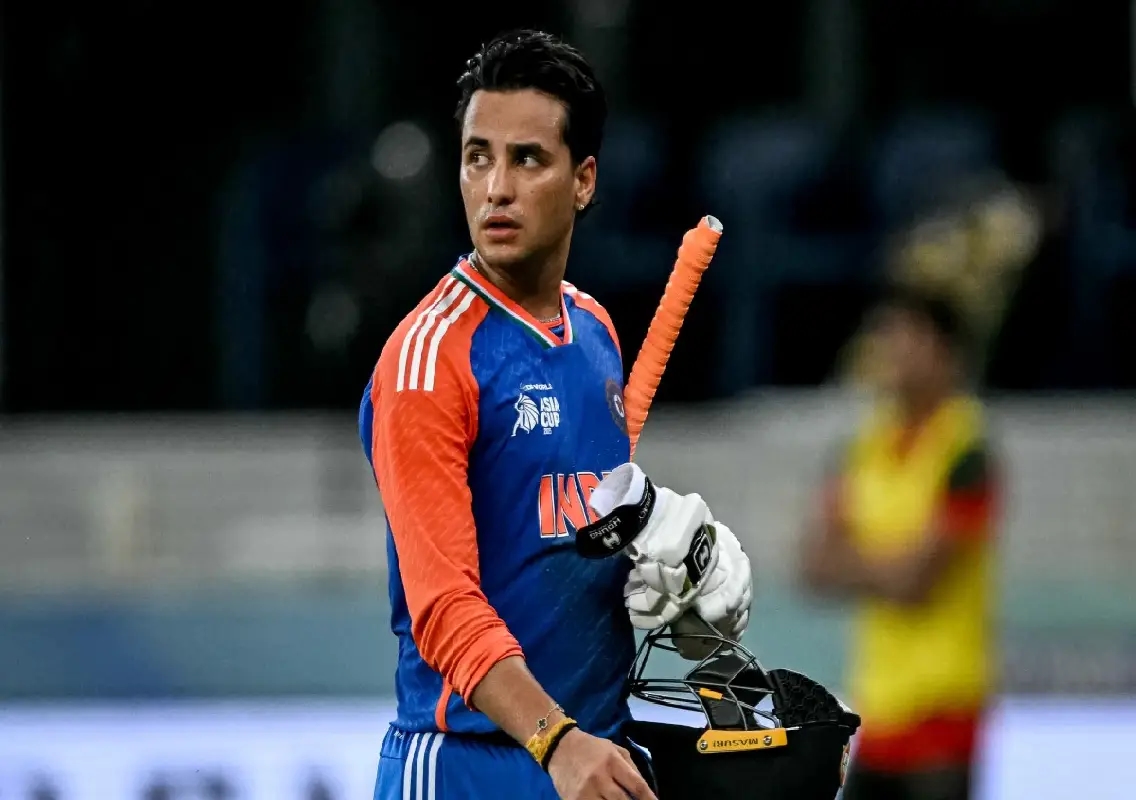


Ahmedabad: Abhishek Sharma delivered a stunning performance in the final of the ICC Men’s T20 World Cup, smashing the fastest fifty in the history of the tournament’s knockout matches during India’s clash with New Zealand national cricket team at the Narendra Modi Stadium on Sunday.
The left-handed opener reached his half-century in just 18 balls, surpassing the previous record of a 19-ball fifty held by Finn Allen. Allen had set the record during the semi-final against South Africa national cricket team at Eden Gardens.
Abhishek’s explosive knock came at a crucial moment in the tournament and helped silence critics who had questioned his place in the team after a difficult run earlier in the competition.
Record-breaking knock in the final
The 25-year-old batter produced an extraordinary innings under pressure, reaching the milestone in only 18 deliveries to create a new record for the fastest fifty in a T20 World Cup knockout match.
His innings also became the fastest half-century of the ongoing tournament.
The previous record for the fastest fifty in a T20 World Cup final was held by Heinrich Klaasen, who had scored a 23-ball half-century against India in the 2024 final held in Barbados.
Abhishek’s achievement therefore placed him at the top of two significant records — the fastest fifty in the current tournament and the fastest in a knockout stage of the T20 World Cup.
Strong response to criticism
Before the final, Abhishek had faced intense criticism for his inconsistent performances during the earlier stages of the tournament.
The young opener had struggled to find form and had recorded three consecutive ducks against the United States national cricket team, Pakistan national cricket team and Netherlands national cricket team.
These failures had led to calls from several analysts and former players for India to consider replacing him in the final.
Among those who voiced concerns was former India captain Sunil Gavaskar, who had suggested that India could include Rinku Singh in place of Abhishek for the summit clash.
However, the Indian team management chose to retain him in the playing XI, a decision that proved decisive in the final.
Aggressive yet calculated innings
Abhishek began his innings cautiously, taking time to assess the pitch conditions and the New Zealand bowling attack.
During the early overs, he focused on rotating the strike and playing solid defensive shots to settle into the match.
Once he found his rhythm, the opener shifted gears and began attacking the bowlers with remarkable confidence.
He struck a series of powerful boundaries and towering sixes, showcasing both precision and timing in his stroke play.
His aggressive approach particularly troubled New Zealand bowlers such as Jacob Duffy, Lockie Ferguson and Matt Henry.
The batter executed a variety of shots ranging from elegant drives over mid-off to well-controlled pulls and lofted hits that sailed over the infield.
Key opening partnership
One of the highlights of Abhishek’s innings was his impressive opening partnership with wicketkeeper-batter Sanju Samson.
The duo added 98 runs in just 43 balls, giving India a powerful start in the high-stakes final.
This partnership placed New Zealand under immediate pressure and significantly shifted the momentum in India’s favour.
Abhishek eventually scored 52 runs from just 21 balls, hitting six fours and three sixes during his brief but impactful innings.
His strike rate and fearless approach helped accelerate India’s scoring rate in the powerplay overs.
Dismissal and standing ovation
Abhishek’s innings came to an end when he was dismissed by all-rounder Rachin Ravindra.
He was caught behind by wicketkeeper Tim Seifert while attempting another attacking shot.
Despite the dismissal, the packed crowd at the Narendra Modi Stadium rose to their feet to applaud his remarkable effort.
The standing ovation reflected the appreciation of fans for an innings that had transformed the early phase of the match.
Statement on the biggest stage
Abhishek Sharma’s performance in the final not only provided India with vital momentum but also reaffirmed his reputation as one of the most exciting young batters in modern T20 cricket.
His ability to deliver under pressure demonstrated both his skill and mental strength.
The innings also highlighted the importance of backing young players during challenging phases, as they can often produce match-winning performances when given the opportunity.
For Abhishek, the knock represented a defining moment in his career — a performance that silenced critics and showcased his potential on one of cricket’s biggest stages.