







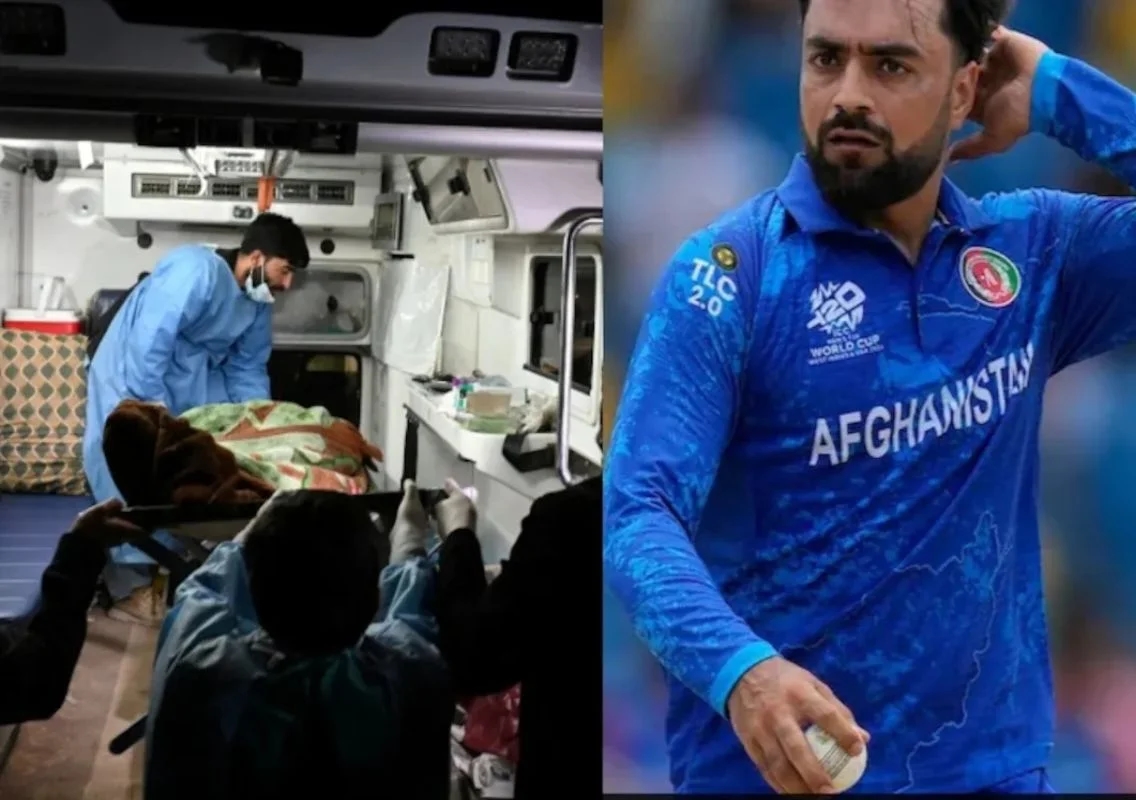


Kabul: Afghan cricketers, including star spinner Rashid Khan, have strongly condemned a deadly airstrike in Kabul that reportedly killed at least 400 people and injured over 250, even as Pakistan denied targeting civilian infrastructure.
The strike, described by Afghan officials as one of the deadliest in recent times, has triggered global concern and outrage, particularly due to allegations that a medical facility was hit during the holy month of Ramadan.
Airstrike claims and conflicting narratives
According to Afghan authorities, the airstrike occurred late on Tuesday night and struck a large drug rehabilitation hospital in Kabul. Deputy government spokesperson Hamdullah Fitrat stated that the 2,000-bed facility suffered extensive damage, leading to significant casualties among patients undergoing treatment.
The Afghan government has accused Pakistan of violating its airspace and deliberately targeting civilian infrastructure. However, Pakistan has firmly rejected these allegations.
Responding to the claims, Attaullah Tarar said that the Pakistani military conducted “precision airstrikes” aimed only at military installations.
He stated that “technical support infrastructure and ammunition storage facilities” were targeted in Kabul and in Nangarhar province, asserting that no hospitals or civilian sites were deliberately hit.
Afghan cricketers express grief and anger
The incident has drawn sharp reactions from members of Afghanistan’s cricket fraternity. Rashid Khan took to X to express his anguish over the reported loss of civilian lives.
“I am deeply saddened by the latest reports of civilian casualties as a result of Pakistani airstrikes in Kabul. Targeting civilian homes, educational facilities or medical infrastructure—either intentionally or by mistake—is a war crime,” he wrote.
He further added that such incidents reflect a “sheer disregard for human lives”, especially during Ramadan, and urged international organisations, including the United Nations, to investigate the matter and hold those responsible accountable.
Former Afghanistan captain Mohammad Nabi also voiced his grief, describing the incident as a devastating loss of innocent lives.
In a deeply emotional message, Nabi said that “hope was extinguished at a hospital” and mourned the deaths of young men seeking treatment, while families waited in anguish outside.
Afghan government condemns attack
Afghanistan’s official spokesperson Zabihullah Mujahid strongly condemned the alleged strike, calling it a violation of international norms.
He accused Pakistan of targeting hospitals and civilian locations, describing the incident as a “crime against humanity”. Mujahid reiterated that such actions go against accepted global principles and demanded accountability.
The Afghan administration has urged the international community to take note of the situation and respond to what it claims is a serious breach of sovereignty and humanitarian law.
Regional tensions and wider implications
The incident comes at a time of heightened tensions in the region, with relations between Afghanistan and Pakistan already strained over security concerns and cross-border militancy.
If confirmed, the scale of casualties would mark one of the most severe escalations in recent months, raising fears of further instability. Analysts warn that such developments could deepen mistrust between the two nations and complicate diplomatic efforts.
The humanitarian dimension of the incident has also drawn attention, particularly given the reported targeting of a medical facility. Attacks on healthcare infrastructure are widely condemned under international law and can have long-term consequences for civilian populations.
Calls for investigation and restraint
Rashid Khan and other voices have called for an independent international investigation into the incident. The demand reflects growing concern over accountability and transparency in conflict zones.
Global organisations, including the United Nations, are expected to monitor the situation closely, though no official statement has been released at the time of writing.
Observers note that establishing the facts will be crucial in determining responsibility and preventing further escalation.
Conclusion
The deadly airstrike in Kabul has sparked outrage, grief, and sharply divided narratives between Afghanistan and Pakistan. While Afghan authorities and public figures allege a targeted attack on civilians, Pakistan maintains that only military sites were struck.
As calls for an independent probe grow louder, the international community faces increasing pressure to intervene diplomatically and ensure accountability. Until verified findings emerge, the incident remains a deeply contested and tragic episode with far-reaching implications.