


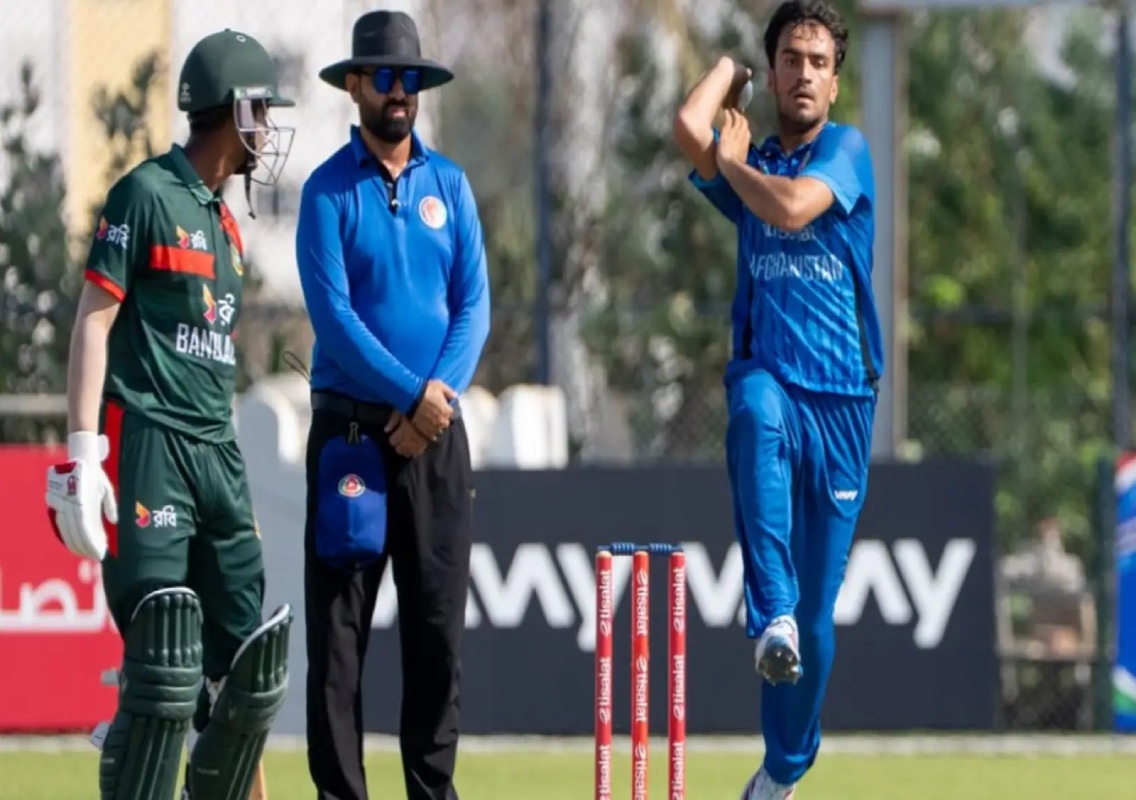


Muscat: Bangladesh Cricket Board (BCB) has written to the Afghanistan Cricket Board (ACB) after alleging that Afghanistan Under-19 captain Sohail Khan bowled 11 overs in a 50-over Youth One-Day International against Bangladesh, exceeding the permitted limit of 10 overs per bowler. The incident, which reportedly occurred during the third match of the bilateral series in Oman on October 21, has also prompted questions about scoring procedures and umpiring decisions.
Bangladesh Under-19 head coach Hannan Sarkar said the team had raised the issue with the match referee and included details in its captain’s report. The team also reportedly submitted video footage of the disputed over. The allegation centres on a possible scoring error that credited an over to a different Afghan player, allowing the disputed over to go unnoticed during the match.
Bangladesh raises concerns over extra over
According to Sarkar, Bangladesh’s team management was tracking the number of overs bowled by Afghanistan’s captain through an online scorecard displayed on the team manager’s phone, as the team did not have access to the official scorer.
The team’s analyst had recorded that Sohail had already completed his 10-over quota. However, by the time the Bangladesh camp noticed the discrepancy, the Afghan captain had reportedly started bowling another over.
Sarkar said Bangladesh informed the umpires immediately after the over was completed. By then, the delivery sequence had already taken place, prompting the team to bring the matter to the attention of match referee Yasir Latifzai.
The Bangladesh coach said the team documented the incident in its captain’s report and attached a separate note specifically referring to the alleged 11 overs. He explained that the standard report form did not have a dedicated section for recording such an incident, so the team added the details separately.
The BCB subsequently contacted the ACB to make it aware of the concerns arising from the series. The communication also covered disputed umpiring decisions, according to reports.
How the alleged scoring error occurred
The central issue is the claim that the official scorecard did not correctly identify the bowler who delivered the disputed over.
According to Sarkar’s account, another Afghan player had initially appeared ready to bowl and handed his cap to the umpire. The plan reportedly changed at the last moment, with Sohail taking the ball and bowling the over instead.
The scorekeeper allegedly failed to notice the change and recorded the over against Shah Faisal Rahimi, rather than Sohail. As a result, the scorecard continued to show Sohail within his 10-over limit even though Bangladesh maintained that he had bowled an additional over.
The Bangladesh team reportedly submitted footage of the disputed over to the match referee to support its account. The issue therefore involves not only the number of overs bowled but also the accuracy of the official match records.
The allegation has not, in the available reports, been presented as a final adjudicated finding. It is important to distinguish Bangladesh’s account of the incident from a formal determination by the relevant cricket authorities.
What are the rules on a bowler’s quota?
In a standard 50-over one-day international, a bowler is ordinarily permitted to deliver a maximum of 10 overs, subject to the applicable playing conditions. This limit helps distribute bowling responsibilities across the team and prevents a single bowler from delivering an excessive share of the innings.
For teams and match officials, accurate records are essential to ensuring that the rules are applied consistently. Scorers track each bowler’s overs, while the on-field umpires supervise the conduct of play and are responsible for administering the match under the applicable regulations.
A last-minute change in the designated bowler can create confusion if the change is not communicated or recorded correctly. However, the precise implications of the alleged incident would depend on the applicable competition regulations and the findings of the match officials.
The dispute highlights the importance of communication between the bowler, captain, umpires and official scorer. A prompt check of the bowling figures can help identify discrepancies before an over begins, while accurate recording can prevent confusion over individual quotas.
Bangladesh also questions umpiring decisions
The alleged extra over was not the only concern raised by the Bangladesh camp. Sarkar said the team had also documented decisions it considered incorrect, including leg-before-wicket (LBW) and caught-behind decisions.
Bangladesh reportedly discussed these concerns with match referee Latifzai and provided supporting material relating to the disputed over. The team’s complaints reflect its dissatisfaction with aspects of the officiating during the series.
A BCB official said the board had written to Afghanistan to inform it of the issues encountered during the bilateral contest and to urge greater care in future matches. The communication was described as an effort to bring the incidents to the other board’s attention.
The allegations do not, by themselves, establish that the umpiring decisions were wrong or that any player deliberately breached the rules. Any formal conclusion would depend on the relevant match records, video evidence and the assessment of the responsible authorities.
Afghanistan win the third match despite controversy
The third Youth ODI saw Afghanistan Under-19 score 237 runs after batting first. Subhan Jakheil contributed 81, while Shah Faisal Rahimi made 80, providing the foundation for Afghanistan’s total.
Bangladesh’s Al Amin Hossain took six wickets in the innings, but his effort was not enough to prevent Afghanistan from setting a competitive target.
In reply, Bangladesh Under-19 were dismissed for 194 in 38.2 overs. Sohail Khan, whose bowling figures became the subject of the subsequent complaint, took two wickets during the innings.
The match result and the controversy surrounding the alleged extra over are separate matters. Bangladesh’s complaint focuses on the bowling quota and other officiating decisions, rather than changing the fact that Afghanistan won the match on the field.
The bilateral series ultimately finished 2-2 after the teams contested four Youth ODIs, according to reports. The schedule had been affected by travel and visa complications, which reduced the planned number of matches.
Scoring accuracy under scrutiny
The incident has drawn attention to the importance of accurate scorekeeping in youth international cricket, where official records help ensure that playing conditions are followed and that teams compete on a fair basis.
For Bangladesh, the immediate step has been to place its concerns on record with the Afghanistan Cricket Board and the match referee. The submitted footage and the disputed scorecard entry could be important in clarifying which bowler delivered the over.
The available reports do not establish whether disciplinary action will follow or whether the match authorities have reached a final conclusion. Any further assessment will depend on the evidence and the response from the relevant cricket boards.
The episode serves as a reminder that even a seemingly small administrative error can become a significant issue when it affects a player’s bowling quota. Clear communication, careful scoring and prompt intervention by officials remain essential to maintaining confidence in the integrity of the game.