







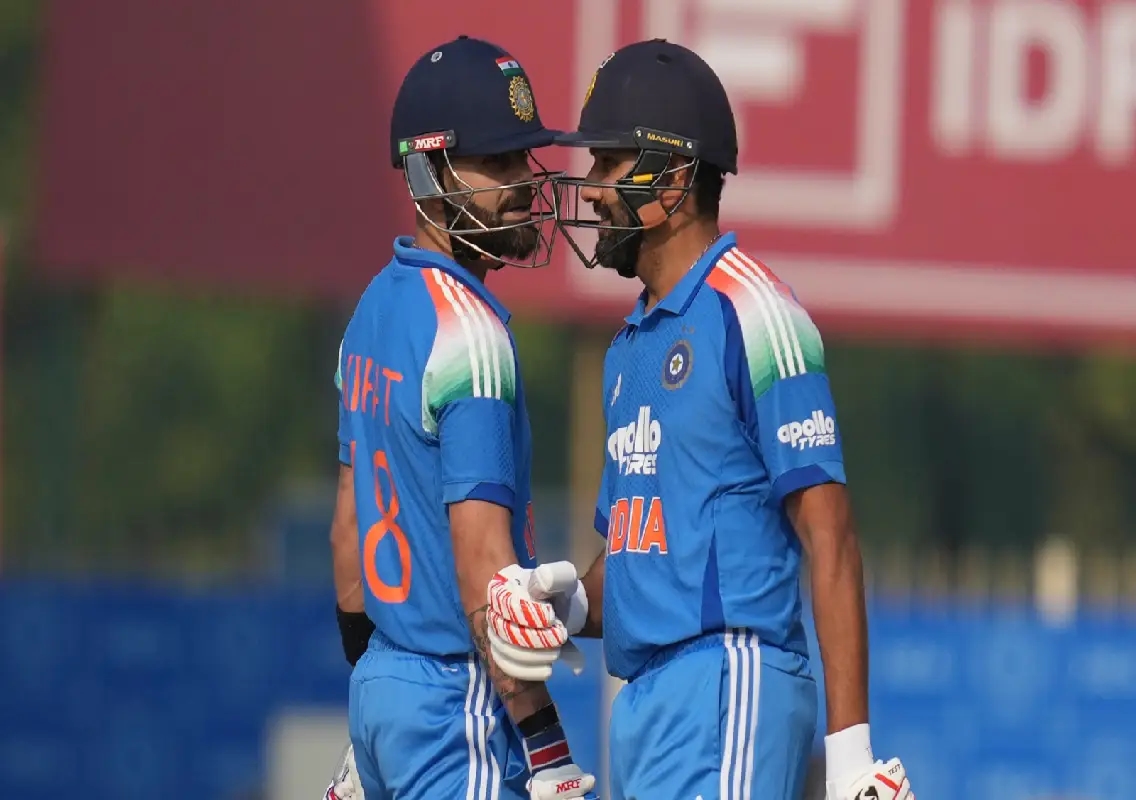


Former India spinner Ravichandran Ashwin has raised concerns over the long-term future of One-Day International (ODI) cricket, suggesting that the format could struggle to remain relevant once iconic players such as Virat Kohli and Rohit Sharma retire from it. Ashwin’s remarks come amid a broader debate within the cricketing fraternity about the shrinking space for ODIs in an era increasingly dominated by T20 cricket and a congested international calendar.
Worry over ODIs beyond 2027 World Cup
Speaking on his YouTube channel Ash Ki Baat, Ashwin said he was uncertain about the future of ODIs after the 2027 World Cup. He noted that while he still follows domestic 50-over cricket, his engagement with the format has reduced compared to shorter formats.
“I am not sure about the future of ODI after the 2027 World Cup. I am a little worried about it,” Ashwin said. “Of course, I am following the Vijay Hazare Trophy, but the manner in which I followed the Syed Mushtaq Ali Trophy, I am finding it slightly difficult to follow.”
Ashwin, India’s second-highest Test wicket-taker with 537 scalps, said the overall volume of ODI cricket, especially involving top international sides, has declined sharply in recent years, which could further weaken the format’s appeal.
Test cricket still has its space
While expressing concern about ODIs, Ashwin was confident that Test cricket would continue to hold its ground despite the rise of T20 leagues worldwide. According to him, the longest format still offers something unique that cannot be replicated elsewhere.
“I feel Test cricket still has space, but ODI cricket, I truly feel, doesn’t have the space,” he said, adding that the cricketing ecosystem needs to assess what audiences genuinely want to watch.
Ashwin, who claimed 156 wickets in 116 ODIs during his international career, said the challenge lies in balancing formats without oversaturating fans. He questioned whether viewers want more ODIs at the cost of either Tests or T20s.
Star power and relevance of the format
Ashwin pointed out that the continued relevance of ODI cricket, especially at the domestic level, appears heavily dependent on star players like Rohit Sharma and Virat Kohli. He cited the recent Vijay Hazare Trophy as an example, noting that interest surged only after the two senior batters returned to play domestic 50-over matches.
“Look, Rohit and Virat came back to the Vijay Hazare Trophy and people started watching it,” Ashwin said. “We have always known that sport is bigger than individuals, but at times these players need to come back to make the game relevant.”
He added that while the Vijay Hazare Trophy is a prestigious domestic tournament, it traditionally attracts limited attention compared to T20 competitions. The presence of Kohli and Rohit, however, brought renewed focus and viewership.
What happens after Rohit and Kohli?
Ashwin posed a crucial question about the future of the format once the two stalwarts step away from ODIs. “Even then, what happens when they stop playing ODIs?” he asked, suggesting that the format may struggle to command the same level of interest without established superstars.
Both Rohit and Kohli have already retired from Test cricket earlier this year and stepped away from T20 Internationals after India’s T20 World Cup triumph last year. As things stand, ODIs remain the only international format in which the two veterans are active.
Decline in bilateral ODIs
The former spinner also linked the issue to the steady decline in bilateral ODI series. With ICC events and T20 leagues taking precedence, boards have increasingly favoured shorter formats in bilateral schedules.
Chief selector Ajit Agarkar had earlier acknowledged this trend, stating that Rohit and Kohli were encouraged to play in the Vijay Hazare Trophy because opportunities to play ODIs at the international level have reduced. This, he said, was necessary to ensure that senior players remain match-ready for major ICC tournaments.
Changing priorities in modern cricket
Ashwin’s comments reflect a broader shift in modern cricket, where commercial interests, broadcasting demands and fan preferences have tilted heavily towards T20 cricket. While ICC events like the World Cup continue to draw massive audiences, bilateral ODIs often struggle for relevance outside multi-nation tournaments.
Several former players and analysts have echoed similar concerns in recent years, arguing that ODIs are caught in an identity crisis — too long to match the instant appeal of T20s and too short to offer the narrative depth of Test cricket.
Conclusion
Ashwin’s candid assessment has reignited the debate over the future of ODI cricket in a rapidly evolving cricketing landscape. With legends like Rohit Sharma and Virat Kohli nearing the twilight of their careers, administrators may soon be forced to rethink how the 50-over format fits into the global schedule. Whether ODIs can reinvent themselves or gradually cede ground to other formats remains one of the biggest questions facing the sport beyond the 2027 World Cup.