







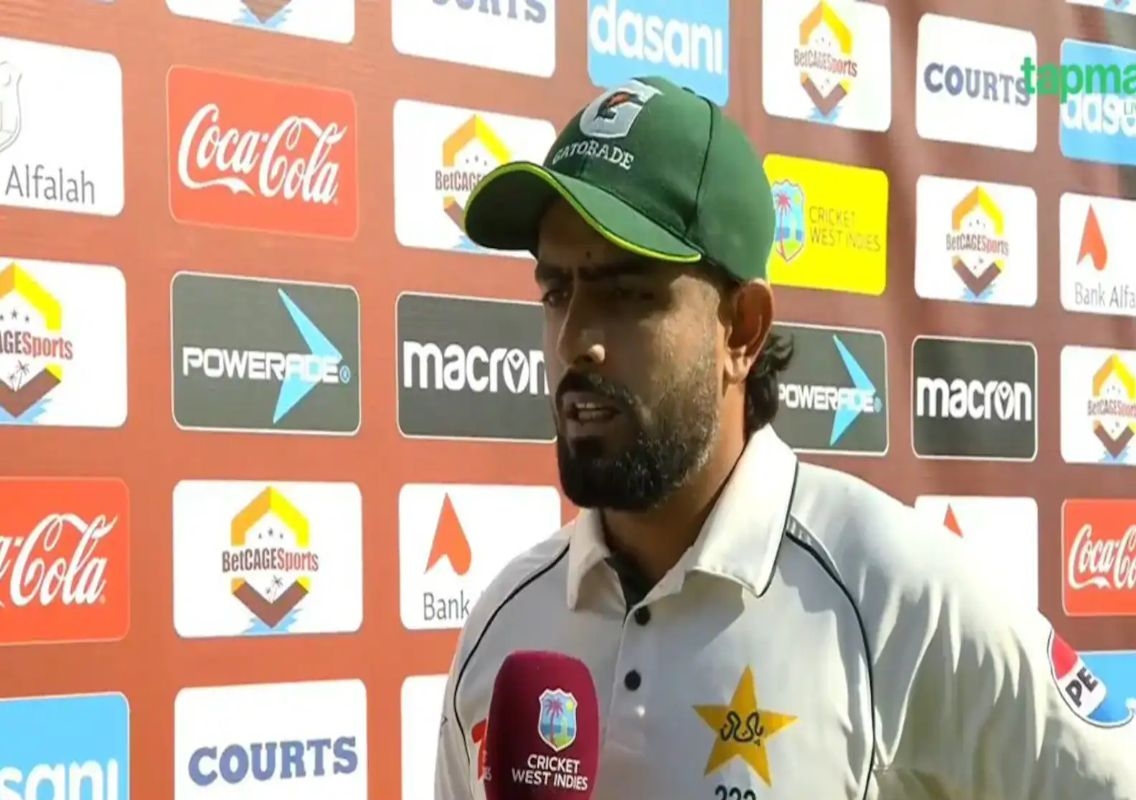


Trinidad: Pakistan’s newly-appointed Test captain Babar Azam did not hold back in his assessment of the team’s batting failure after a shocking defeat to West Indies cricket team in the first Test on Tuesday. Despite a fighting unbeaten half-century from the skipper, Pakistan collapsed dramatically, handing the hosts a memorable victory.
Babar stood tall amid the ruins with an unbeaten 58 off 107 balls in the second innings, but found no meaningful support from the rest of the batting line-up. Pakistan were bowled out for just 120, with the next best contribution coming from No. 11 Mohammad Abbas, who scored 23. The lack of resistance from the top and middle order proved costly in conditions that, according to the captain, were far from unplayable.
Batting collapse draws sharp criticism
Speaking after the match, Babar expressed disappointment at the collective failure of his batters, pointing to the inability to build partnerships as the key reason behind the loss.
“Over the last two days we played some good cricket. Today, though, as a batting unit, we weren’t up to the mark. We kept losing wickets back-to-back and the batting failed,” Babar said during the post-match presentation.
His remarks highlighted a recurring concern for Pakistan in overseas Tests — fragile batting performances under pressure. While Babar showed composure and resilience, the rest of the unit crumbled against disciplined bowling from the West Indies attack.
Pitch not to blame, says skipper
Addressing questions about the playing surface, Babar dismissed suggestions that the pitch was excessively difficult. Instead, he credited the opposition bowlers for making the most of the conditions.
“The surface was good. We expected some movement with the new ball because that’s natural here, and we were prepared for that. But they bowled very well and used the conditions brilliantly,” he explained.
He added that while the pitch began to show uneven bounce later in the match, it was still manageable for batters willing to apply themselves and spend time at the crease.
Injury setback worsens Pakistan’s woes
Pakistan were also hampered by an injury to former captain Shan Masood, who batted lower down the order despite suffering a fractured finger. Masood managed just 3 runs off 15 balls, and Babar acknowledged that his absence from the top order had a significant impact.
“Yes, it affected us because unfortunately his finger isn’t in good condition. It’s fractured, so we definitely missed him,” Babar noted.
The skipper emphasised the importance of surviving the initial overs with the new ball and building partnerships — a strategy his team failed to execute.
Need for introspection ahead
With Pakistan’s struggles in away Tests continuing, Babar called for serious introspection within the squad. He stressed the need for the team to learn from its mistakes and improve its approach in challenging conditions.
“We will sit together and discuss these things because while the result isn’t in our hands, we can certainly address our mistakes. We will do our best to change those things,” he said.
The defeat once again exposed Pakistan’s vulnerability outside home conditions, raising questions about the team’s consistency and temperament. As the series progresses, the focus will be on whether the batting unit can regroup and deliver a stronger performance.
Conclusion
Pakistan’s loss in Trinidad serves as a stark reminder of the challenges of Test cricket in foreign conditions. While Babar Azam’s lone effort stood out, cricket remains a team game, and without collective contributions, victories remain elusive. The team management now faces the task of rebuilding confidence and ensuring that such collapses do not become a recurring theme.