







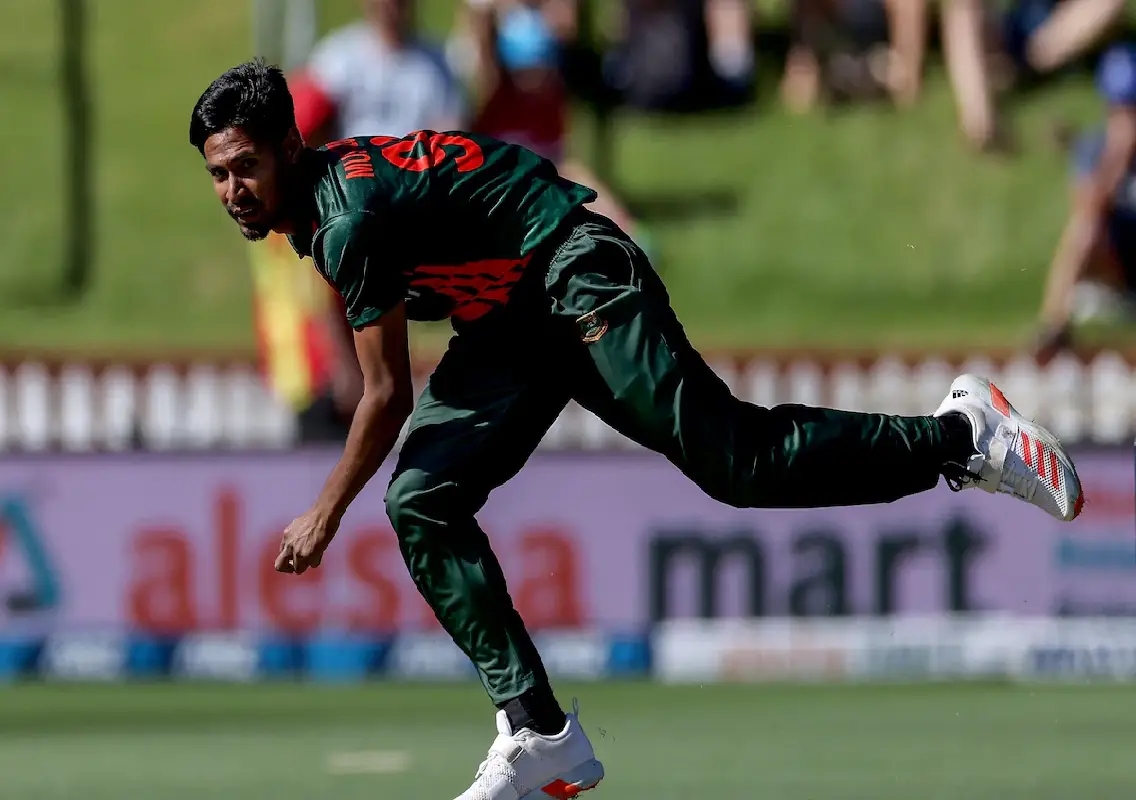


New Delhi: The Bangladesh government has ordered a suspension of the broadcast of all matches of the upcoming Indian Premier League (IPL) season, triggering a fresh flashpoint in cricketing relations between the two countries. The decision follows the release of Bangladesh fast bowler Mustafizur Rahman from Kolkata Knight Riders (KKR), reportedly after instructions issued by the Board of Control for Cricket in India (BCCI), a move that has sparked anger and debate in Bangladesh.
Telecast ban ordered amid growing outrage
The directive to suspend IPL broadcasts was issued by Bangladesh’s Ministry of Information and Broadcasting, which said the decision was taken in view of public sentiment following Rahman’s exclusion from the IPL. In an official statement, the ministry said there was “no reasonable justification” for the decision to release the Bangladesh pacer and claimed it had caused “pain, distress, and anger among the people of Bangladesh”.
“Under these circumstances, until further instructions are issued, it is hereby ordered that the broadcast/telecast of all Indian Premier League (IPL) matches and related programmes be suspended,” the statement said.
The IPL 2026 season is scheduled to begin on March 26, and the ban would mean Bangladeshi television viewers will not be able to watch any matches or related content if the suspension remains in force.
Ex-BCCI official says reaction was expected
Reacting to the development, a former BCCI official said Bangladesh’s response was a predictable outcome of the controversy. Speaking to news agency IANS, the official remarked that the ban was a direct reaction to Rahman’s release.
“For every action, there is a reaction. The Bangladesh Cricket Board is merely doing what it believes is within its authority. ‘Takleef hui hai’, so obviously there will be a reaction,” the former official said.
However, he downplayed the potential impact of the decision on the IPL or Indian cricket, suggesting that the league’s commercial and global standing would remain largely unaffected despite the loss of viewership from Bangladesh.
Mustafizur Rahman’s release at the centre of controversy
Mustafizur Rahman, one of Bangladesh’s most recognisable cricketing faces, was part of the Kolkata Knight Riders squad before being released ahead of the 2026 IPL season. While detailed reasons for his exclusion have not been officially made public by the BCCI or the franchise, the decision has been widely perceived in Bangladesh as unfair and politically motivated.
The controversy intensified after reports suggested that the release followed a directive from the BCCI, rather than being a purely franchise-level call based on form or team requirements. This perception has fuelled criticism from fans, former players and officials in Bangladesh, many of whom see the move as discriminatory.
Bangladesh Cricket Board escalates the matter
In response to Rahman’s release, the Bangladesh Cricket Board (BCB) convened an emergency board meeting to discuss the implications of the decision and the broader issues surrounding player treatment in overseas leagues.
According to sources, the BCB has also approached the International Cricket Council (ICC) to raise concerns over the situation. In a significant escalation, Bangladesh has sought the relocation of its matches in the 2026 ICC Men’s T20 World Cup away from India, citing safety and security concerns for its players and officials.
India and Sri Lanka are scheduled to co-host the 2026 ICC Men’s T20 World Cup, with matches planned across multiple venues in both countries. Bangladesh’s request, if formally considered by the ICC, could complicate logistical and scheduling arrangements for the global tournament.
Political and public reactions in Bangladesh
The IPL telecast ban has found strong support among sections of the Bangladeshi public, where sentiment around the Mustafizur Rahman episode remains highly charged. Social media platforms in Bangladesh have been flooded with posts criticising the BCCI and expressing solidarity with the national team player.
Several commentators have framed the issue as one of national pride, arguing that Bangladeshi cricketers should not be subjected to what they see as arbitrary decisions by foreign boards. The government’s swift action to suspend IPL broadcasts has been portrayed domestically as a stand taken in defence of a national sporting icon.
Limited impact expected on IPL revenues
Despite the strong reaction from Bangladesh, cricket administrators and analysts in India believe the IPL’s commercial prospects are unlikely to suffer significantly. The league commands massive domestic and international audiences, with broadcast and digital rights deals worth several thousand crore rupees.
While Bangladesh represents a passionate cricket market, it is relatively small in terms of overall IPL revenue. Industry experts say advertisers and broadcasters may see some regional impact, but the league’s global appeal and financial stability are not expected to be shaken by the ban.
A growing diplomatic undertone
The episode has added a diplomatic undertone to what began as a sporting decision. With Bangladesh now involving the ICC and raising concerns about future international tournaments, the situation has moved beyond franchise cricket into the realm of bilateral sporting relations.
Cricketing ties between India and Bangladesh have historically been competitive but sensitive, with past controversies occasionally spilling into political discourse. Observers say how the BCCI, IPL authorities and the ICC respond in the coming weeks will be crucial in determining whether the standoff escalates further or is quietly resolved.
Conclusion
Bangladesh’s unprecedented decision to suspend IPL telecasts underscores the depth of anger over Mustafizur Rahman’s release and highlights how player-related controversies can quickly snowball into larger institutional and political disputes. While the IPL itself may remain largely insulated from financial harm, the incident has strained cricketing relations and raised fresh questions about governance, fairness and communication in the global game.