


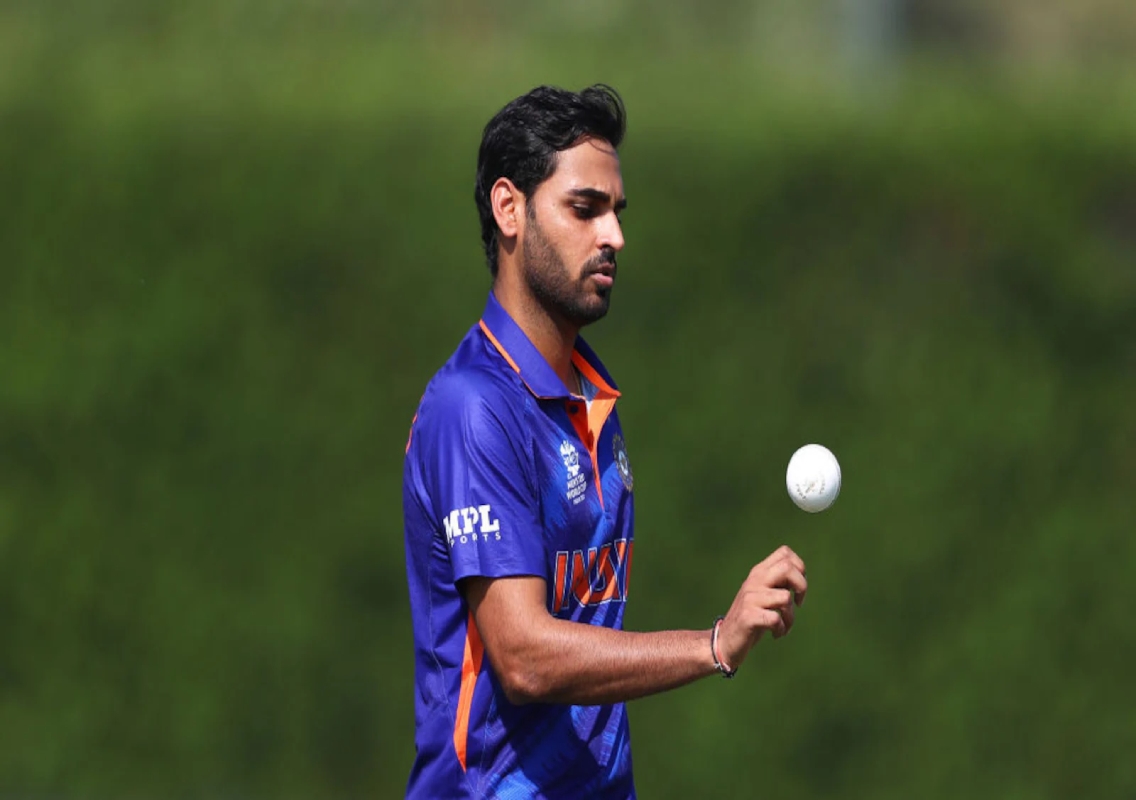


Bengaluru: India have added veteran fast bowler Bhuvneshwar Kumar to their squad for the fifth and final T20I against the West Indies after Arshdeep Singh sustained a blow to his bowling shoulder during the fourth match.
India’s decision to bring back Bhuvneshwar comes at a crucial stage of the series, with the team’s bowling attack facing challenges in containing the West Indies batters. Bowling coach Morne Morkel has welcomed the experienced seamer’s return, highlighting the value his experience and recent performances for Royal Challengers Bengaluru (RCB) could bring to a relatively young bowling unit.
Morkel spoke to reporters ahead of the series decider in Bengaluru, expressing his enthusiasm about having Bhuvneshwar back in the squad.
Morkel welcomes Bhuvneshwar’s return
Morkel said Bhuvneshwar’s experience and performances in the Indian Premier League had made him a valuable addition to the team.
“I’m really excited to have him back in the mix. He’s done exceptionally well for RCB in the past, and I think his experience will add a lot of value to a relatively young bowling attack. So, it’s great to have him back, and I’m really looking forward to it,” Morkel said.
Bhuvneshwar is known for his ability to move the ball and execute variations, including yorkers, in different phases of a limited-overs match. His inclusion gives India another experienced pace option as they prepare for the decisive encounter.
The selection also comes after Arshdeep sustained a shoulder blow during the fourth T20I. With Arshdeep described as the only experienced specialist pacer in the side, Bhuvneshwar’s addition provides further depth to the bowling group.
However, his inclusion in the squad does not automatically confirm that he will feature in the final playing XI. The team management will have to assess its options before the match.
India’s bowling attack faces pressure
India’s bowling has come under scrutiny during the series, with the West Indies repeatedly posting or chasing large totals. The matches have highlighted the challenge of defending high scores in T20 cricket, where a few overs of expensive bowling can significantly alter the result.
Morkel said the focus was on helping India’s young bowlers make better decisions under pressure, particularly at Bengaluru’s high-scoring venue.
He emphasised that consistently executing deliveries such as yorkers requires experience and match practice. In high-scoring matches, bowlers need to assess the batter’s intentions, select the appropriate delivery and execute their plans under pressure.
For India, the challenge is not limited to restricting runs. The bowling unit must also identify opportunities to take wickets, prevent partnerships from developing and manage the closing overs effectively.
The series has offered a demanding test of those skills, with the West Indies batting line-up demonstrating its ability to accelerate and put the opposition under pressure.
West Indies dominate the second T20I
The second match in Ranchi exposed India’s difficulties in defending a substantial total. The West Indies chased down India’s target of 250, reaching 252/4 in 18.3 overs to register a high-scoring victory.
The result underlined the importance of controlling the scoring rate even when the batting side has produced a total exceeding 200. It also placed greater attention on India’s ability to deliver under pressure during the middle and final overs.
India’s bowlers subsequently responded in the third match, showing that the unit could defend a challenging total when it executed its plans more effectively.
India bounce back in the third match
India defended 223 runs in the third T20I to secure a 14-run victory, despite the West Indies scoring 209/7.
The win demonstrated the value of maintaining pressure and taking wickets while defending a large total. It also prevented the series from becoming a one-sided contest and kept India in contention.
However, the team was unable to carry that defensive performance into the next match, with the West Indies once again finding ways to score freely.
Shai Hope powers West Indies in fourth T20I
The fourth match brought another difficult outing for India’s bowlers. West Indies captain Shai Hope scored an unbeaten century as his side reached 247/3.
India were unable to complete the chase and fell 24 runs short, leaving the series finely poised ahead of the final encounter.
The result renewed questions about India’s ability to contain aggressive batting and defend large totals. It also increased the importance of selecting the right bowling combination for the series decider.
Experience and execution key for the decider
The fifth T20I gives India an opportunity to address the problems exposed during the series and compete for the final result. Bhuvneshwar’s return provides an additional experienced option, while the coaching staff continues to work with the younger bowlers on decision-making and execution.
At Bengaluru, where the report describes the venue as high-scoring, India will need disciplined bowling, effective variations and better control during the closing overs.
Morkel’s comments make clear that the team values what Bhuvneshwar can contribute to the bowling group. Whether the veteran seamer plays in the final XI remains a selection decision, but his inclusion gives India another option at a critical point in the series.
With both sides having produced high-scoring performances, the series decider will test India’s ability to adapt, execute its plans and respond to the pressure of a decisive T20I.