







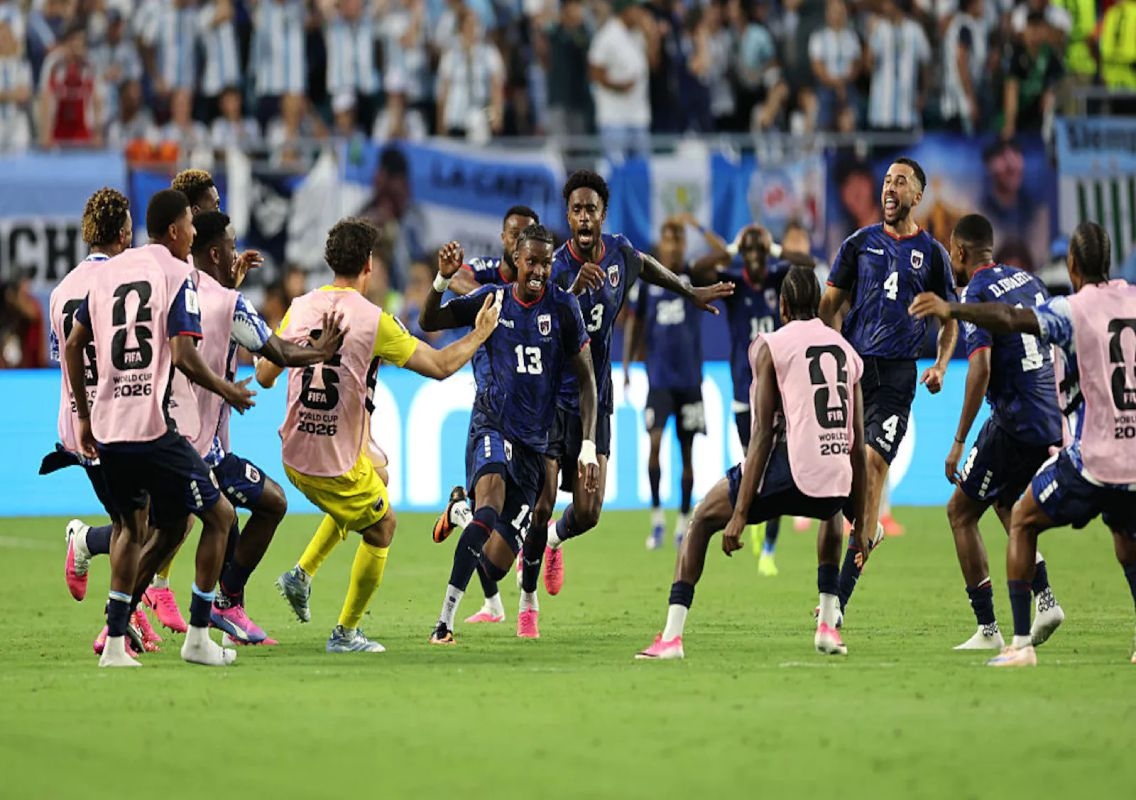


Kansas City: Cape Verde produced one of the most spirited performances of the FIFA World Cup 2026 despite losing 3-2 after extra time to defending champions Argentina national football team in a dramatic Round of 32 clash that left fans and neutrals in awe.
The African underdogs, representing a nation of just over 5 lakh people, stunned global audiences by taking Argentina to the edge in a match that swung repeatedly before being decided by fine margins. Even star captain Lionel Messi was forced to work harder than expected as Cape Verde refused to back down throughout 120 minutes of high-intensity football.
Underdogs refuse to be intimidated
Cape Verde entered the contest as overwhelming outsiders, but quickly showed they were not in Kansas City merely to make up the numbers. Their compact defensive structure and disciplined midfield play frustrated Argentina for long spells, while goalkeeper Vozinha made crucial saves to keep them in the contest.
Argentina struck first in the 29th minute through Messi, but Cape Verde’s response was immediate in spirit, even if not on the scoreboard initially. The resilience they displayed was a continuation of their impressive tournament run, which had already included a famous draw against Spain and a high-scoring stalemate with Uruguay.
Rising from group stage surprise to global attention
Cape Verde’s journey at the tournament had already captured attention before the knockout stage. Their disciplined draw against Spain saw goalkeeper Vozinha produce a standout performance with multiple saves, while the squad’s defensive organisation earned widespread praise.
They followed that with a 2-2 draw against Uruguay, where Kevin Pina’s stunning free-kick marked their first-ever World Cup goal at this level, while Helio Varela added another crucial strike to secure qualification momentum.
By the time the knockout rounds arrived, Cape Verde had transformed from unknown participants into one of the tournament’s most talked-about stories.
Drama unfolds in a thrilling knockout battle
The Round of 32 clash against Argentina turned into a classic. After Messi opened the scoring, Cape Verde refused to collapse. Their equaliser through Deroy Duarte brought belief back into the match, and they even forced extra time after holding firm under pressure.
Argentina regained the lead through Lisandro Martinez early in extra time, but Cape Verde responded in spectacular fashion. Sidny Lopes Cabral delivered a stunning equaliser, curling in a goal that momentarily stunned the reigning champions and even drew admiration from the crowd.
However, Argentina eventually found the decisive breakthrough when Cristian Romero scored from a Messi corner, with a deflection proving costly for Cape Verde’s defence.
Heroic effort earns global respect
Despite the defeat, Cape Verde refused to fade away. They continued to press and forced multiple saves from Emiliano Martínez in the closing stages. When the final whistle blew, even Argentina’s players acknowledged the challenge they had faced.
The performance underlined Cape Verde’s remarkable growth during the tournament, turning them into one of the most admired underdog stories of the competition. Their ability to challenge elite opposition repeatedly highlighted their tactical discipline, mental strength and unity.
A campaign that changed perception
Cape Verde’s World Cup run may have ended in defeat, but their impact extended far beyond the result. From being largely unknown at the start of the tournament to pushing champions Argentina to extra time, they became a symbol of football’s unpredictability.
Their journey reinforced the value of the expanded format of the World Cup, giving smaller nations a platform to compete and inspire. For Cape Verde, the tournament will be remembered not for elimination, but for rewriting expectations and earning global respect.
Conclusion
Cape Verde’s 3-2 extra-time defeat to Argentina will be remembered as one of the standout matches of FIFA World Cup 2026. While Messi and Argentina advanced, it was the African side that captured hearts, proving that even the smallest nations can produce moments that define football’s greatest stage.