




London: Former England all-rounder Chris Woakes has criticised the England and Wales Cricket Board (ECB) over the manner in which his international career came to an end, saying the handling of his omission from the 2025–26 Ashes tour left him disappointed.
Woakes, who represented England across formats and played 62 Test matches, has spoken about the experience while reflecting on his career in his autobiography, The Wizard, co-written with Guardian journalist Ali Martin.
The former fast bowler was particularly unhappy with the way England managing director Rob Key publicly indicated that he was no longer part of the team’s plans. Woakes felt the decision should have been communicated to him privately before it was discussed publicly.
Woakes questions how ECB communicated its decision
Woakes’ frustration centred not simply on being left out of England’s Ashes plans but on how the decision was communicated.
According to reports on his comments, Key publicly stated that Woakes was not in England’s plans for the tour of Australia. Woakes felt the announcement was impersonal and that a direct conversation would have been a more considerate way to handle the situation.
He described the manner of his departure as cold and shabby, expressing disappointment that he had not been given the opportunity to discuss the decision privately before it became public.
Woakes also indicated that he had generally maintained a good relationship with Key and suggested that the wording may not have been intended to cause offence. Nevertheless, he believed a private discussion would have been more appropriate after his years of service to England.
His comments bring attention to the challenges experienced by established international players when selection decisions signal the end of their careers at the highest level.
The Oval Test became an emotional final chapter
Woakes’ final Test appearance against India at The Oval in August 2025 became one of the most memorable moments of his international career.
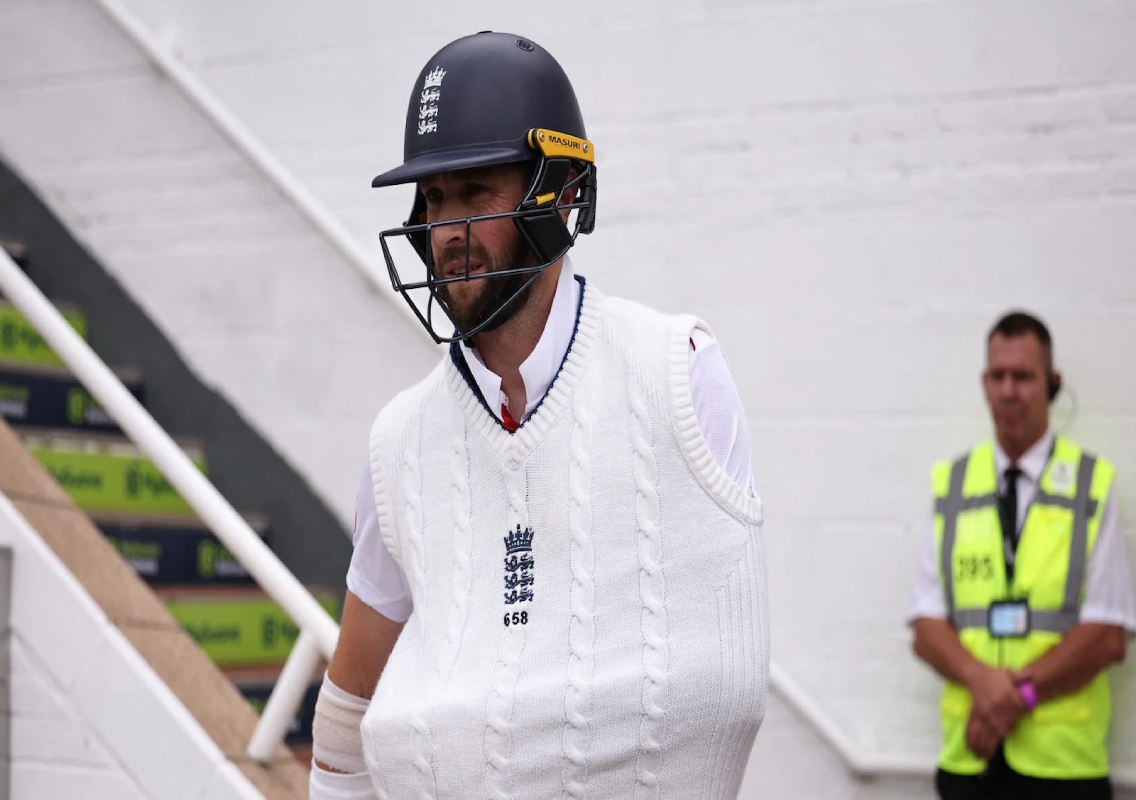
He dislocated his shoulder while fielding during the match but still walked out to bat in England’s second innings when the team needed runs. With his injured arm supported in a sling, he was able to hold the bat with only one hand.
England were chasing a target in a closely contested Test and needed a late contribution to keep their hopes alive. Woakes joined Gus Atkinson at the crease, but the injury left him severely restricted.
Atkinson continued the chase and brought England closer to the target before being dismissed. Woakes did not face a delivery, and India went on to win the match by six runs.
The moment drew attention from spectators and cricket followers, with Woakes receiving an ovation as he entered the field despite his injury.
Playing with an injury brought mixed emotions
Reflecting on that appearance, Woakes described the experience as both meaningful and painful. Walking out in front of a packed stadium was a special moment, but the circumstances also highlighted the difficulty of continuing to play while seriously injured.
He acknowledged the fear involved in facing fast bowling with one functioning arm. The possibility of being struck by a hard cricket ball made the situation particularly challenging, especially with India’s fast bowlers operating at high pace.
Woakes also expressed disappointment at being unable to contribute directly with the bat. While he wanted to support his team, he recognised the risks involved in attempting to play under those conditions.
The episode became a defining image of his final Test, reflecting his determination to be available for England even when injury severely limited his ability to perform.
A career spanning 62 Tests and two World Cups
Woakes built a long international career as a fast-bowling all-rounder, contributing with both the ball and the bat. He played 62 Tests for England, taking 192 wickets and scoring more than 2,000 runs in the format.
He was also part of England squads that won the 2019 ODI World Cup and the 2022 T20 World Cup. His international career included several major tournaments and years of service across different formats.
After his international career ended, Woakes continued playing county cricket for Warwickshire. His experience and performances at domestic level remained part of his professional cricket journey.
His reflections on the end of his England career also form part of his wider account of the demands of professional cricket, the relationships within the team environment and the challenges players face as their international careers approach their conclusion.Woakes’ comments renew focus on player-management relationships
Woakes’ criticism highlights the importance of communication between players and team management, particularly when decisions affect a player’s future at international level.
Selection decisions are part of professional sport, and teams must make choices based on their plans and requirements. However, Woakes’ comments suggest that the way such decisions are communicated can have a lasting impact on players who have spent years representing their country.
For Woakes, the disappointment was tied to how the news was delivered rather than simply the prospect of missing the Ashes tour. His account offers a personal perspective on the end of an international career that included major trophies, significant performances and a memorable final Test against India.