


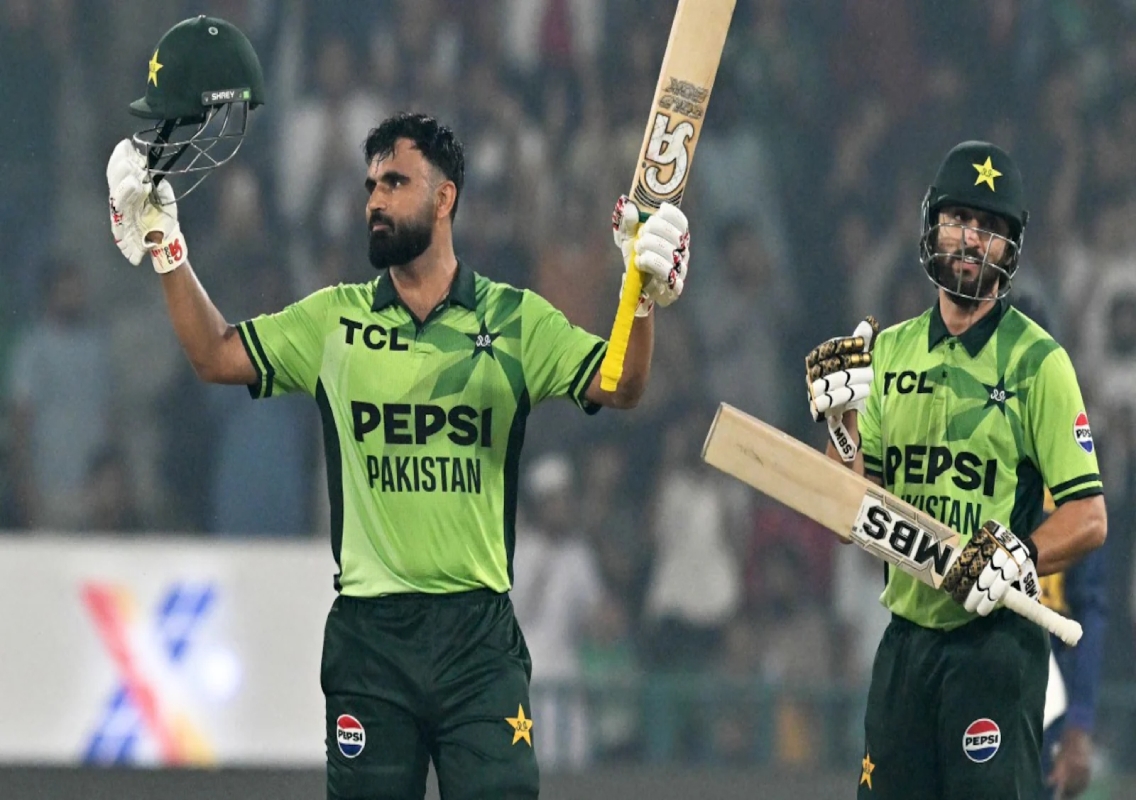


Lahore: Fakhar Zaman struck a superb century as Pakistan defeated Sri Lanka by three wickets in the final of the ODI tri-series at Gaddafi Stadium on October 31, chasing down a target of 326 with nine balls to spare.
Pakistan finished at 331/7 in 48.3 overs after Sri Lanka had posted 325/8 in their allotted 50 overs. The victory gave the hosts the tri-series title in front of their home supporters and ended their wait for a major ODI tri-series triumph since 2008.
Zaman led the chase with 127 runs from 99 deliveries, while Saad Baig scored a valuable 74 and Arafat Minhas produced a rapid 61. Their contributions helped Pakistan recover from early setbacks and complete a demanding run chase.
Sri Lanka had built their total around Kamindu Mendis, who scored 131, and Pavan Rathnayake, who contributed 77. However, their efforts were not enough to prevent Pakistan from claiming the trophy.
Kamindu Mendis and Pavan Rathnayake lift Sri Lanka to 325
After Pakistan won the toss and elected to field, Sri Lanka made a steady start through openers Avishka Fernando and Kamindu Mendis.
The pair added 87 runs for the opening wicket, providing a solid foundation. Fernando scored 38 from 49 balls before being dismissed by Salman Ali Agha.
Mendis continued to build the innings and found an effective partner in Rathnayake. The two batters put together a significant partnership, keeping the scoreboard moving and putting pressure on Pakistan’s bowling attack.
Mendis eventually completed his century, scoring 131 from 128 deliveries. His innings included 12 fours and two sixes, making him the leading run-scorer for Sri Lanka.
Rathnayake provided aggressive support with 77 from 65 balls, striking eight fours. Their partnership helped Sri Lanka move towards a challenging total.
Pakistan’s bowlers managed to take wickets at important stages, preventing Sri Lanka from accelerating further towards the end. Shaheen Shah Afridi claimed two wickets, while Naseem Shah, Haris Rauf and Salman Ali Agha also contributed to the bowling effort.
Sri Lanka eventually finished with 325/8 in 50 overs, leaving Pakistan with a target of 326 to win the final.
Pakistan suffer early setbacks in the chase
Pakistan’s pursuit of the target did not begin smoothly. The hosts lost Maaz Sadaqat and Babar Azam early, leaving the batting side under pressure.
Sadaqat was dismissed for five, while Babar returned to the pavilion without scoring. The early wickets gave Sri Lanka an opportunity to take control of the final.
Fakhar Zaman, however, remained composed and began rebuilding the innings. He was joined by Saad Baig, and the pair gradually shifted the momentum towards Pakistan.
Rather than allowing the early dismissals to disrupt the chase, the two batters concentrated on building a substantial partnership. Zaman combined his experience with attacking stroke play, while Baig provided stability at the other end.
Their partnership became the turning point of the innings, giving Pakistan a realistic chance of reaching the target despite the difficult start.
Fakhar Zaman scores 127 in match-winning innings
Zaman produced one of the defining performances of the final, scoring 127 from 99 balls.
The left-hander struck 11 fours and six sixes, maintaining an attacking approach while ensuring that Pakistan remained in contention throughout the chase.
The century was his 12th in ODI cricket and further strengthened his record in high-pressure matches. His ability to score quickly without losing control of the innings proved crucial against Sri Lanka.
Zaman’s dismissal came after he had done much of the work required to put Pakistan in a strong position. His innings provided the foundation for the lower middle order to finish the chase.
Baig also made a major contribution, scoring 74 from 75 deliveries. His maiden ODI half-century for Pakistan came at an important stage and included 11 fours.
The pair added 149 runs for the third wicket, helping Pakistan recover from 23/2 and move towards the target.
Arafat Minhas delivers decisive late assault
Pakistan still needed significant contributions after the dismissals of Zaman and Baig. Sri Lanka attempted to regain control by taking wickets in the middle and lower order.
Arafat Minhas then produced a decisive attacking innings. He scored 61 from just 31 deliveries, hitting three fours and four sixes.
His aggressive approach changed the pace of the chase at a crucial moment. Hasan Nawaz supported him with an unbeaten 37 from 45 balls, ensuring that Pakistan did not lose their way during the closing stages.
The pair added 94 runs for the sixth wicket, taking Pakistan closer to victory when the required run rate was becoming increasingly important.
Minhas eventually departed, but the damage had been done. Captain Shaheen Shah Afridi remained at the crease and finished the contest with a six, taking Pakistan to 331/7 in 48.3 overs.
Pakistan completed the chase with three wickets remaining and nine balls to spare.
Pakistan end tri-series campaign with trophy
The final victory gave Pakistan the ODI tri-series title after a competitive tournament involving Sri Lanka and England.
The hosts’ successful chase of 326 was particularly significant because it was among the highest successful run chases in an ODI final. It also provided a strong response after Pakistan had lost to Sri Lanka earlier in the competition.
Fakhar Zaman’s century was central to the victory, but the contributions from Baig, Minhas and Nawaz demonstrated the depth of Pakistan’s batting effort.
For Sri Lanka, Mendis and Rathnayake produced outstanding innings, but the bowling attack could not defend the total against Pakistan’s determined chase.
The result gives Pakistan valuable confidence as the team continues preparations for the 2027 ICC Men’s Cricket World Cup. The final also provided encouraging signs for the hosts, particularly through the performances of younger players such as Saad Baig and Arafat Minhas.