







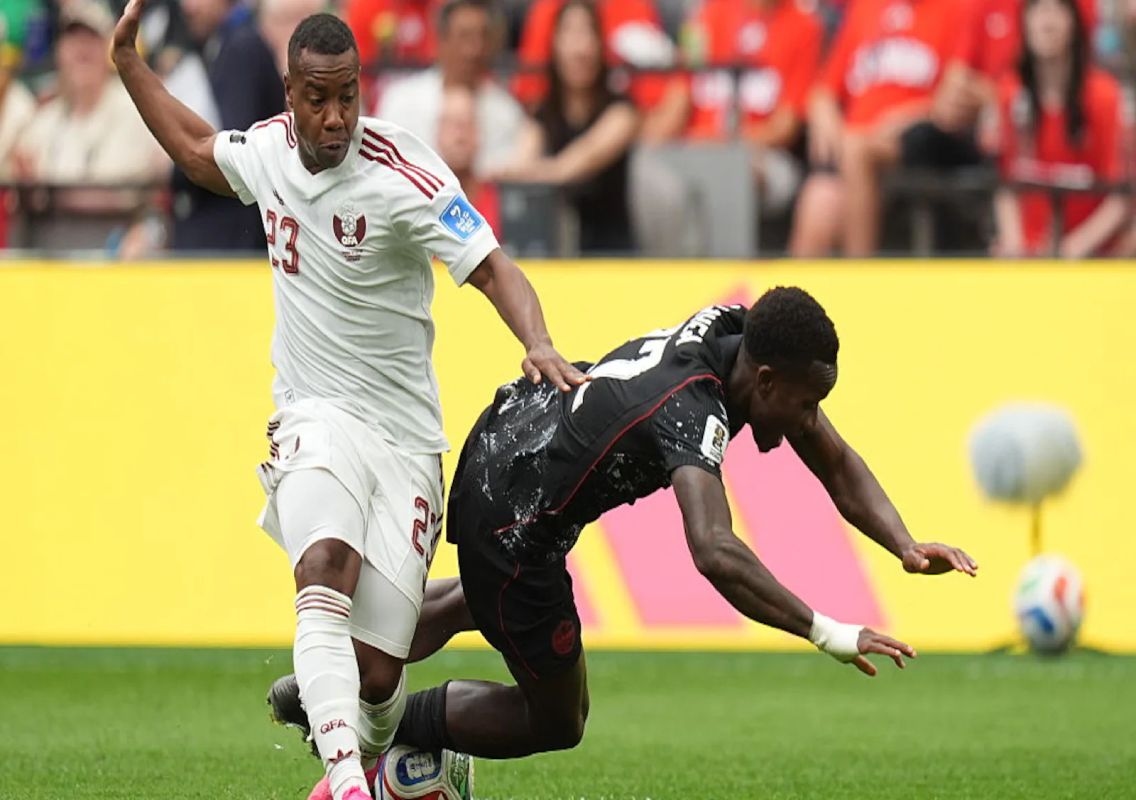


Vancouver: FIFA has handed Qatar midfielder Assim Madibo a five-match suspension following a dangerous tackle that resulted in a serious leg injury to Canada’s Ismael Kone during a FIFA World Cup 2026 match.
The incident occurred during Canada’s emphatic 6-0 victory over Qatar in Vancouver last week. While the result marked a historic moment for the co-hosts, it was overshadowed by Kone’s severe injury, which required immediate medical attention and surgery.
Reckless tackle leads to serious injury
The foul took place in the 51st minute when Madibo lunged into a challenge from behind, catching Kone’s leg. Players nearby immediately signalled the severity of the situation as Kone fell to the ground in visible pain.
Medical staff rushed onto the pitch, and the Canadian midfielder was stretchered off before being transported to hospital. Doctors later confirmed that he had suffered fractures to both the tibia and fibula in his left leg.
Kone subsequently underwent emergency surgery, with initial reports suggesting he could be sidelined for several months during recovery.
Immediate red card and apology
Madibo was shown a straight red card by the referee following the challenge, reflecting the seriousness of the offence. After the match, the Qatar player reportedly expressed remorse and personally apologised to Kone for the incident.
Despite the apology, the severity of the injury prompted FIFA’s disciplinary committee to conduct a detailed review of the challenge.
FIFA disciplinary action
On Wednesday, FIFA confirmed a five-match suspension for Madibo, citing “serious foul play” as the reason for the punishment. The governing body stated that such actions endanger player safety and will not be tolerated.
Qatar retains the right to appeal the decision, although no official response had been issued at the time of reporting.
While a five-match ban is considered significant, it is not unprecedented in World Cup history.
Past World Cup disciplinary cases
FIFA has previously handed out severe punishments for on-field misconduct. In the 2014 World Cup, Uruguay striker Luis Suarez received a nine-match international ban and was suspended from all football-related activities for four months after biting Italy’s Giorgio Chiellini.
Similarly, during the 1994 tournament, Italy defender Mauro Tassotti was banned for eight matches after breaking the nose of Spain’s Luis Enrique with an elbow challenge.
These cases highlight FIFA’s strict stance on dangerous play and player safety during major tournaments.
Kone responds with gratitude
Following surgery, Kone shared an emotional message on social media, thanking fans and well-wishers for their support.
“You can’t even imagine how grateful I am to everyone who reached out and has me in their prayers,” he wrote.
His injury has been a significant blow to Canada, who have otherwise enjoyed a historic campaign in the tournament.
Conclusion
The suspension of Assim Madibo underscores FIFA’s commitment to maintaining discipline and ensuring player safety at the highest level. As Kone begins his recovery, the incident serves as a reminder of the physical risks in football and the importance of fair play.