







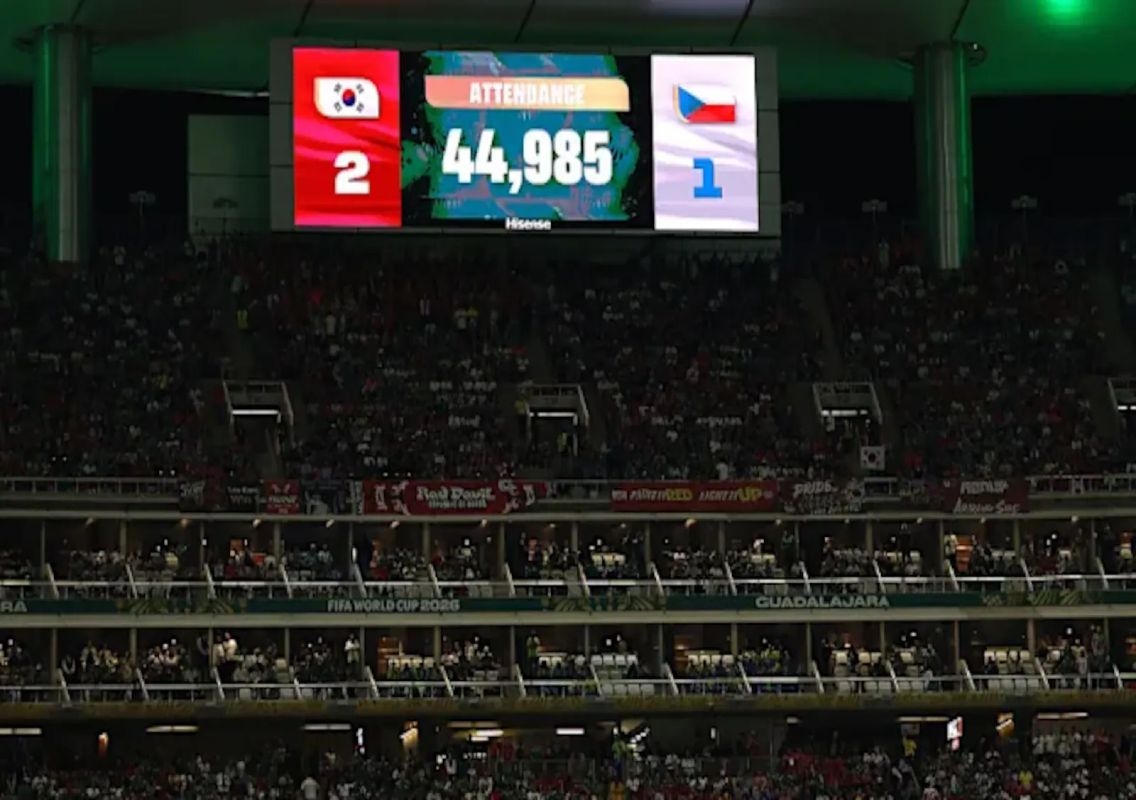


Guadalajara: FIFA has addressed concerns over visibly empty seats during the World Cup match between South Korea and the Czech Republic in Guadalajara, attributing the phenomenon to spectators choosing to watch the game from stadium concourses rather than their assigned seats.
The match, held at the Guadalajara Stadium with a capacity of 45,664, showed several empty patches across different sections, particularly in the middle tiers. Despite this, the official attendance was recorded at 44,985, a figure that included FIFA President Gianni Infantino among those present.
In a statement issued on Friday, FIFA clarified that attendance figures are based on the number of tickets scanned at entry points rather than the number of spectators physically seated at any given time.
“Official attendance figures reflect the number of tickets scanned and spectators present within the stadium footprint, rather than visual assessments of seating occupancy,” the governing body said.
Fans in concourses cited as key reason
According to FIFA, a significant number of ticket holders opted to remain in the concourse areas during the match. These spaces, typically lined with food and beverage outlets and large screens, often attract fans who prefer a more social viewing experience.
“Several ticketed fans could be seen standing in concourses rather than staying in their assigned seats throughout the match,” FIFA added.
Eyewitness accounts from the game supported this explanation, noting that large groups of spectators gathered near concession stands and walkways, contributing to the perception of empty seating in the stands.
Similar trends observed in other venues
The issue of partially filled seating areas has not been limited to Guadalajara. In Toronto, which hosted Canada’s opening World Cup match, the stadium appeared nearly full but still had noticeable empty spots, particularly in premium lower-tier sections and newly installed temporary seating.
Toronto Stadium, the smallest venue in the tournament with an official capacity of 43,036, recorded an attendance of 43,002. Additional seating had been installed to meet FIFA’s minimum requirements for World Cup venues.
However, the city’s busy sports calendar may have influenced turnout patterns. The Toronto Blue Jays were hosting the New York Yankees in Major League Baseball, while the Canadian Open golf tournament was also underway nearby, offering multiple entertainment options for sports fans.
Ticket pricing under scrutiny
FIFA’s ticketing policies have also come under criticism during the tournament. The governing body has implemented dynamic pricing across the 16 host venues in North America, including 11 in the United States, three in Mexico, and two in Canada.
Ticket prices have reportedly surged since their initial release, with some premium seats reaching five-figure sums. While Gianni Infantino defended the pricing strategy as appropriate for the North American market, fans and analysts have raised concerns about affordability and accessibility.
High ticket costs may also be a contributing factor to uneven stadium occupancy, especially in high-demand matches where spectators might prefer to spend time in hospitality areas rather than traditional seating sections.
Strong sales despite concerns
Despite these issues, FIFA has reported robust ticket sales overall. Ahead of the tournament’s opening, 29 matches were officially sold out, with only limited wheelchair-accessible seating remaining. Additionally, 75 matches still had tickets available, indicating steady demand across the competition.
Organisers have emphasised that attendance figures remain reliable and reflective of actual turnout, even if visual impressions suggest otherwise during live broadcasts.
Conclusion
While the sight of empty seats during a World Cup match has raised eyebrows, FIFA maintains that the issue is largely a matter of fan behaviour rather than low attendance. With spectators increasingly opting for flexible viewing experiences within stadiums, traditional perceptions of crowd presence may be evolving. As the tournament progresses, organisers will likely continue monitoring attendance patterns to ensure an optimal experience for fans both inside the stadium and watching worldwide.