







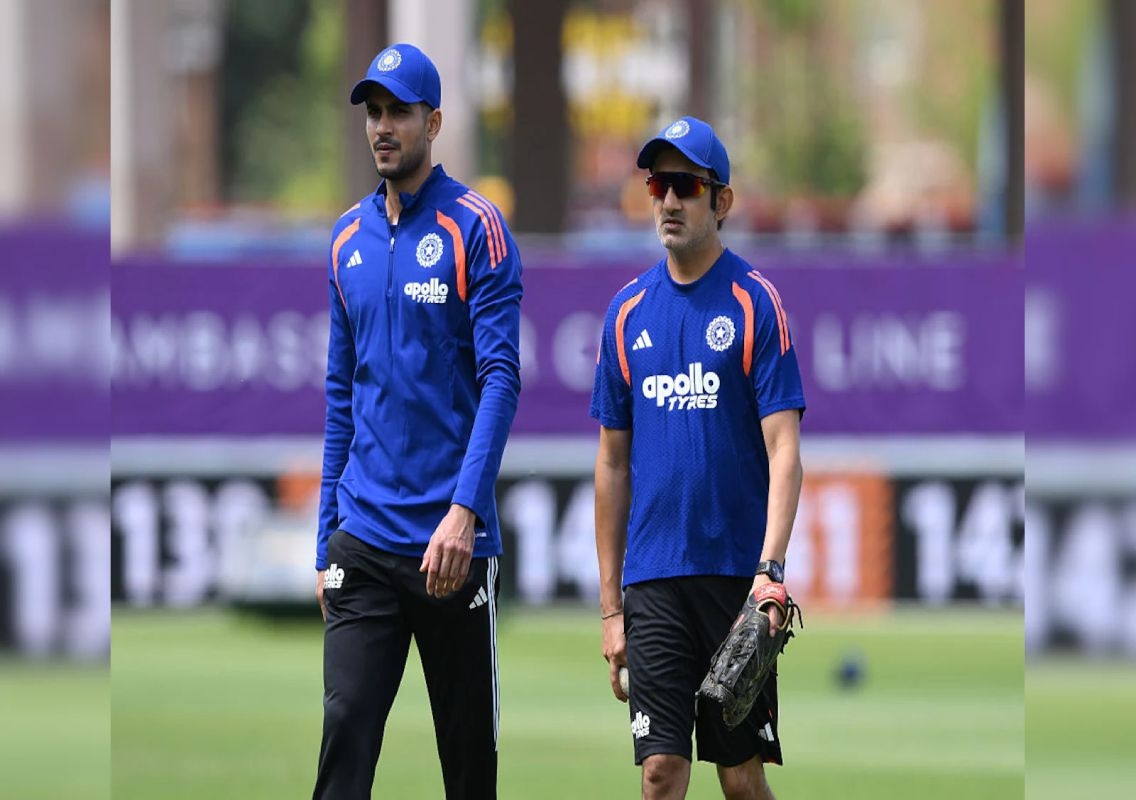


Colombo: India head coach Gautam Gambhir and Test captain Shubman Gill have reportedly decided against releasing several reserve players from the current Sri Lanka series squad for the Duleep Trophy 2026-27, according to a report by NDTV Sports. The decision comes as India prepare for the second and final Test against Sri Lanka in Colombo, with the team management apparently preferring to keep its reserves available rather than send them immediately into domestic action.
The Duleep Trophy is scheduled to begin on August 23, the same day India and Sri Lanka are due to start the second Test of their ongoing series at the Sinhalese Sports Club in Colombo. The scheduling overlap has created a selection and workload-management challenge for the Indian team, particularly because some players who are not part of the playing XI could otherwise have strengthened their respective zonal teams in the domestic tournament.
India entered the second Test with a 1-0 lead after a convincing 165-run victory over Sri Lanka in the opening Test at Galle. The Shubman Gill-led side will be looking to complete a series sweep, while the team’s management will also be monitoring the fitness and workload of players ahead of a busy Test calendar.
India reserves face Duleep Trophy uncertainty
According to the NDTV Sports report, the Indian team management has opted not to release reserve players for the Duleep Trophy despite the domestic tournament beginning during the second Test.
The decision is understood to have been taken by Gambhir and Gill, who are keen to have the reserve players available with the national squad.
Reserve players can play an important role during a Test match. Injuries, illness and last-minute changes can force a team to alter its playing XI, making it difficult for the management to release players while a Test is still underway.
The situation is particularly relevant because India’s second Test against Sri Lanka begins on August 23 and is expected to run for up to five days.
Duleep Trophy begins on August 23
The timing of the Duleep Trophy has made the situation more complicated.
The 2026-27 edition returns to the traditional zonal format, with six teams competing for the domestic title.
East Zone will face North East Zone in one quarter-final, while North Zone will take on West Zone in the other. Central Zone and South Zone have direct entry into the semi-finals.
The tournament begins on August 23, the same day as the India-Sri Lanka second Test.
This means players released from the national squad would have to travel to Bengaluru and join their respective zonal teams almost immediately.
The Duleep Trophy quarter-finals are scheduled to be played over four days, giving selectors an opportunity to assess several domestic performers in first-class conditions.
Why Gambhir and Gill may want reserves available
The decision to retain the reserves is understandable from the perspective of Test-match planning.
India are currently involved in a two-match series and have already used several players during the Sri Lanka tour. Although the team won the opening Test comfortably, the second match presents a fresh challenge.
The national team cannot assume that its playing XI will remain unchanged throughout a five-day Test.
A reserve batter may be needed if a player suffers an injury, while an additional bowler could become important if the workload of the main attack becomes excessive.
Keeping the reserves close to the team also allows the coaching staff to monitor their fitness and prepare them for a potential call-up at short notice.
For Gambhir, this could be particularly important as India begin a demanding phase of the World Test Championship cycle.
India have limited room for error
The Sri Lanka series is significant for India’s World Test Championship campaign.
India started the series in fifth position in the WTC standings but moved to a higher points percentage after their Galle victory.
The 165-run win improved India’s percentage of points from 48.15% to 53.33%, although they remained fifth because Bangladesh moved ahead after their historic victory over Australia.
The result means India need consistent performances during the remainder of the cycle.
Following the Sri Lanka series, India are scheduled to face New Zealand in a two-Test series later this year before hosting Australia for a five-Test series.
The volume of upcoming Test cricket makes squad depth particularly important.
Reserve players could miss a valuable domestic opportunity
While retaining the players gives the Indian team greater security, it could deprive some reserves of valuable first-class match practice.
The Duleep Trophy is one of India’s most important domestic tournaments and regularly features players competing for national selection.
For reserve players who are not part of the playing XI in Colombo, a four-day domestic match could provide an opportunity to spend time in the middle and maintain red-ball rhythm.
That is especially important for batters and bowlers who may be required later in India’s Test campaign.
However, the national team’s immediate requirements take priority when a Test is being played.
The Duleep Trophy provides a platform for younger players
The absence of some India reserves could give other domestic players greater opportunities.
One of the biggest attractions this season is teenage batting sensation Vaibhav Sooryavanshi, who is expected to feature for East Zone against North East Zone.
The youngster has already attracted enormous attention because of his performances in limited-overs cricket and will now have another opportunity to demonstrate his ability in first-class cricket.
The Duleep Trophy also gives established domestic performers an opportunity to push for national selection.
With India facing a packed Test calendar, performances in the competition could become particularly important for players hoping to enter the national team’s wider squad.
India-Sri Lanka second Test begins on August 23
The second Test between India and Sri Lanka will begin at the Sinhalese Sports Club in Colombo on August 23.
India will enter the match with considerable confidence after their Galle victory.
Manav Suthar was one of the standout performers in the opening Test, claiming a maiden 10-wicket haul. Devdutt Padikkal also played a major role with a 167-run innings in India’s first innings.
India’s victory was built around strong batting and disciplined bowling, giving the visitors a 1-0 advantage in the series.
Sri Lanka, meanwhile, will need a significantly improved performance if they are to prevent India from completing a 2-0 series win.
Shubman Gill’s leadership role continues
Gill’s decision to retain the reserves also comes as part of his first major period as India’s Test captain.
The young batter has taken over the leadership role at an important stage of India’s Test cycle.
His partnership with Gambhir will be closely watched as the team attempts to rebuild following a difficult period in Test cricket.
The management will have to balance winning immediate matches with developing a squad capable of handling a demanding international schedule.
Keeping reserves available during the Sri Lanka Test is therefore consistent with a cautious approach to squad management.
Domestic and international cricket overlap
The situation also highlights the increasingly complicated calendar facing Indian cricketers.
Domestic tournaments such as the Duleep Trophy are essential for maintaining the depth of India’s Test system, but international commitments inevitably take precedence when dates overlap.
The BCCI has attempted to structure domestic competitions around the international calendar, but overlaps can still occur because of India’s extensive Test, white-ball and franchise commitments.
The Duleep Trophy’s return to the zonal format has increased interest in the tournament, making the absence of some national reserves more noticeable.
What happens after the Sri Lanka series?
India’s immediate priority remains the second Test in Colombo.
If the team completes a 2-0 series victory, attention will then turn towards the next stages of the World Test Championship campaign.
The national selectors will also continue monitoring performances in domestic cricket, particularly the Duleep Trophy.
Players who are not currently part of India’s main Test group will have an opportunity to strengthen their claims through strong performances in the tournament.
The decision to retain the current reserves does not necessarily mean those players will be excluded from domestic cricket for the entire competition. Their availability could change once India’s second Test is completed.
Conclusion
The reported decision by Gautam Gambhir and Shubman Gill to retain India’s reserve players reflects the team’s immediate focus on the second Test against Sri Lanka.
With the Duleep Trophy beginning on the same day as the Colombo Test, the management has had to choose between giving reserves valuable domestic match practice and keeping them available for an international assignment.
For India, retaining the players provides additional security during a crucial Test match. For the Duleep Trophy, their absence could open the door for younger and fringe domestic players to make a stronger impression.
India currently lead Sri Lanka 1-0 and will aim to complete a series sweep in Colombo. With several important Test series still ahead, maintaining squad depth and managing player workloads will remain key priorities for Gambhir, Gill and the Indian selectors.